

By Professor Tony Artigas🔗 Original version in Spanish✍️ English adaptation and formatting by Tymur Levitin
🌍 Looking for a language? Choose your language here
Why Interviews in Another Language Can Be a Real Challenge
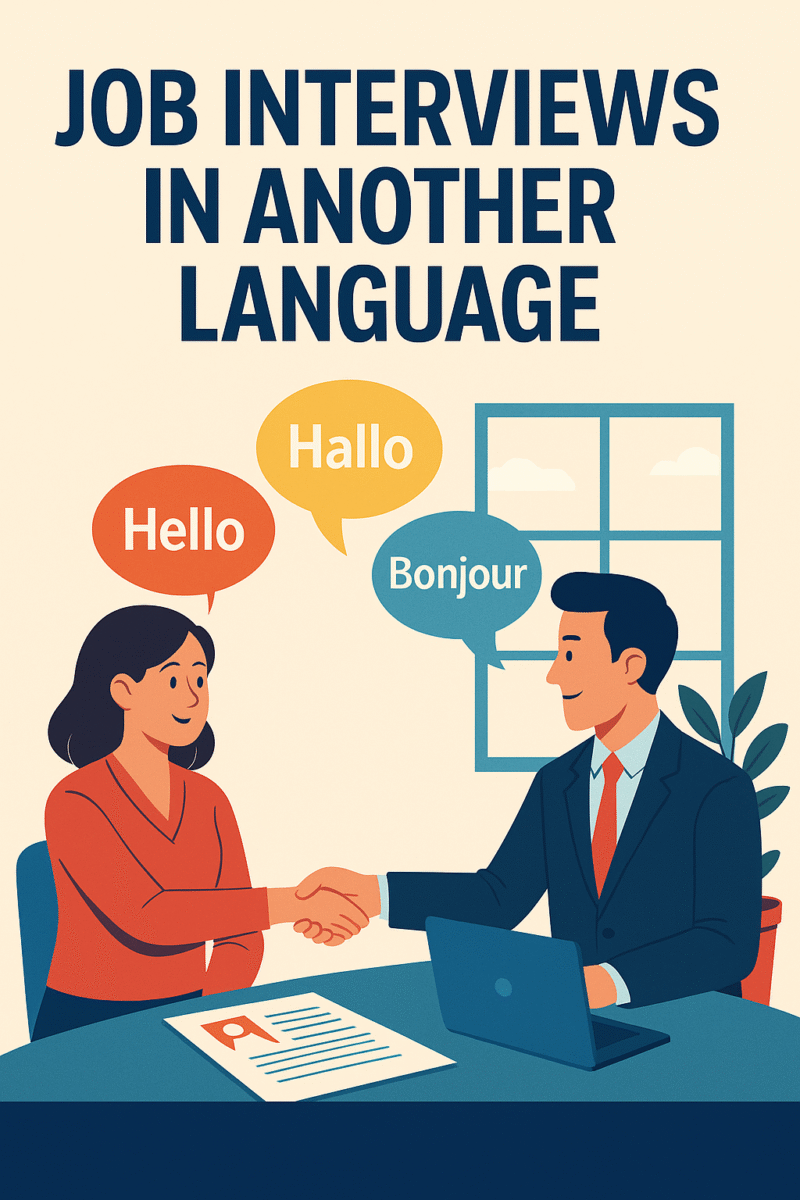
When facing a job interview in a language other than your native one, most people focus on what to say and how to say it correctly. But the key lies not only in fluency, but in confidence, adaptability, and strategy.
Whether you’re a non-native speaker or just learning a new language, the job interview situation puts your knowledge and composure to the test. And it doesn’t only apply to beginners — even intermediate and advanced speakers can struggle under pressure.
The Two Realities of Interviewing in Another Language
1. You’re Expected to Act Like a Native Speaker
Employers may unconsciously expect you to perform like a native speaker — even if your resume shows otherwise.
This expectation gap can lead to misunderstanding or misjudgment during an interview. You might feel that your tone is polite, but to a native speaker, it may sound unsure or evasive. You may answer with the right words, but lack the non-verbal cues or cultural idioms that convey certainty or enthusiasm.
That’s why it’s essential not only to know the language, but also to understand the cultural codes that go with it.
2. You’re Actually Performing a Double Interview
You’re not just being evaluated for your skills — you’re also being tested on your ability to communicate cross-culturally.
This is why interviews in a foreign language require a different kind of preparation. It’s not enough to memorize vocabulary or rehearse canned answers. You need to:
- Understand how people interview in that culture
- Learn what’s considered polite, persuasive, or appropriate
- Master tone, pauses, and body language
So, How Do You Prepare?
Here are a few simple but powerful techniques that can increase your chances of success:
✅ Practice real scenarios, not just language
Don’t just memorize questions and answers. Practice live interview simulations with a coach or teacher. Include awkward questions, interruptions, and unexpected turns.
✅ Learn the “soft skills” of the language
Focus on tone, politeness, expressing disagreement, or enthusiasm without sounding exaggerated. These soft skills are often what sets candidates apart.
✅ Research cultural norms
How do professionals in that country greet each other? How direct or indirect are their answers? Are personal stories welcome or discouraged?
✅ Don’t be afraid to clarify
If you don’t understand a question, ask politely for clarification. It shows professionalism — not weakness.
Final Thoughts
Interviewing in another language is more than just a test of vocabulary. It’s a moment of real connection — or missed opportunity — that depends on much more than grammar.
By understanding how language, culture, and self-presentation intersect, you can walk into the room not just hoping to survive… but ready to succeed.
🖋️ About the Author
Professor Tony Artigas is an expert in intercultural communication and language coaching. This article was originally written in Spanish and adapted for English readers by Tymur Levitin, founder of Levitin Language School.
We thank Professor Artigas for his permission and collaboration in making this important insight available to our global audience.
📚 Explore More
- Read our blog for more insights
- Choose your language and start learning
- Contact us for personalized training and interview prep


