
Students are often surprised when they hear this:
“You can use Present Continuous to talk about the future.”
They immediately ask:
“But isn’t that a present tense?”
Yes.
And that is exactly the point.
Present Continuous for the future is not about time.
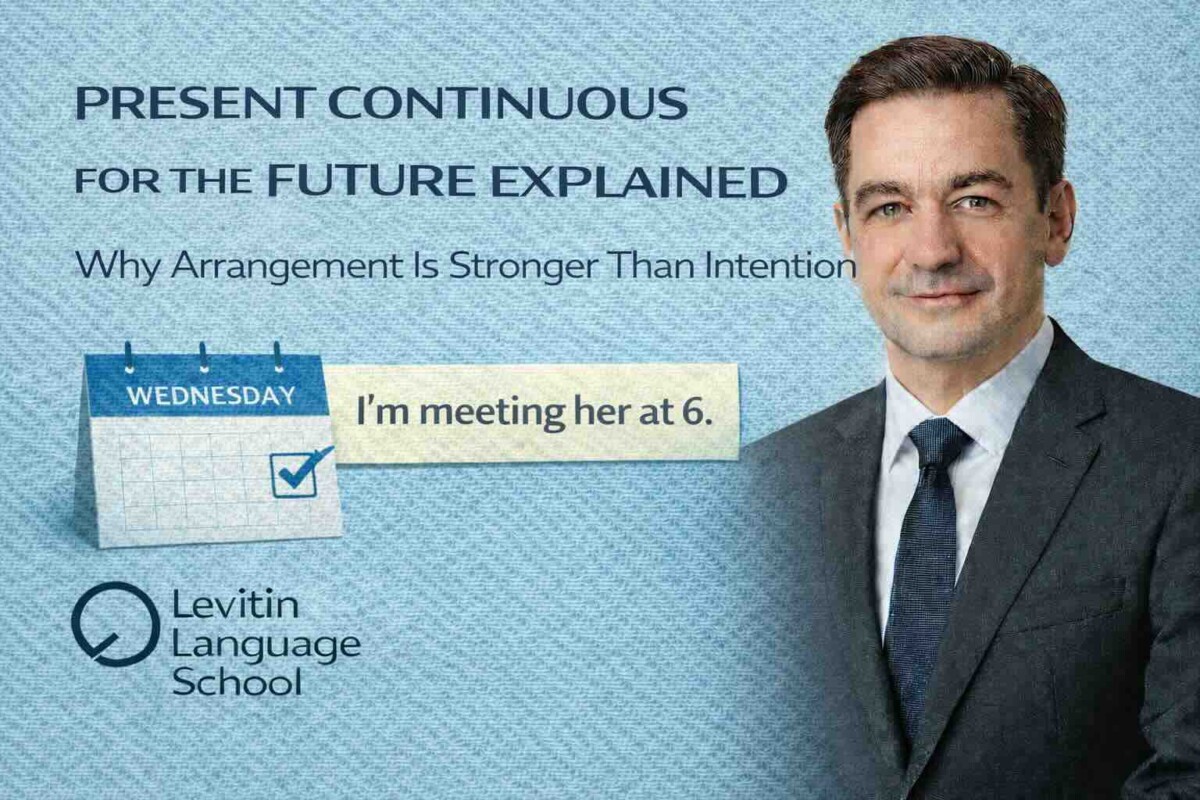
It is about arrangement that already exists in reality.
The Core Principle: Fixed Arrangement
When you say:
I’m meeting her tomorrow.
You are not describing something happening now.
You are describing something already organized.
There is structure behind it:
- a scheduled time
- a confirmed plan
- another person involved
- an external commitment
That is why this form feels solid.
It reflects reality that has already been set.
Compare the Future System
Let’s align the three major forms:
| Form | Logic | Example |
|---|---|---|
| Will | Decision now | I’ll call you. |
| Going to | Prior intention / evidence | I’m going to call you. |
| Present Continuous | Fixed arrangement | I’m calling you at 5. |
All refer to the future.
But none are interchangeable in meaning.
The difference is psychological and structural.
Why It Feels So Certain
Present Continuous for the future suggests that the event is already part of the calendar.
It is not just your intention.
It exists in shared reality.
I’m flying to Berlin on Monday.
She’s starting a new job next week.
We’re having dinner at 7.
These sentences imply preparation.
They imply coordination.
They imply commitment.
The Hidden Strength of This Form
This future form is often stronger than “going to.”
Compare:
I’m going to meet him tomorrow.
I’m meeting him tomorrow.
The second feels more definite.
Because it suggests arrangement.
Something is already in motion.
Why Time Words Do Not Decide the Tense
Students often try to memorize:
“Tomorrow → use future.”
That approach fails.
Because English chooses structure based on:
- decision timing
- intention stability
- arrangement status
Not on calendar vocabulary.
The Structural Formula
am / is / are + verb-ing
But the deeper formula is:
existing arrangement → future event
When that logic is clear, the tense becomes natural.
When Not to Use It
You cannot use Present Continuous for vague future ideas:
❌ I’m becoming rich one day.
❌ I’m traveling somewhere next year (if no real plan exists).
Without arrangement, the form feels unnatural.
It requires structure behind it.
Why Learners Mix It With Going To
Because both can refer to the future.
But ask yourself:
Is this just my intention?
Or is this already scheduled?
That question solves most confusion.
The Psychological Dimension
Will = personal decision.
Going to = intention already formed.
Present Continuous = arranged reality.
That is the hierarchy.
Once you see it, the system becomes logical.
Final Insight
Present Continuous for the future is not a grammatical exception.
It is a structural reflection of commitment.
The event is not just imagined.
It is organized.
And that is why English uses a present form
to express a future action.
Because the arrangement already exists now.
Author: Tymur Levitin
Founder & Director, Levitin Language School
Global Learning. Personal Approach.
© Tymur Levitin