Translation Theory and Practice
Translation Theory and Practice
Before choosing a language to learn, explore all available options here:https://levitintymur.com/#languages Language often creates an illusion of universality. When we open a dictionary, it seems that every word has an equivalent somewhere else in the world. English has a translation for a German word, German has a translation for a Spanish word, and so on. […]
 Tymur Levitin
English
How Colours Reveal the Hidden Logic of Culture We think colours are universal. Red is red.Green is green.Blue is blue. But the moment you step into another language, colour stops being visual — and becomes cultural. And this is where misunderstandings begin. Red Is Not Always Just Red In English, someone embarrassed is “red as […]
Tymur Levitin
English
Why Idioms Reveal the Way We Think — Not Just the Way We Speak There is a Polish proverb that has always fascinated me: „Ty o chlebie, ja o niebie.”You talk about bread, I talk about the sky. At first glance it sounds poetic. Almost lyrical. But in reality it describes something painfully common: two […]
Tymur Levitin
Interesting information
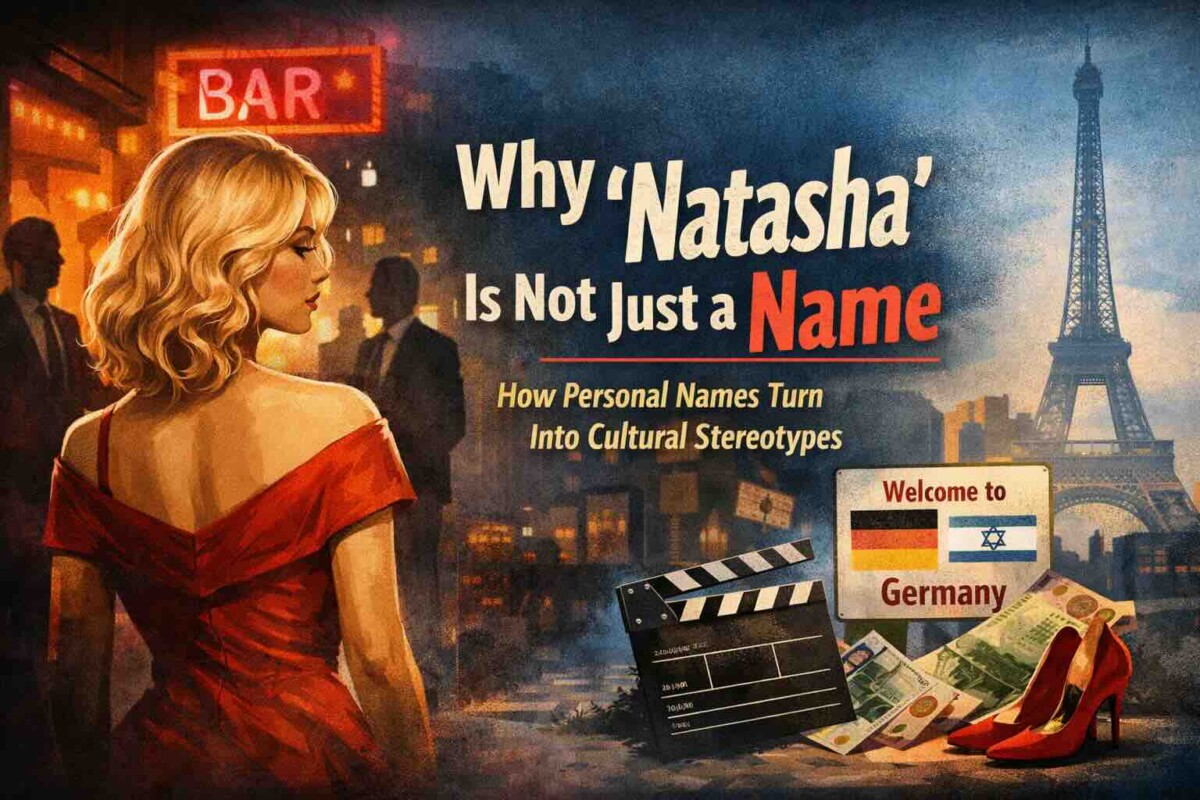
Author’s Column by Tymur LevitinLanguage. Identity. Choice. Meaning. When you learn a foreign language, you think you are learning grammar. You are not. You are entering a system of associations — historical, emotional, political, sexual, cinematic. And sometimes all of that can be packed into one simple word. A name. One of the most striking […]
Tymur Levitin
Author’s Column | Tymur Levitin on Language, Meaning and Respect
The Cultural Code Behind Charm, Cynicism, and Consent Choose your language → What It Really Means In Russian, the word пройдоха (proydókha) doesn’t simply mean “a trickster” or “an opportunist.” It’s much more layered — somewhere between admiration and suspicion, charm and irritation, action and manipulation. A пройдоха is someone who: It’s not a criminal.It’s […]
Tymur Levitin
Author’s Column | Tymur Levitin on Language, Meaning and Respect
Choose your language → What It Really Means In English, solving problems sounds perfectly normal — if you’re a technician, therapist, or maybe a diplomat. But when someone in Russian says: «Я решаю вопросы»(Ya reshayu voprosy) …it doesn’t mean they fix air conditioners.It doesn’t mean they’re a consultant or politician.And it certainly doesn’t mean they […]
Tymur Levitin
Author’s Column | Tymur Levitin on Language, Meaning and Respect
Author’s Column by Tymur Levitin – Levitin Language School / Start Language School by Tymur LevitinLanguage. Identity. Meaning. Survival. “Ich nehme eine Latte.”A simple sentence.Or is it? If you’re standing at a coffee shop counter in Germany, what you just said could either get you a hot drink… or a weird look. Or a smirk. […]
Tymur Levitin
Author’s Column | Tymur Levitin on Language, Meaning and Respect
Author’s Column by Tymur Levitin — Founder, Director, and Senior TeacherLevitin Language School / Start Language School by Tymur LevitinGlobal Learning. Personal Approach. It All Started With a Question Just minutes before writing this, I finished a private lesson with one of my students.He looked at me and said, “So what’s the difference between сломал […]
Tymur Levitin
Author’s Column | Tymur Levitin on Language, Meaning and Respect
Author’s Column by Tymur Levitin — Levitin Language School / Start Language School by Tymur LevitinLanguage. Identity. Meaning. Respect. Why Words Matter More Than You Think Words like chick, девка, mädel, or nena may seem innocent or familiar — until you look closer. What do we really mean when we call someone милая, süße, ma […]
Tymur Levitin
 Tymur Levitin