
When people look at the map of Europe, one country often raises a simple question:
How can such a tiny country have such a large economic influence?
That country is Luxembourg.
With a population of around 660,000 people and an area of just over 2,500 square kilometers, Luxembourg is smaller than many cities. Yet it is one of the most economically powerful states in Europe.
But the most interesting part is not its size.
It is its language situation.
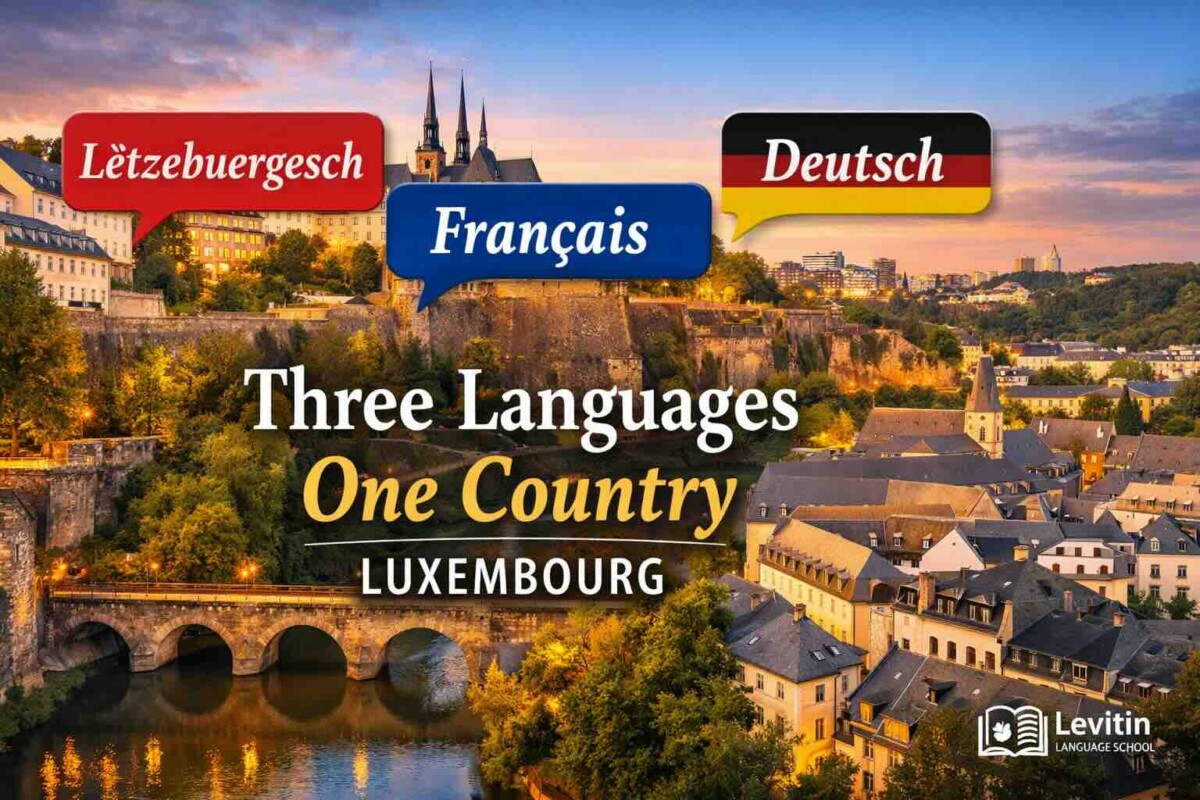
Luxembourg is one of the few countries in the world where three languages function simultaneously in everyday life.
A Country Where Three Languages Work Together
In Luxembourg, language is not just about communication. It is part of how society is structured.
The country officially operates with three languages:
- Luxembourgish — everyday communication
- French — administration and law
- German — media, press and part of the education system
Most residents grow up naturally switching between these languages.
In practice, many people speak four or even five languages.
The Hidden Workforce of Luxembourg
Another surprising fact is that a large part of the workforce in Luxembourg does not actually live there.
Every day, roughly 200,000–250,000 people commute across the border to work in Luxembourg.
They come mainly from:
- France
- Belgium
- Germany
These workers are known as cross-border commuters.
Many of them live in nearby cities such as Trier in Germany or Metz in France, where housing is significantly cheaper.
They earn Luxembourg salaries while living in neighboring countries.
Why Luxembourg Needs So Many Workers
The reason lies in the country’s economic structure.
Luxembourg is one of Europe’s major financial centers. The country hosts:
- hundreds of international banks
- thousands of investment funds
- European Union institutions
- large international corporations
For example, institutions such as the European Investment Bank and the Court of Justice of the European Union are located there.
As a result, the local population alone cannot fill the labor demand.
Where Languages Become Practical Tools
Luxembourg is a perfect example of how languages function as real economic tools.
In daily professional life, people may switch between:
- Luxembourgish with colleagues
- French for administration
- German in media and documentation
- English in international business
For many professionals in the region, language knowledge is not an academic skill.
It is simply part of everyday survival in the job market.
A Small Country That Explains a Big Idea
Luxembourg demonstrates a simple truth that often surprises language learners.
Languages are rarely isolated systems.
They exist inside economies, borders, migration and real human needs.
In the case of Luxembourg, one small country has become a place where languages meet because people, work and opportunities meet there.
And sometimes understanding this real context explains language much better than grammar alone.
Author: Tymur Levitin
Founder & Director
Levitin Language School
Global Learning. Personal Approach.
© Tymur Levitin