
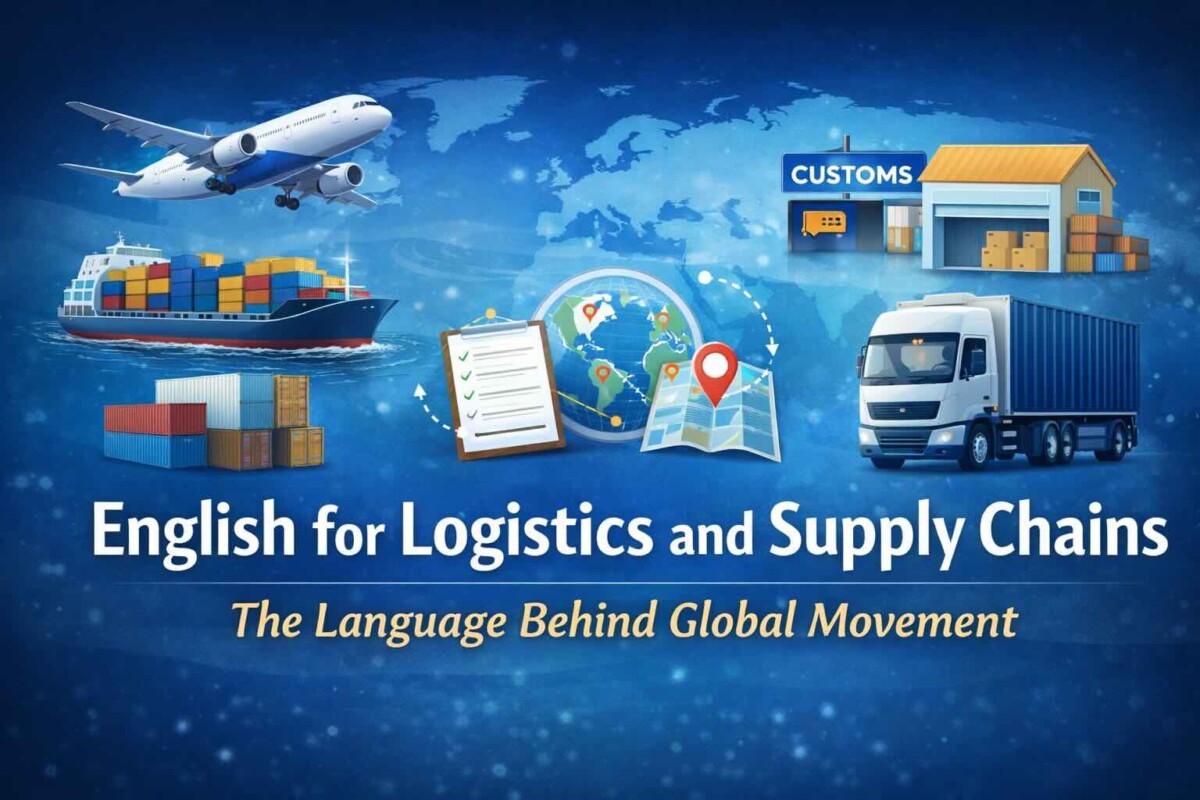
Global trade does not move only through ships, trucks, and warehouses.
It moves through language.
Every shipment, every delivery schedule, every customs declaration depends on precise communication. One unclear instruction can delay an entire supply chain.
This is why English has become the operational language of logistics worldwide.
At Levitin Language School, learning English for logistics means learning how real supply chains communicate.
Why Logistics Professionals Need English
Modern logistics is international by definition.
Even companies operating inside one country constantly interact with:
- international suppliers
- shipping companies
- freight forwarders
- customs authorities
- warehouse partners
- international clients
English is the common working language connecting these participants.
Professionals in logistics must be able to:
- confirm shipment details
- clarify delivery conditions
- negotiate schedules
- report delays or disruptions
- coordinate multiple partners at once
In logistics, language is not theoretical.
It directly affects operations.
The Vocabulary of Logistics
Logistics English has its own structured terminology.
Professionals regularly work with terms such as:
- freight forwarding
- lead time
- delivery window
- customs clearance
- shipment tracking
- inventory management
- supply chain coordination
Understanding these terms is only the first step.
The real skill is using them correctly in real communication.
For example:
- “The shipment has cleared customs.”
- “The delivery window has been changed.”
- “The cargo will arrive ahead of schedule.”
- “We need confirmation from the warehouse.”
Clarity prevents operational mistakes.
Communication Situations in Logistics
Professionals working in logistics must handle many types of communication:
Operational communication
- shipment updates
- delivery confirmation
- warehouse coordination
Problem-solving communication
- delays
- lost cargo
- documentation issues
International coordination
- communication with suppliers
- transport partners
- international clients
In each situation, accuracy and clarity are critical.
How We Teach Logistics English
At Levitin Language School, logistics English is taught through real operational situations.
Lessons focus on:
- structured professional vocabulary
- clear operational communication
- practical dialogue scenarios
- written communication used in logistics
Students learn to explain processes such as:
- shipment coordination
- warehouse operations
- delivery scheduling
- supply chain planning
The goal is not just vocabulary — but professional communication.
Learning from Real Logistics Experience
Our logistics English lessons are supported by professionals who understand how supply chains operate in practice.
One of the teachers working in this direction is Olena Adamenko, whose background includes teaching English in logistics environments.
This allows lessons to include realistic communication scenarios that logistics professionals actually encounter.
You can learn more about her experience here:
https://levitintymur.com/teachers/olena-adamenko/
English as the Infrastructure of Global Logistics
Ships transport cargo.
Trucks move goods.
Warehouses store products.
But coordination between all these elements depends on language.
Clear English communication allows logistics systems to function smoothly across countries and companies.
When professionals master logistics English, they do more than improve language skills.
They improve the efficiency of the entire system they work in.
Author: Tymur Levitin
Founder & Director, Levitin Language School
© Tymur Levitin