
After learning will, students usually hear something simple:
“Use going to for plans.”
Again — partially correct.
But not enough.
Because be going to is not just about planning.
It is about visible intention and existing direction.
The difference is subtle.
The impact is structural.
The Core Idea: Evidence in the Present
Unlike will, which often expresses a decision made at the moment of speaking,
be going to usually reflects something that already exists.
A prior decision.
A visible sign.
A current trajectory.
Compare:
I’ll call her now.
I’m going to call her tonight.
The first is spontaneous.
The second suggests prior intention.
Visible Signs and Logical Prediction
Be going to is also used when the present shows clear evidence.
Look at those clouds.
It’s going to rain.
We are not predicting emotionally.
We are observing something concrete.
This is not a random future.
It is a logical outcome.
Intention That Exists Before Speaking
When you say:
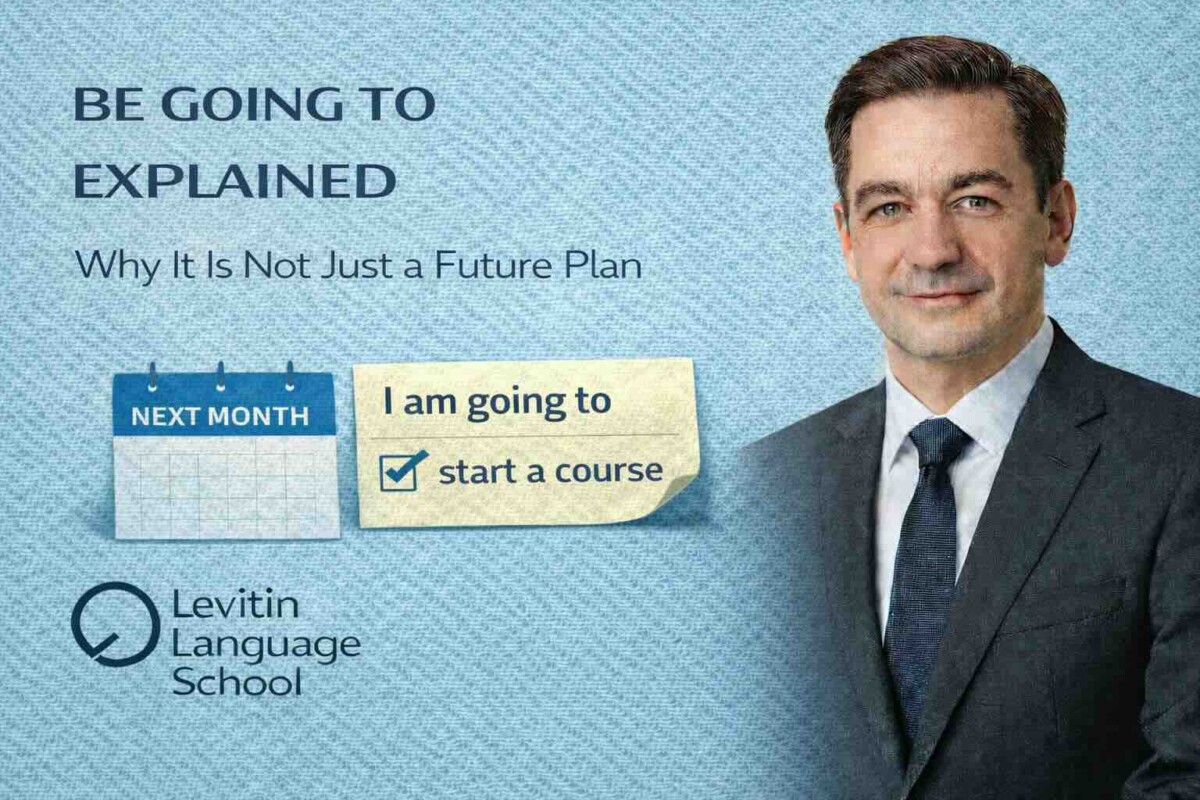
I’m going to start a new course next month.
The decision is not made now.
It already exists.
That is why going to feels more stable.
It is less about impulse.
More about direction.
Why It Is Not Simply “Plan”
Students often reduce the system:
Will = future
Going to = plan
But consider:
I’m going to tell him the truth.
You’re going to regret this.
The second example is not a plan.
It is a warning based on certainty.
Again — direction, not schedule.
Structural Formula
am / is / are + going to + base verb
But structure alone does not explain usage.
The deeper formula is:
present evidence or prior intention → future outcome
That connection defines the tense.
Compare with Future Simple
Let’s align the system:
| Future Simple (will) | Be Going To |
|---|---|
| Decision now | Decision earlier |
| Promise | Intention |
| Spontaneous | Prepared |
| Personal stance | Existing direction |
| Emotional prediction | Logical prediction |
They both refer to the future.
But they do not function the same way.
Why Learners Hesitate
Because they look at time words:
“Tomorrow”
“Next week”
“Soon”
And try to match them to grammar.
But English does not choose future forms based on calendar words.
It chooses them based on mental structure.
The Psychological Difference
I’ll help you.
This feels immediate.
I’m going to help you.
This feels intentional.
The nuance is small.
The meaning is not.
Final Insight
Be going to is not about tomorrow.
It is about present direction.
Something has already started — even if only in your mind.
And that present reality shapes the future expression.
When you understand that,
you stop asking:
“Is it a plan?”
You start asking:
“Does this intention already exist?”
And the answer becomes natural.
Author: Tymur Levitin
Founder & Director, Levitin Language School
Global Learning. Personal Approach.
© Tymur Levitin