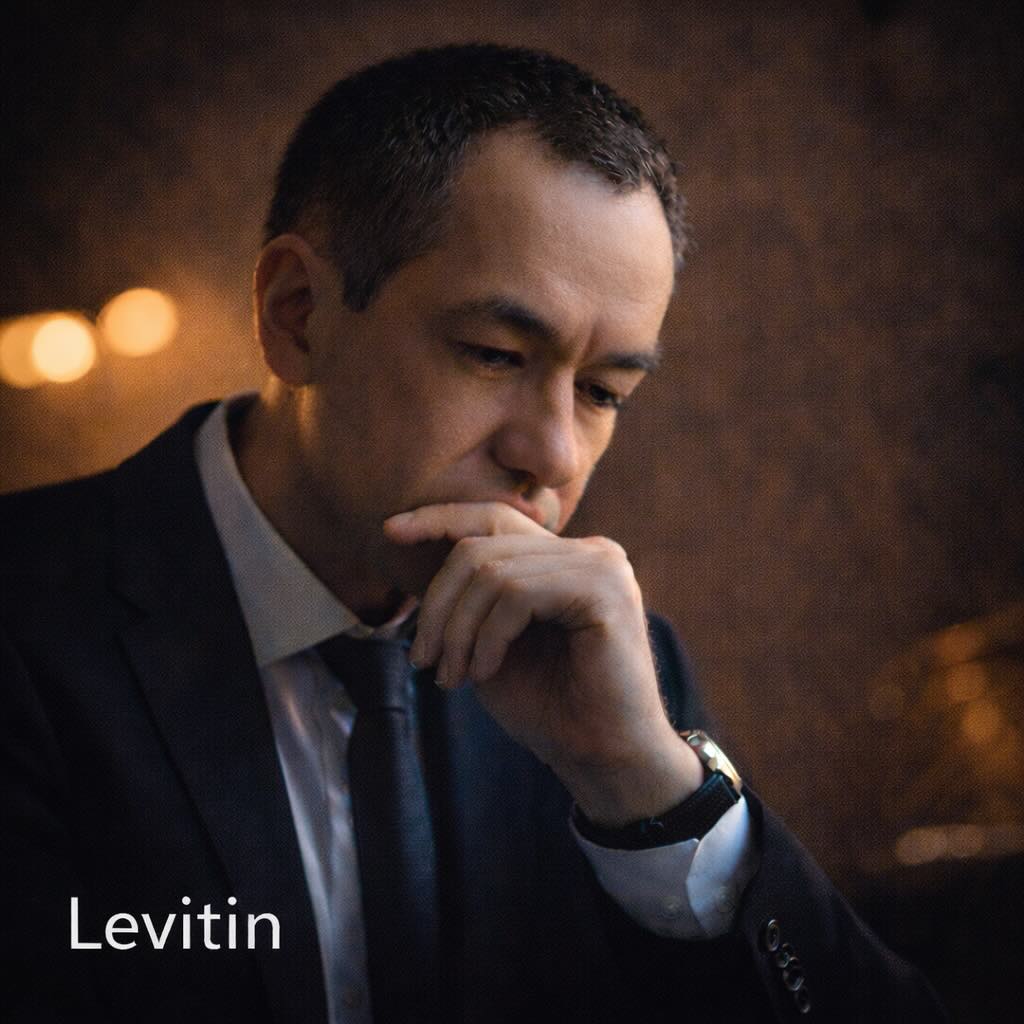

When Silence Is the Strongest Choice
Author’s Column by Tymur Levitin
Founder, Director & Senior Teacher
Levitin Language School / Start Language School by Tymur Levitin
Language. Identity. Choice. Meaning.
Watch the podcast — all language versions
English
Deutsch
Русский
Українська
Read this article in other languages
- 🇩🇪 Deutsch — Der Moment vor dem Sprechen
- 🇷🇺 Русский — Момент перед тем, как сказать
- 🇺🇦 Українська — Момент перед тим, як говорити
The moment no one talks about
Most people believe that language is about what you say.
Some believe it is about how you say it.
But in real life, in real conversations, in moments that actually change relationships, careers, and destinies, the most important part of language happens before any word appears.
It happens in the pause.
In the moment when you already know what you could say —
and you decide whether you should.
That is where responsibility lives.
Not in vocabulary.
Not in grammar.
Not in eloquence.
In restraint.
Why this moment is more powerful than speech
Words are easy.
Silence is not.
When you speak, you release something into the world.
You cannot pull it back.
You cannot control how it will be interpreted, remembered, quoted, or used against you.
But when you pause —
when you stop yourself just before speaking —
you are still in control.
That moment is where maturity begins.
Not emotional maturity.
Not social politeness.
Linguistic maturity.
The ability to feel the weight of a word before it leaves you.
Why language students struggle with this
In my work as a teacher, I see something fascinating.
Students think their problem is grammar.
Or vocabulary.
Or accent.
But the real problem is much deeper.
They speak too fast.
Not because they are confident.
But because they are afraid of silence.
They rush to fill the gap.
They throw words into the air just to avoid the uncomfortable pause.
And in that rush, they lose control over meaning.
This is why real fluency is not speed.
It is direction.
Silence is not emptiness — it is structure
In many languages, silence carries more meaning than words.
In German, a pause can change the entire tone of a sentence.
In English, hesitation can signal doubt, politeness, or power.
In Ukrainian and other Slavic languages, silence often speaks louder than explicit statements.
Language is not only what is said.
It is also what is deliberately not said.
This is what dictionaries cannot teach you.
This is what apps cannot train.
This is what only thinking in the language develops.
Why this matters for real life
People get fired not because they lack words —
but because they used the wrong ones at the wrong moment.
Relationships break not because of grammar —
but because something was said that should have stayed inside.
Reputation is not destroyed by silence.
It is destroyed by uncontrolled speech.
The moment before you speak is the last line of defense between you and consequences.
The Tymur Levitin Method and the pause before speech
At Levitin Language School and Start Language School by Tymur Levitin, we do not train people to speak faster.
We train them to think first.
That is why our students do not memorize phrases.
They build meaning.
That is why we focus on internal structure, not external performance.
That is why language becomes a tool of identity, not just communication.
You can see how this philosophy works across languages here:
- Learn English with real meaning
https://levitintymur.com/languages/english/ - Learn German with depth and structure
https://levitintymur.com/languages/learning-german/ - Learn Spanish with clarity and cultural awareness
https://levitintymur.com/language/spanish/
And you can explore my full teaching profile here:
https://levitintymur.com/teachers/tymur-levitin/
Why this podcast belongs to this series
This episode is not isolated.
It continues a clear line:
The weight of words → Responsibility → Silence before speech
First we learned that words carry weight.
Then we learned that weight creates responsibility.
Now we reach the deepest layer:
Sometimes the strongest word is the one you do not say.
This is not about being quiet.
It is about being in control.
The voice you hear in the podcast
Here are the original narration texts used in the video versions.
English
The most important moment
is not when you speak.It’s the moment before.
When you already know what you could say —
and still choose silence.Because real responsibility
begins not with words,
but with restraint.
Deutsch
Der wichtigste Moment
ist nicht der, in dem man spricht.Sondern der Moment davor.
Wenn man weiß, was man sagen könnte —
und trotzdem schweigt.Verantwortung beginnt
nicht mit Worten,
sondern mit Zurückhaltung.
Русский
Самый важный момент —
не когда ты говоришь.А когда ты уже мог бы сказать —
и не говоришь.Потому что ответственность
начинается не со слов,
а с удержания.
Українська
Найважливіший момент —
не тоді, коли ти говориш.А тоді, коли вже міг би —
і не говориш.Бо відповідальність
починається не зі слів,
а зі стриманості.
Final thought
Anyone can speak.
Very few people can hold a word.
That is why the most important moment in language is not the moment of speech.
It is the moment when you feel the word forming —
and decide whether it deserves to exist.
© Tymur Levitin
Founder & Director
Levitin Language School / Start Language School by Tymur Levitin
Language. Identity. Choice. Meaning.