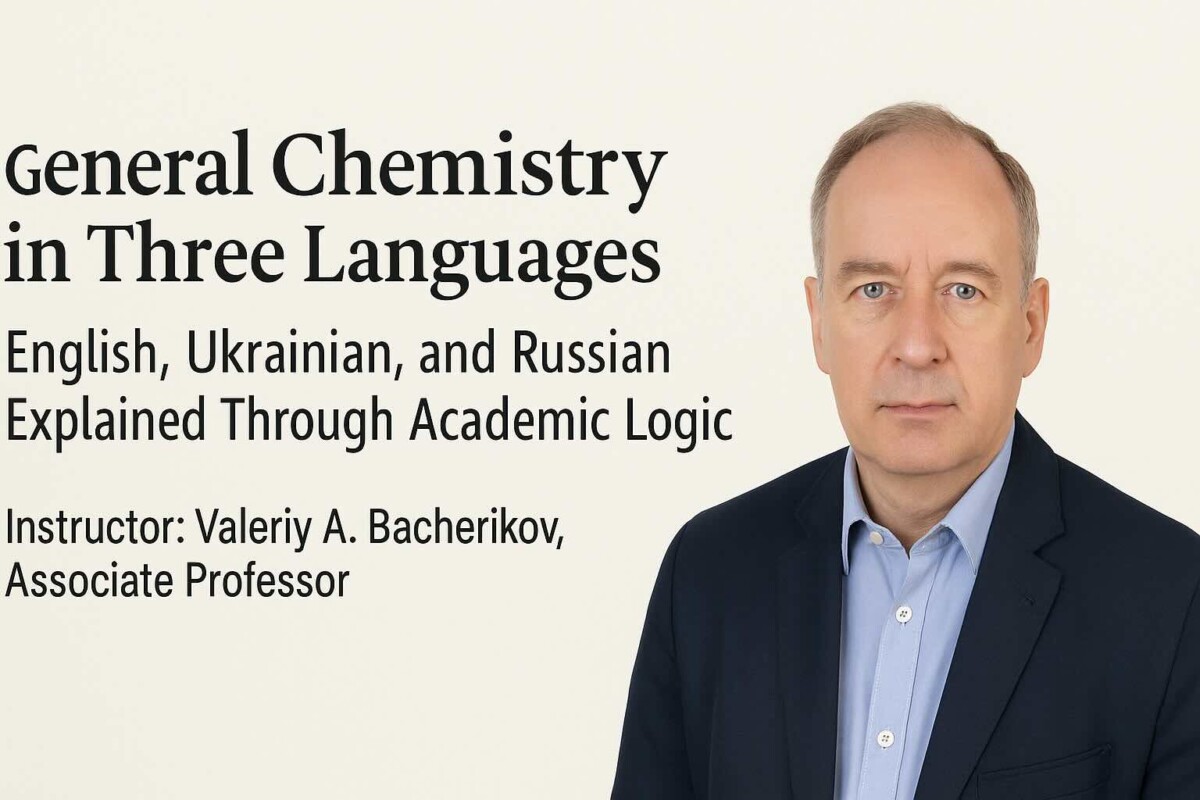

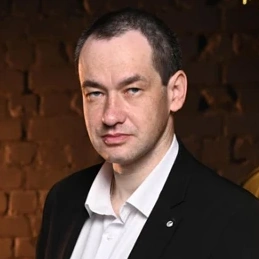
Instructor: Valeriy A. Bacherikov, Associate Professor
Choose your language: https://levitintymur.com/#languages
General chemistry is the foundation of every scientific discipline — from biochemistry and medicine to physics, pharmacy, engineering, and environmental science.
When students learn chemistry through more than one language, something remarkable happens: their understanding becomes deeper, clearer, and more structured.
At Levitin Language School / Start Language School by Tymur Levitin, general chemistry is taught through academic logic, cross-language comparison, and clarity.
Instead of memorizing formulas, students learn why matter behaves the way it does — and how chemical principles remain universal across languages.
This is the third publication in our academic chemistry series taught by Associate Professor Valeriy A. Bacherikov, following:
- Biochemistry in English — Understand Life at the Molecular Level
- Organic Chemistry in English — The Language of Carbon-Based Life
Why Learn Chemistry in Three Languages
Learning chemistry simultaneously through English, Ukrainian, and Russian gives students:
1. A stronger conceptual foundation
When you see the same idea expressed in three linguistic structures, the essence becomes clearer.
2. Improved scientific literacy
English is the global language of science.
Ukrainian and Russian offer strong academic terminology familiar to post-Soviet and Eastern European education.
3. Better exam preparation
Cross-language clarity helps students entering:
- medical universities,
- pharmacology programs,
- international schools,
- foundation courses,
- IB / AP / A-level equivalent chemistry tracks.
4. The ability to switch terminology instantly
Many students use one language at home, another at school, and English for textbooks — this course solves the confusion.
Core Topics of General Chemistry (with Terminology in Three Languages)
1. Atomic Structure and Periodicity
Understanding the periodic table is understanding the logic of the universe.
| Concept | English | Ukrainian | Russian |
|---|---|---|---|
| Atom | Atom | Атом | Атом |
| Electron shell | Electron shell | Електронна оболонка | Электронная оболочка |
| Periodic table | Periodic table | Періодична таблиця | Периодическая таблица |
| Ionization energy | Ionization energy | Енергія іонізації | Энергия ионизации |
| Atomic radius | Atomic radius | Атомний радіус | Атомный радиус |
Students understand not just terms — but relationships.
2. Chemical Bonding and Molecular Geometry
| Concept | English | Ukrainian | Russian |
|---|---|---|---|
| Covalent bond | Covalent bond | Ковалентний зв’язок | Ковалентная связь |
| Ionic bond | Ionic bond | Йонний зв’язок | Ионная связь |
| Polar molecule | Polar molecule | Полярна молекула | Полярная молекула |
| Hybridization | Hybridization | Гібридизація | Гибридизация |
| Molecular geometry | Molecular geometry | Геометрія молекул | Геометрия молекул |
Cross-language learning helps students visualize structures more accurately.
3. States of Matter and Intermolecular Forces
- gases, liquids, solids
- van der Waals forces
- hydrogen bonding
- dipole–dipole interactions
Terminology comparison deepens understanding:
| English | Ukrainian | Russian |
|---|---|---|
| Hydrogen bond | Водневий зв’язок | Водородная связь |
| Intermolecular forces | Міжмолекулярні сили | Межмолекулярные силы |
| Phase transition | Фазовий перехід | Фазовый переход |
4. Stoichiometry and Chemical Reactions
A universal language of equations:
- balancing reactions
- mole concept
- Avogadro’s number
- mass–mole–volume relationships
| English | Ukrainian | Russian |
|---|---|---|
| Mole | Моль | Моль |
| Reaction rate | Швидкість реакції | Скорость реакции |
| Catalyst | Каталізатор | Катализатор |
Students learn to solve problems fluently in all three languages.
5. Solutions, Acids, Bases, and pH
| English | Ukrainian | Russian |
|---|---|---|
| Solution | Розчин | Раствор |
| Concentration | Концентрація | Концентрация |
| Acid | Кислота | Кислота |
| Base | Основа | Основание |
| Buffer | Буфер | Буфер |
This section supports both school-level students and future medical/pharmaceutical students.
6. Thermochemistry and Energy
Understanding:
- enthalpy
- exothermic and endothermic processes
- Hess’s law
- energy conservation
| English | Ukrainian | Russian |
|---|---|---|
| Enthalpy | Ентальпія | Энтальпия |
| Exothermic | Екзотермічний | Экзотермический |
| Endothermic | Ендотермічний | Эндотермический |
Chemistry becomes a universal logic system — not a set of isolated facts.
Your Instructor — Associate Professor Valeriy A. Bacherikov
A leading academic lecturer, researcher, and educator with experience teaching:
- General Chemistry
- Organic Chemistry
- Inorganic Chemistry
- Physical and Colloidal Chemistry
- Pharmaceutical Chemistry
- Biochemistry
He prepares future:
- doctors
- dentists
- pharmacists
- biomedical researchers
His scientific activity includes reviewing for international journals and affiliation with the Royal Society of Chemistry.
📌 Teacher profile:
https://levitintymur.com/teachers/valeriy-a-bacherikov/
Why Our Method Works
Chemistry becomes clear when:
- terminology is aligned across languages
- concepts are explained visually and logically
- examples connect school chemistry to biochemistry and medicine
- problem-solving replaces memorization
- students see the same principle from multiple perspectives
This is the philosophy of our school:
Global Learning. Personal Approach.
Explore More Scientific Courses
- Biochemistry in English — Understand Life at the Molecular Level
- Organic Chemistry in English — The Language of Carbon-Based Life
- Chemistry in English
- Physics in English
- Mathematics in English
and German-medium subjects:
Every subject includes academic logic, Fachsprache, and individual progress tracking.
Author: Tymur Levitin — Founder, Director, and Head Teacher
© Levitin Language School | Start Language School by Tymur Levitin