
Many learners think reported speech is a simple transformation.
Direct speech becomes indirect speech.
Change the pronouns.
Move the tense back.
And the job is done.
But this view misses the real point.
Reported speech is not about grammar.
It is about ownership of information.
Direct Speech Belongs to the Speaker
When someone speaks directly, the words belong to them.
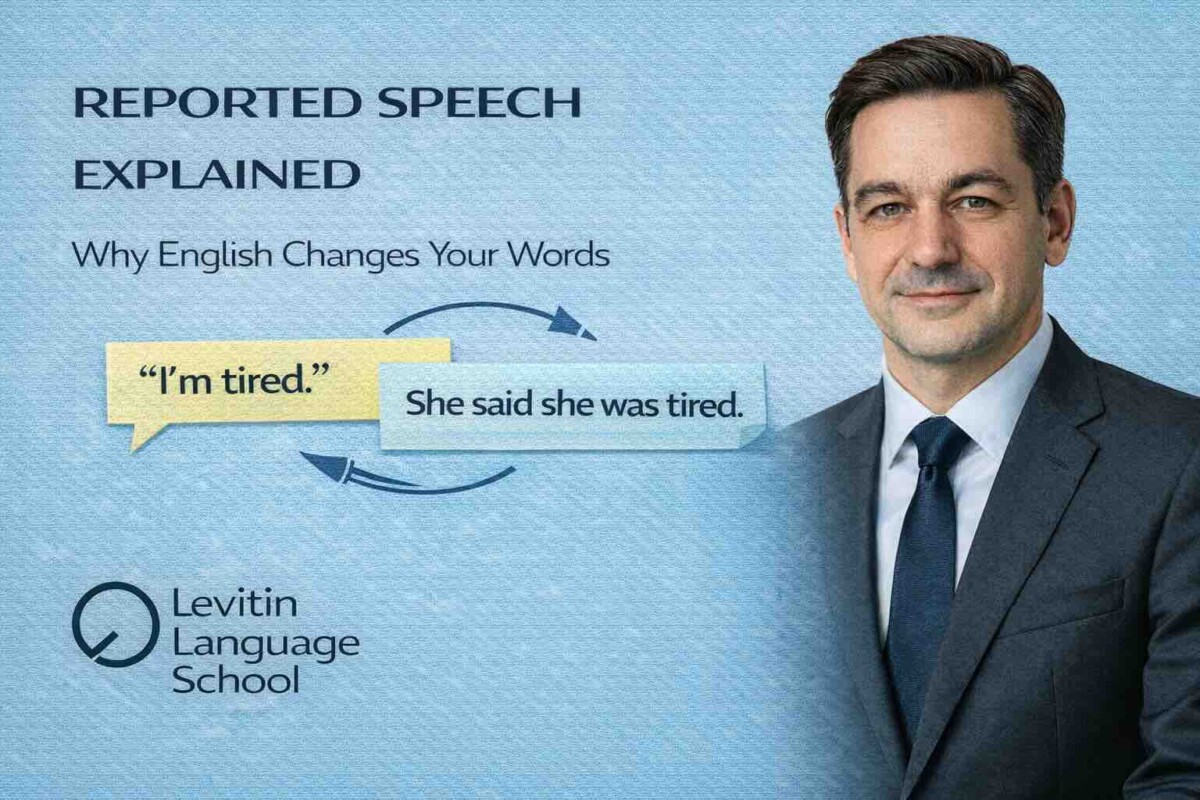
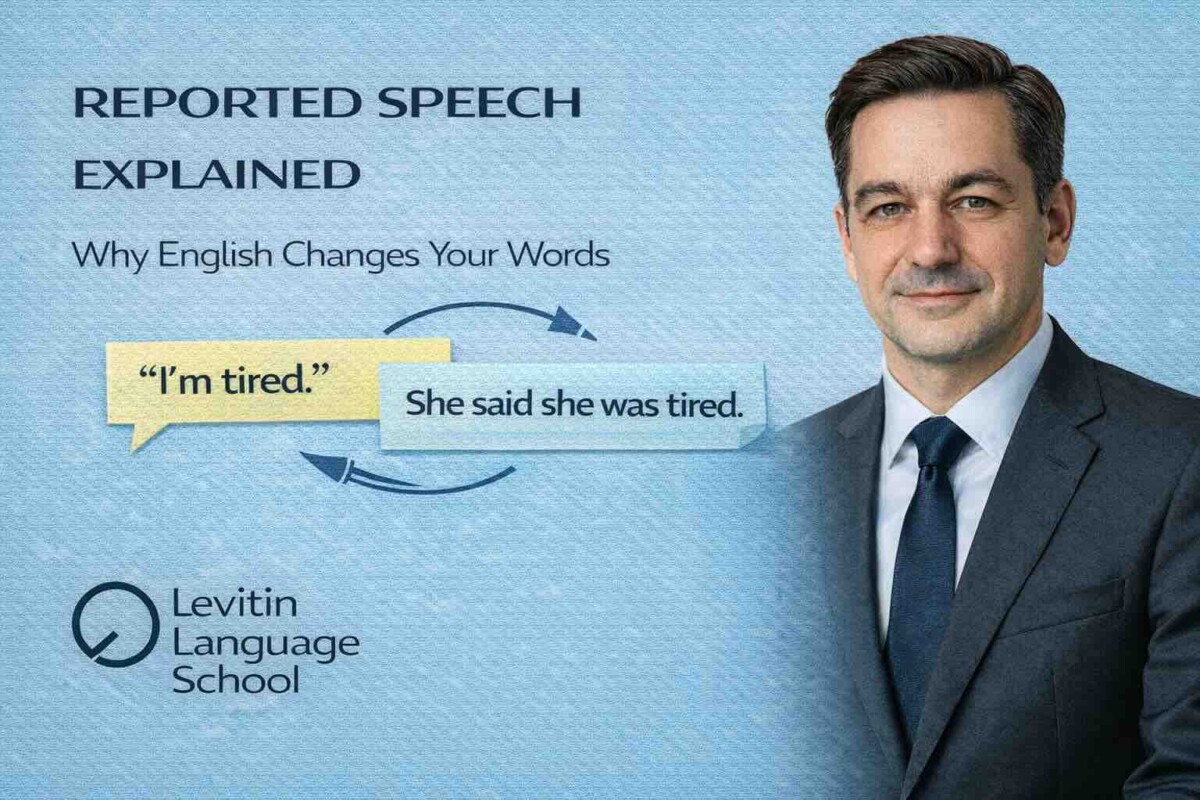
She said:
“I am tired.”
The sentence reflects her present reality.
The time frame belongs to the original speaker.
Reported Speech Belongs to the Narrator
When you report that sentence, the situation changes.
You are now the narrator.
She said she was tired.
The sentence is no longer inside her moment.
It is now inside yours.
That shift is why English adjusts tense.
Why Tense Often Moves Back
When we report something from a past moment,
the statement aligns with that moment.
“I am tired.”
She said she was tired.
This is called backshift.
But the shift does not happen because of a rule.
It happens because the speaker is reporting
from a different temporal position.
When Backshift Is Not Necessary
Not everything belongs to the past.
Sometimes the information is still true.
She said she lives in Berlin.
Both versions can exist:
She said she lived in Berlin.
She said she lives in Berlin.
The choice depends on whether the situation still applies.
Grammar follows reality.
Pronouns Also Change Perspective
Direct:
“I will call you.”
Reported:
He said he would call me.
Pronouns adjust because perspective changes.
Reported speech reorganizes the entire sentence around the narrator.
Time Expressions Also Move
Now becomes then.
Today becomes that day.
Tomorrow becomes the next day.
These changes are not mechanical.
They reflect the distance between the original moment
and the reporting moment.
Questions in Reported Speech
Direct:
“Where are you going?”
Reported:
She asked where I was going.
Two things change:
- Word order returns to statement structure
- The tense aligns with the reporting frame
Again — perspective.
Commands and Requests
Direct:
“Close the door.”
Reported:
He told me to close the door.
Or:
He asked me to close the door.
English shifts from quotation
to instruction structure.
Why Reported Speech Matters
Without it, communication becomes rigid.
In real life we constantly report:
- conversations
- instructions
- news
- explanations
Reported speech allows language to move through time and people.
Final Insight
Reported speech is not just grammar.
It is narrative control.
Direct speech captures a moment.
Reported speech reorganizes that moment
from a new point of view.
English changes the structure
because perspective has changed.
And once you understand that,
reported speech stops feeling mechanical.
It becomes storytelling.
Author: Tymur Levitin
Founder & Director, Levitin Language School
Global Learning. Personal Approach.
© Tymur Levitin