
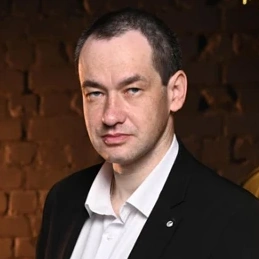
Author’s Column by Tymur Levitin
Language. Identity. Choice. Meaning.
“Politeness is not in the phrase. It’s in the power dynamic.”
— Tymur Levitin
Most students believe they understand thank you.
They can translate it.
They can pronounce it.
They use it daily.
And yet — they often don’t understand what it really does in a conversation.
This article is not about vocabulary.
It is about hierarchy, distance, tone, and emotional positioning.
“Thank You” Is Not About Gratitude
Let’s start with something uncomfortable:
“Thank you” is sometimes a boundary.
Not warmth.
Not appreciation.
Not kindness.
A boundary.
Compare:
- Thank you for your opinion.
- Thank you. That will be all.
- Thank you for explaining.
In professional English, this often signals closure.
The conversation is over. The hierarchy is clear.
Now listen to it with a different tone:
- Thank you so much — that really helped.
- Thank you, I truly appreciate it.
Same words. Different emotional temperature.
The phrase does not carry the meaning.
The speaker does.
Why “Thanks” Feels Different
“Thanks” is lighter. Faster. Less formal.
But that does not automatically mean warmer.
- Thanks.
- Thanks.
- Thanks…
One can be friendly.
One can be irritated.
One can mean: “I didn’t need that.”
Students often ask me:
“So which one is more polite?”
That’s the wrong question.
The correct question is:
What relationship exists between the speakers?
Politeness in English is relational, not grammatical.
“Thanks a Lot” — The Dangerous Middle
This phrase is unstable.
It can mean:
- Deep appreciation
- Mild gratitude
- Open sarcasm
- Passive aggression
All depending on:
- Intonation
- Facial expression
- Timing
- Context
Spoken warmly:
“Thanks a lot — you saved me.”
Spoken flat:
“Oh. Thanks a lot.”
Same structure. Opposite meaning.
That is why students who “lived in Britain” sometimes still misunderstand conversations.
They learned the words.
They did not decode the emotional coding system.
Let’s Step Outside English
Now compare:
- Ukrainian: Я тобі дякую
- Russian: Спасибо
- Ukrainian: Дякую
At first glance — simple equivalents.
But culturally, they behave differently.
In Ukrainian, “Дякую” can sound direct, warm, or even intimate depending on tone.
In Russian, “Спасибо” can be neutral, formal, or dry — and sometimes used ironically.
And then we have:
- Я тебе кохаю (Ukrainian — romantic, deep, intimate)
- Я тебя люблю (Russian — broader emotional range)
Translate both as I love you — and something disappears.
Not grammar.
Context.
Cultural weight.
Emotional territory.
Why Native Speakers Cannot Explain This
Ask a native speaker:
“What’s the difference between thank you and thanks?”
Most will say:
“It depends.”
They are not being evasive.
They are describing fluency.
Fluency is unconscious pattern recognition.
Students, however, need conscious decoding first.
That is where teaching becomes intellectual work.
The Real Problem With Immersion
Immersion gives exposure.
But exposure without analysis produces imitation — not understanding.
Students learn:
- how something sounds
- when people say it
- how often it appears
But they rarely ask:
- what emotional role it plays
- what hierarchy it signals
- what distance it creates
- what it hides
Language is not just sound.
It is social choreography.

What We Actually Teach
At Levitin Language School, we do not teach phrases as fixed units.
We teach students to notice:
- emotional pressure inside a word
- tone shifts inside the same sentence
- boundaries disguised as politeness
- warmth disguised as neutrality
Because saying “thank you” correctly is easy.
Understanding when it means:
- appreciation
- dismissal
- distance
- irony
- closure
- soft rejection
—that requires awareness.
And awareness is what separates fluency from mimicry.
Words You Know — Meanings You Don’t
This article continues the series exploring how familiar expressions behave differently across cultures and contexts.
Because language is never just vocabulary.
It is positioning.
It is power.
It is intention.
And if you don’t see that — you only speak the surface.
Author: Tymur Levitin
Founder & Director, Levitin Language School
Global Learning. Personal Approach.
© Tymur Levitin. All rights reserved.