
Language. Identity. Faith. Understanding.
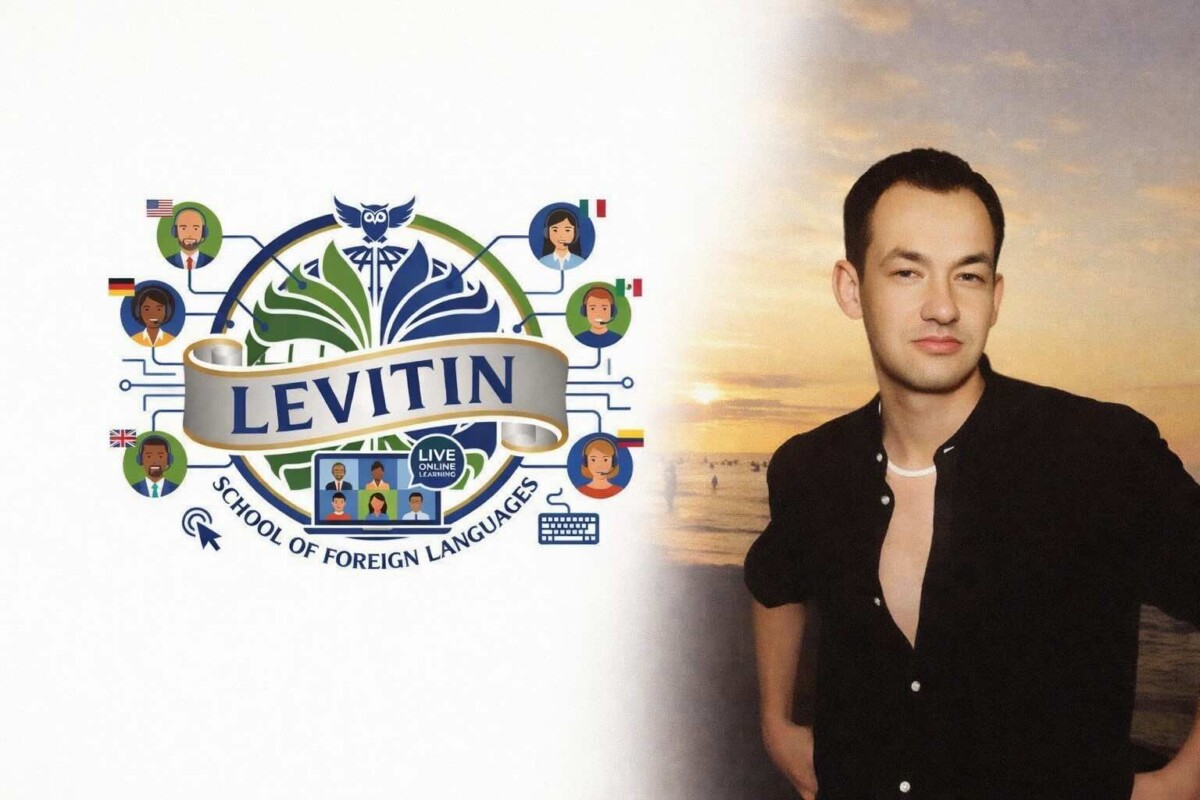
🌍 Author’s Column by Tymur Levitin — Founder and Director of Levitin Language School / Language Learnings
🔗 Choose your language: https://levitintymur.com/#languages
There’s a scene in a film:
a man stands at sunset, whispering a prayer.
To someone who doesn’t know his world, it may look like a farewell — a man walking toward death.
To someone who does, it’s just Maghrib — the evening prayer, a quiet thank-you for the day that’s ending.
Five times a day, Muslims pray — not to die, but to live consciously.
And yet, for a viewer outside that culture, a moment of peace can look like a moment of war.
That’s what happens when we don’t understand the language behind the words.
Faith has its grammar.
Culture has its syntax.
And translation without context is like speaking without meaning.
🕋 When a prayer becomes a stereotype
Maghrib, the prayer at sunset, isn’t about dying — it’s about completion, gratitude, reflection.
But films, headlines, and even classroom examples often strip it of its meaning, turning a sacred act into a cinematic signal.
A bowed head — and we think “martyr.”
Raised hands — and we think “extremist.”
That’s not translation.
That’s projection.
✋ It’s not just about Arabic. It’s about awareness.
Every language hides small cultural traps.
In Japan, silence can mean respect.
In Germany, it can mean disapproval.
In the Middle East, it may simply mean reflection.
Words, gestures, rituals — they all form a grammar of culture.
To learn a language is to step into that grammar — and to unlearn your own assumptions.
🌅 When we teach language, we teach perception
As a teacher, I’ve seen how students can master tenses and vocabulary —
and still fail to understand people.
Because understanding doesn’t start with grammar.
It starts with humility.
When you stop trying to fit someone’s world into your own words —
you begin to see what words were meant to do in the first place:
to connect, not to divide.
💬 Final thought
When you say “I understand,” you don’t just mean “I know the word.”
You mean:
I see where you come from.
I know what your silence means.
I hear your prayer — and I don’t mistake it for war.
That’s not religion.
That’s humanity.
And that’s where real language learning begins.
📘 Author: Tymur Levitin — Founder, Director, and Head Teacher at Levitin Language School / Language Learnings.
🔗 https://levitintymur.com/
🔗 https://languagelearnings.com
🎧 Global Learning. Personal Approach.
© Tymur Levitin, Levitin Language School