Before choosing a language, explore all available options here:
Levitin Language School — Choose Your Language
Most people think language learning is about memory.
It is not.
That misunderstanding alone destroys years of effort for millions of students.
People buy grammar books, memorize vocabulary lists, complete exercises, watch videos, install apps, repeat phrases, and still cannot speak naturally when real communication begins.
Not because they are lazy.
Not because they are “bad at languages.”
But because they train the wrong mental process from the very beginning.
The real problem is simple:
Most students are trying to store a language instead of processing it.
And those are completely different things.
Your Brain Was Never Designed to Speak Through Translation
One of the biggest mistakes in language learning is the belief that speaking works like this:
- Think in your native language
- Translate mentally
- Apply grammar rules
- Search for vocabulary
- Build the sentence
- Speak
That is not communication.
That is cognitive overload.
Real speech happens too quickly for that system to survive under pressure.
This is why students often say:
- “I understand English, but I cannot speak.”
- “I know the rules, but I freeze.”
- “I understand movies, but I panic in conversations.”
- “I know the word, but I cannot remember it when speaking.”
The issue is not intelligence.
The issue is processing speed.
Language is not a school subject inside the brain.
Language is a reaction system.
And reactions cannot depend on conscious translation every time.
This is also why many intelligent students struggle more than expected.
They try to build perfect sentences before speaking instead of learning how to react naturally in real time.
That is one of the reasons why grammar knowledge alone rarely creates fluency.
Related reading:
Fluency Is Not Perfect Grammar
Many students secretly believe that fluency means:
- speaking without mistakes,
- remembering every rule,
- knowing advanced vocabulary,
- sounding like a native speaker.
But real fluency is much simpler.
Fluency means:
your brain stops collapsing under real-time communication pressure.
That is why some people with “worse grammar” speak more freely than students who studied for years.
Because speech and grammar are not identical skills.
Grammar is important.
But grammar is a tool — not the engine itself.
You do not learn to drive by memorizing the structure of an engine.
You learn by driving.
The same happens with language.
The Real “Hack” Behind Language Learning
Most internet “language hacks” are nonsense.
“Watch Netflix.”
“Listen while sleeping.”
“Learn 1000 words in one week.”
“Become fluent in 30 days.”
Real language learning does not work like magic.
But there is a real hack.
The real hack is this:
Your brain learns language faster when it stops treating language as isolated information.
Language becomes easier when it becomes:
- predictable,
- situational,
- emotional,
- visual,
- repetitive,
- meaningful,
- automatic.
This changes everything.
For example, students often memorize words separately:
- table
- chair
- window
- door
But the brain remembers situations far better than isolated data.
Now compare that to:
“I opened the window because the room was hot.”
Suddenly the word is connected to:
- action,
- logic,
- context,
- emotion,
- physical imagination.
That is how the brain naturally builds language.
Not through dead lists.
But through living patterns.
Why Translation Slows You Down
Mental translation is one of the biggest hidden obstacles in language learning.
Not because translation itself is evil.
But because constant translation creates delay.
Your brain becomes dependent on an extra step.
Imagine trying to play football while mentally translating every movement before running.
Impossible.
Speech works similarly.
At some point, the brain must begin connecting:
- situations,
- intentions,
- reactions,
- emotions,
- patterns
directly to the target language.
That is where real progress begins.
This is why many students suddenly improve after enough exposure to repeated situations.
Not because they “learned more rules.”
But because their brain finally stopped translating every second.
Related reading:
Why Fear Blocks Speech
Many students think fear is emotional weakness.
Usually, it is cognitive overload.
The brain freezes because too many processes happen simultaneously:
- translation,
- grammar monitoring,
- vocabulary search,
- pronunciation control,
- fear of mistakes,
- social pressure.
That system crashes easily.
Especially in intelligent adults.
Children often progress faster not because they are “better learners,” but because they tolerate imperfection more naturally.
Adults try to control everything consciously.
But real communication is too fast for complete conscious control.
That is why overthinking destroys speaking speed.
Related reading:
Automatic Speech Is Built, Not Gifted
Many people believe that some students simply “have talent.”
In reality, automatic speech is usually built through repeated meaningful exposure.
The brain automates what it encounters repeatedly under understandable conditions.
That means:
- repeated sentence structures,
- repeated conversational situations,
- repeated emotional patterns,
- repeated reactions,
- repeated associations.
This is why random vocabulary memorization often fails.
And this is why structured communication works far better than chaos.
Language learning is not about memorizing infinite information.
It is about building fast mental pathways.
The Brain Learns Meaning Faster Than Rules
One of the biggest misunderstandings in traditional education is the idea that rules create communication.
In reality, communication usually creates understanding of rules.
This is why students sometimes use grammar correctly before they can explain it.
Their brain recognizes patterns first.
The explanation comes later.
This is normal.
Human language existed long before grammar textbooks.
Meaning came first.
Rules came afterward.
That does not mean grammar is unnecessary.
It means grammar works best when attached to real communication.
Language Learning Is Mental Restructuring
This is the part many schools never explain.
Learning a language is not adding information to your brain.
It is partially rebuilding the way your brain processes meaning.
That is why real progress sometimes feels uncomfortable.
Your brain is adapting to:
- new structures,
- new word order,
- new reactions,
- new social patterns,
- new emotional signals,
- new ways of organizing thought itself.
This is especially visible when learning languages with very different structures.
Your brain is not simply “learning words.”
It is learning a new system of interpreting reality.
And that process cannot be reduced to memorization alone.

The Real Goal Is Not Perfection
The real goal is not speaking perfectly.
The real goal is:
understanding quickly,
reacting naturally,
and communicating meaningfully.
That is where confidence comes from.
Not from memorizing another grammar table.
But from feeling that the language finally starts moving automatically instead of mechanically.
That is the moment students stop “studying English” and start actually using it.
And that changes everything.
If you want to learn languages through understanding instead of memorization, explore:
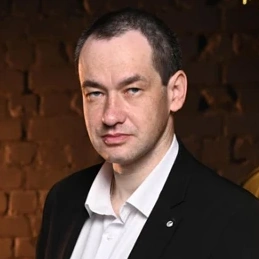
Author’s Column by Tymur Levitin
Founder, Director, and Lead Teacher at Levitin Language School
Global Learning. Personal Approach.
© Tymur Levitin
Telegram: @START_SCHOOL_TYMUR_LEVITIN
WhatsApp / Viber: +380 93 291 34 29


