
Many years of teaching have convinced me of one uncomfortable truth.
A large number of people believe they cannot speak English.
But very often English is not the real problem.
The real problem is that they struggle to express themselves in any language.
That may sound harsh.
It is not meant to be.
It is simply an observation.
The Question I Often Ask
When a student tells me:
“I cannot speak English.”
I often ask a different question:
“How talkative are you in your native language?”
The answer is surprisingly revealing.
Some people immediately start telling stories.
They describe situations.
They share opinions.
They ask questions.
They argue.
They laugh.
They react.
Others give one-word answers.
Even in their native language.
Even about topics they know well.
Even when they feel comfortable.
At that point, the issue is no longer English.
The issue is communication itself.
A Foreign Language Does Not Create a Personality
Many students secretly believe that learning a foreign language will transform them.
They imagine becoming more confident, more interesting, more social, more expressive.
Sometimes it happens.
But not because of the language.
The language is only a tool.
A microphone does not create a singer.
A camera does not create an actor.
And English does not create a communicator.
It amplifies what is already there.
A curious person becomes curious in English.
A humorous person becomes humorous in German.
A thoughtful person becomes thoughtful in Spanish.
And a silent person often remains silent in every language.
The Problem Is Not Vocabulary
I have met students who knew thousands of words.
Their grammar was good.
Their pronunciation was acceptable.
Yet conversations with them lasted thirty seconds.
Not because they lacked language.
Because they lacked thoughts they wanted to share.
Then I have met students whose English was far from perfect.
Their grammar contained mistakes.
Their vocabulary was limited.
But they could speak for twenty minutes about a football match, a family trip, a business idea, a neighbour, a film, a memory from childhood, or a problem they wanted to solve.
Who was communicating better?
The answer is obvious.
Language Begins Before Language
People often ask:
“How can I improve my speaking?”
My answer is sometimes unexpected.
Start speaking more in your native language.
Tell stories.
Ask questions.
Explain your opinions.
Describe what you see.
Discuss books.
Discuss films.
Discuss life.
Learn to organize thoughts.
Learn to connect ideas.
Learn to react.
A foreign language becomes much easier when your mind already knows how to build conversations.
Why Some Teenagers Speak Better Than Adults
One of the biggest surprises in teaching is that age often means very little.
I have met sixteen-year-olds capable of discussing complex ideas, emotions, relationships, politics, culture, and personal responsibility.
I have also met adults twice their age who struggle to move beyond:
“Everything is fine.”
“Normal.”
“I don’t know.”
The difference is not intelligence.
The difference is practice.
Some people spend years thinking, observing, questioning, and discussing.
Others do not.
Language simply reveals the difference.
Speaking Is Not About Words
Many people believe conversation is built from vocabulary.
I disagree.
Conversation is built from curiosity.
Words help.
Grammar helps.
Pronunciation helps.
But curiosity creates speech.
If you genuinely want to understand people, share experiences, solve problems, tell stories, or explore ideas, language becomes a vehicle.
If you do not, even perfect grammar will not save the conversation.

The Best Speakers Are Not Always The Best Students
This is another lesson many people find surprising.
The student with the highest test score is not always the student who speaks best.
Sometimes the strongest speaker is the one who says:
“I’m not sure how to say it, but let me try.”
That sentence alone creates more language growth than ten minutes of silence spent searching for perfection.
Communication rewards courage.
Not perfection.
A Thought Worth Remembering
Whenever a student tells me:
“I can’t speak English.”
I quietly wonder:
“How much do you speak when English is not involved?”
Because a foreign language does not invent thoughts.
It gives your thoughts another voice.
And if you learn to express yourself in one language, you can learn to express yourself in another.
The journey starts long before the first English sentence.
It starts with having something to say.
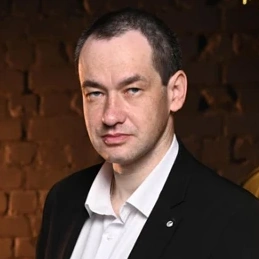
Author: Tymur Levitin — Founder & Director, Levitin Language School / Language Learnings
Language. Identity. Choice. Meaning.
https://levitintymur.com/
https://languagelearnings.com/
© Tymur Levitin