
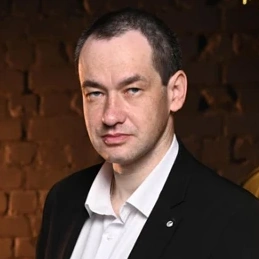
“Progress is not when you know more.
Progress is when you need less time to think.”
— Tymur Levitin
Most students come into language learning with a simple expectation:
If I study enough, I will improve.
It sounds obvious. Logical. Almost guaranteed.
But after weeks or months, many start asking a different question:
“Why do I feel like I know more — but still can’t speak?”
This is the moment where confusion begins.
And it happens because most people have never been shown
what real progress actually looks like.
Progress Is Not Information
You can learn new words every day.
You can study grammar for hours.
You can complete exercises without mistakes.
And still not move forward.
Because language is not measured by how much you know.
It is measured by how quickly and naturally you can use what you know.
That difference changes everything.
The First Illusion: “I Understand Everything”
Many students reach a stage where they can read and understand quite a lot.
They listen — and recognize familiar words.
They read — and follow the meaning.
It feels like progress.
But when they try to speak, something stops them.
Why?
Because recognition is passive.
Speaking is active.
Understanding a language is not the same as operating inside it.
The Second Illusion: “I Need More Grammar”
When speech feels difficult, many students go back to grammar.
They believe they are missing rules.
So they study more.
They review structures.
They try to “fix the gaps.”
But in many cases, the problem is not grammar.
It is processing speed.
The brain is still translating.
Still searching.
Still building sentences step by step.
And real communication does not wait.
Real Progress Is Speed and Stability
At a certain point, progress stops looking like learning
and starts looking like reaction.
You hear — and understand immediately.
You think — and the sentence appears.
You respond — without building it piece by piece.
That is real progress.
Not perfection.
Not complexity.
But clarity without delay.
The Shift No One Talks About
There is a moment in language learning that most systems ignore.
It is the moment when the student stops asking:
“Is this correct?”
And starts asking:
“Does this express what I mean?”
This shift changes everything.
Because now the focus is not on rules —
but on meaning.
And meaning is what language was built for.
Mistakes Do Not Block Progress
Many students believe they must eliminate mistakes before they can move forward.
This belief slows them down.
In reality, mistakes are part of the process of building speed.
A student who speaks and corrects will always move faster
than a student who waits to be perfect.
Because fluency is not built on accuracy alone.
It is built on movement.

At Levitin Language School, We Track What Actually Matters
We do not measure progress by pages completed or rules memorized.
We look at:
- how quickly a student reacts
- how naturally they build sentences
- how confidently they express ideas
- how little they rely on translation
Because these are the real indicators of development.
Not theoretical knowledge.
But functional ability.
Progress Is Not Visible All the Time
One of the most difficult parts of learning is that progress is often invisible.
It accumulates quietly.
Until one day, the student suddenly realizes:
“I didn’t translate that.”
“I answered without thinking.”
“I understood immediately.”
That moment is not random.
It is the result of consistent, correctly directed work.
The Real Question Is Not “How Much Do You Know?”
The real question is:
“How easily can you use it?”
Because language is not a subject you pass.
It is a system you enter.
And once you are inside it,
progress no longer feels like effort.
It feels like freedom.
Written by Tymur Levitin
Founder and Director
Levitin Language School
Learn more:
🌐 https://levitintymur.com
🌐 https://languagelearnings.com
Telegram: @START_SCHOOL_TYMUR_LEVITIN
WhatsApp / Viber: +380 93 291 34 29
© Tymur Levitin