Category
The Tymur Levitin Method — Thinking Instead of Memorizing in Language Learning
Before a student learns a word, a tense or a grammar structure, something else happens first.
A human being enters the lesson.
Not a “client.”
Not a “user.”
Not a “unit in a system.”
A real person.
Someone tired after work.
Someone afraid to speak.
Someone preparing for immigration.
Someone who already spent years learning and still feels stuck.
Someone who can read but cannot answer.
Someone who understands grammar but freezes in conversation.
Someone trying to rebuild confidence after school, university, relocation or failure.
This is where a real lesson begins.
And this is exactly why a serious language lesson cannot be built like a factory template.
Why One System for Everyone Usually Fails
One of the biggest illusions in modern education is the idea that every student can be taught through the same structure.
The same textbook.
The same order.
The same pace.
The same explanation.
The same expectations.
It looks efficient on paper.
But language is not mathematics inside a machine.
Language is a reaction between thinking, memory, emotion, culture, fear, speed, personality and life experience.
Two students can technically have the same level — and require completely different lessons.
One needs structure.
Another needs freedom.
One needs repetition.
Another needs challenge.
One needs calm.
Another needs pressure.
One must first stop being afraid of mistakes.
Another must stop overthinking every sentence.
A teacher who ignores this does not teach a language.
He teaches a system.
And systems often fail real people.
A Language Is Never Separate From Life
At Levitin Language School and the U.S. branch Language Learnings, we do not begin with “Which textbook?”
We begin with another question:
“Who is the person in front of us?”
Because the goal changes everything.
English for relocation is not the same as English for IT.
German for life in Germany is not the same as German for Goethe exams.
A teenager after school burnout is not the same as a motivated adult learner.
A student preparing for engineering studies needs a different linguistic structure than someone learning for travel or relationships.
This is why our lessons are built around:
- the student’s real situation,
- psychological readiness,
- language background,
- learning history,
- speed of reaction,
- communication style,
- future plans,
- and even the way the person processes stress.
That is not “extra personalization.”
That is what real teaching actually is.
The Problem Is Often Not Grammar
Many students arrive believing they have a grammar problem.
In reality, they often have:
- a reaction problem,
- a confidence problem,
- a processing-speed problem,
- a fear-of-error problem,
- or years of mechanical learning without real communication.
A person may know hundreds of rules and still be unable to answer a simple question in real time.
Why?
Because recognition is not communication.
Understanding is not reaction.
Memorization is not speech.
This idea is central to the philosophy behind The Tymur Levitin Method — Thinking Instead of Memorizing in Language Learning.
The goal is not to create students who “know about the language.”
The goal is to create people who can actually use it.
Real Teaching Means Adaptation — Not Chaos
Some schools proudly say:
“We follow one clear program.”
But real teaching is not rigid repetition.
And adaptation is not disorder.
Strong teaching requires structure.
But structure must serve the person — not replace the person.
That means a professional teacher constantly adjusts:
- explanation depth,
- speaking pressure,
- correction style,
- lesson rhythm,
- vocabulary density,
- cognitive load,
- emotional intensity,
- and communication strategy.
Sometimes the best lesson is intensive speaking.
Sometimes the best lesson is slowing down and rebuilding confidence from zero.
Sometimes a student first needs to learn how to think calmly before learning how to speak quickly.
And this is normal.
Because people are not machines.
Why Students Often Stay Silent for Years
One of the most painful things in language education is this:
Good students often remain silent.
Not because they are lazy.
Not because they are unintelligent.
But because they were trained to avoid mistakes instead of learning how to communicate.
Many educational systems unconsciously teach fear.
Fear of incorrect grammar.
Fear of accents.
Fear of pauses.
Fear of sounding imperfect.
But real communication has never worked like that.
A living conversation is dynamic.
Messy.
Emotional.
Fast.
Human.
That is why many students need not only language practice —
but permission to speak again.
The Human Side of Teaching
A teacher is not only someone who explains grammar.
A real teacher also notices:
- exhaustion,
- hesitation,
- overload,
- silence,
- emotional shutdown,
- perfectionism,
- fear,
- and loss of motivation.
Sometimes the most important part of a lesson is not the rule itself.
Sometimes it is helping the student understand:
“You are not failing.
Your system simply never trained real communication.”
This changes everything.
Because shame blocks language faster than grammar ever will.
Why Online Learning Can Work Deeply — If It Is Real
People sometimes still imagine online lessons as something cold or impersonal.
But in reality, online education often removes unnecessary pressure.
A student learns:
- from home,
- from another country,
- after work,
- between responsibilities,
- inside real life.
And when the lesson is built correctly, the distance disappears very quickly.
Because human communication does not depend on the classroom walls.
It depends on attention, trust and intellectual honesty.
That is why modern online education can become deeply personal when the teacher actually sees the person behind the screen.
Language Is Also Identity
People rarely learn a language only for words.
Usually they are trying to build a new version of life.
A new career.
A new country.
A new confidence.
A new ability to think.
A new future.
That is why language learning is never only academic.
It is psychological.
Social.
Cultural.
Professional.
And sometimes deeply emotional.
A teacher who ignores this sees only vocabulary.
A teacher who understands this sees the person.
A Good Lesson Starts Before the First Word
The strongest lessons often begin long before grammar appears.
They begin when the student feels:
- respected,
- understood,
- safe enough to speak,
- and intellectually taken seriously.
Because people learn faster when they stop defending themselves psychologically.
And that is one of the central ideas behind our educational philosophy at Levitin Language School and Language Learnings:
A language is learned most effectively when the student remains a human being — not a template.

Learn Languages Through Real Communication
Choose your language and learning direction:
You can also explore related materials:
Watch the Short Podcast Version
Read This Article in Other Languages
- German (Deutsch): Ein guter Unterricht beginnt mit einem echten Menschen
- Ukrainian (Українська): Хороший урок починається з живої людини
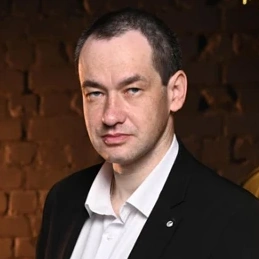
Author: Tymur Levitin — Founder & Director, Levitin Language School / Language Learnings
Global Learning. Personal Approach.
Levitin Language School
Language Learnings
Telegram:
English Online | Tymur Levitin
German Online | Tymur Levitin
TikTok:
International TikTok
Facebook Community:
Levitin Language School Community
© Tymur Levitin


