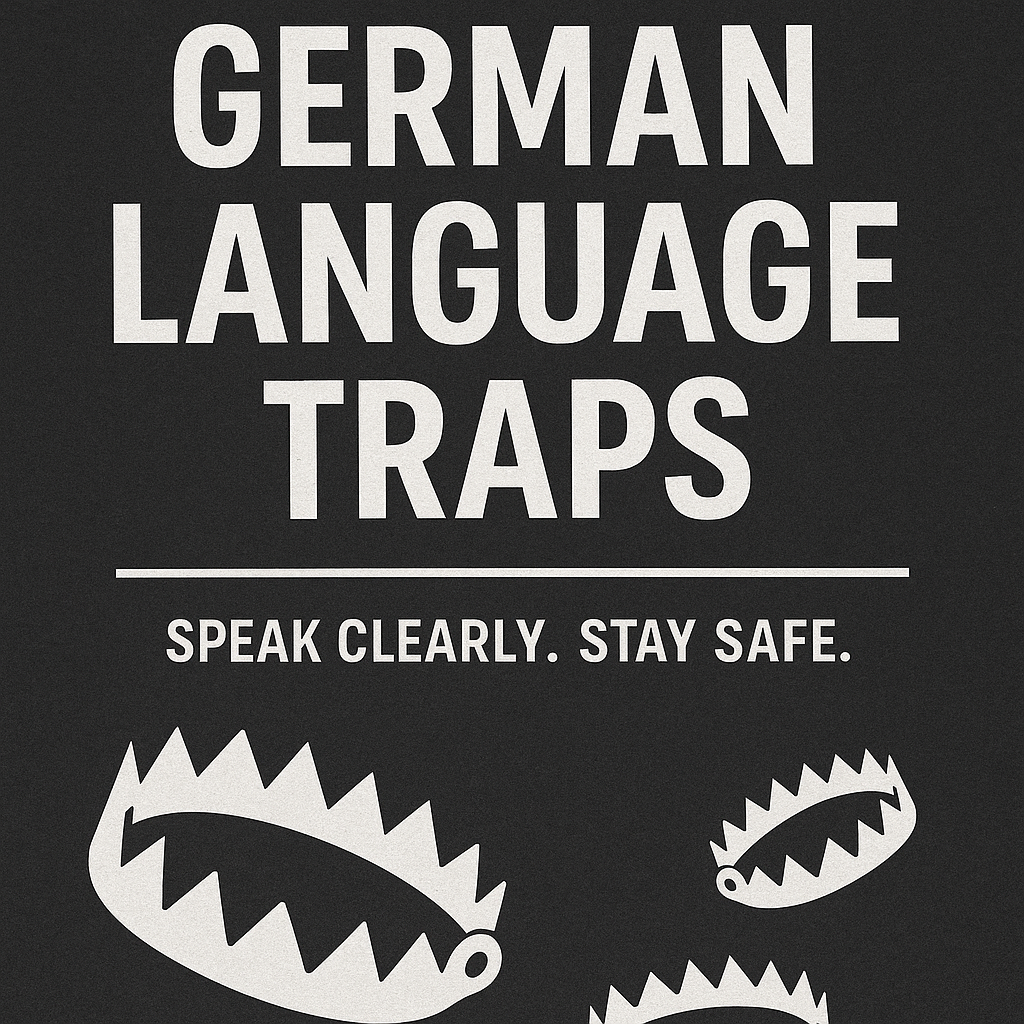


Is it a mistake to be careful?
In many languages, caution is often seen as hesitation. Being careful can be interpreted as being afraid, indecisive, or slow. But in German, it’s different.
The word „Vorsicht“ doesn’t carry negative weight. In fact, it is often seen as a strength.
In German:
- Vorsicht! is a common warning — and a sign of responsibility.
- Mit Vorsicht handeln means acting with care — not fear.
- Vorsichtig sein implies awareness — not weakness.
Caution is not fear
For many language learners, the problem comes from false friends. Words like “careful,” “anxious,” or “hesitant” in English — or осторожный in Russian — often feel emotionally loaded. But in German, Vorsicht is a neutral, even positive trait.
Being vorsichtig can save your job, your money — and your reputation.
In the German mindset, being cautious means thinking first, speaking later.
It’s not a flaw. It’s emotional intelligence.
Cultural misunderstandings happen fast
One student once asked me:
“Why did my German colleague say I was careless when I just acted fast?”
Because in many German workplaces:
- Acting fast without reflection = dangerous.
- Acting with Vorsicht = professional.
This doesn’t mean you have to be passive.
But understanding what the culture values is essential to avoid misunderstanding.
Vorsicht ≠ Angst
It’s important to make a distinction:
| German Word | Meaning | Perception |
|---|---|---|
| Vorsicht | Caution, attentiveness | Positive/neutral |
| Angst | Fear, anxiety | Negative/emotional |
| Zögern | Hesitation, delay | Often negative |
So when you say:
- Ich bin vorsichtig — it means “I’m careful” in a good way.
- Ich habe Angst — that’s about being afraid, which can be misunderstood.
Language is more than words
When learning German, it’s not enough to translate literally.
You need to understand the cultural meaning behind words like:
- Vorsicht (caution)
- Verantwortung (responsibility)
- Zuverlässigkeit (reliability)
- Gründlichkeit (thoroughness)
These aren’t just values — they’re linguistic codes.
Caution is not a mistake. It’s a skill.
At Levitin Language School, we teach more than grammar.
We help you understand what your words actually mean — in the culture you’re speaking to.
Because real language learning isn’t just vocabulary.
It’s mindset.
🔗 Related reading from our blog:
- German Ends with -ung, But What Does It Mean?
- Üben ist nicht Arbeiten: Why Practicing Is Not the Same as Working
- Stille vs Stil: When Silence and Style Sound the Same
- The Quiet Code: Introduction to “The Language I Live”
🖋 Author’s Column — The Language I Live
Language. Identity. Choice. Meaning.
📍 Tymur Levitin — founder, teacher, and translator
🔗 https://levitintymur.com
© Tymur Levitin