
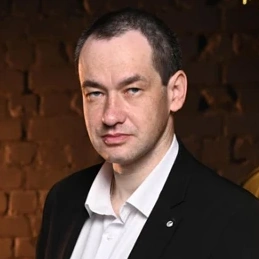
Author’s Column by Tymur Levitin
Language. Identity. Choice. Meaning.
© Tymur Levitin
What teachers rarely say out loud
There is a very specific moment I have learned to notice during lessons.
A student who used to speak calmly suddenly begins speaking quickly.
At first glance, it looks like improvement.
More words. More sentences. More energy.
But after many years of teaching, I learned something counterintuitive:
When a learner suddenly speeds up, it is very often not development.
It is tension.
Not linguistic tension.
Psychological tension.
The hidden signal teachers recognize
Students themselves usually interpret this moment as success:
“I’m finally speaking more.”
“I’m less shy now.”
“I’m getting fluent.”
But what I often observe is different.
Fast speech frequently appears when a learner is trying to avoid evaluation.
They start talking quickly because they don’t want the teacher to interrupt.
They hope that if the sentence keeps moving, mistakes won’t be noticed.
Speed becomes a shield.
The fear behind fast speech
Most learners are not afraid of grammar.
They are afraid of exposure.
Language lessons create a very unusual psychological situation:
you must express thoughts while knowing your tools are incomplete.
This produces a specific type of anxiety:
not fear of being wrong —
fear of being seen struggling.
So the student unconsciously changes behavior:
Instead of constructing meaning → they perform activity.
Talking replaces communicating.
Why this slows learning
Here is the paradox:
The moment a student starts speaking faster to look better
is the moment learning becomes slower.
Why?
Because learning requires three processes:
- noticing a mistake
- understanding why it happened
- rebuilding the structure
Fast speech blocks all three.
The teacher cannot intervene.
The student cannot observe themselves.
Reflection disappears.
The lesson becomes performance.
A lesson that becomes a monologue
In such situations, teachers often hear long answers that sound impressive but contain:
repeated structures,
safe vocabulary,
avoided grammar,
circumvented meanings.
The student is not expanding language.
They are protecting territory.
Instead of learning new forms, they rotate familiar ones.
Progress stops — but confidence illusion grows.
Why pauses are necessary for growth
Real learning requires a moment that students dislike:
silence.
Silence is where awareness appears.
When a learner stops and says:
“Wait… I don’t know how to say this.”
That is not failure.
That is the beginning of language acquisition.
Because now the brain is searching for structure, not memorized fragments.
The difference between activity and development
Many educational systems reward activity.
Talk more.
Answer quickly.
React immediately.
But language ability does not grow from reaction speed.
It grows from:
- noticing patterns
- testing hypotheses
- correcting oneself
These processes cannot happen at high speed.
Thinking needs time.

What actually indicates progress
After years of observation, I learned a simple diagnostic rule:
A developing student does not speak faster.
They speak more precisely.
You start hearing:
shorter sentences,
better word choice,
self-corrections,
controlled pauses.
They may even appear less fluent for a while.
But they are becoming more competent.
The real role of the teacher
A teacher’s job is not to make students talk more.
It is to make them aware of what they are doing while talking.
Sometimes that means slowing them down.
Because learning does not happen when language flows effortlessly.
Learning happens when the learner notices the gap between intention and expression.
Final thought
Fast speech often protects the ego.
Slow speech builds the mind.
One hides insecurity.
The other creates ability.
Fluency is not measured by how long you can talk without stopping.
Fluency begins the moment you are not afraid to stop.
—
Tymur Levitin
Founder & Director
Levitin Language School
© Tymur Levitin — All rights reserved.