
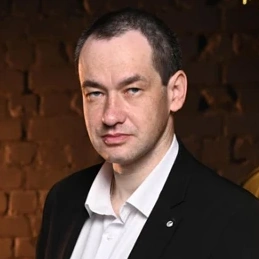
Thinking, Responsibility, and the Real Nature of Careful Language
Category
The Language of Responsibility
The Misunderstood Moment Before a Sentence
In many conversations there is a brief moment that people rarely notice.
Someone is asked a question.
The room becomes quiet.
The person pauses before answering.
For some listeners, that pause feels uncomfortable. It can be interpreted as uncertainty, lack of knowledge, or hesitation.
Yet in many cases the opposite is true.
Very often the people who hesitate for a moment before speaking are the ones who take language most seriously.
They are not searching for words because they have nothing to say.
They are deciding which words deserve to be said.
This difference is fundamental.
Speech is not simply the act of producing sentences. It is the act of choosing consequences.
And intelligent speakers are often aware of this.
Fast Speech Is Not the Same as Clear Thinking
Modern communication culture rewards speed.
Quick answers look confident.
Immediate reactions feel decisive.
Rapid speech creates the impression of competence.
But speed and thinking are not the same thing.
A fast response often means that the answer was prepared before the question was even finished. In such cases the speaker is not responding to the actual situation. They are simply repeating something that already existed in their mind.
True thinking rarely happens at that speed.
When a person actually considers what they are about to say — its meaning, its implications, and its accuracy — a pause naturally appears.
That pause is not a failure of communication.
It is evidence that thinking is taking place.
The Difference Between Hesitation and Uncertainty
Many people confuse hesitation with uncertainty.
They assume that a confident speaker always answers immediately.
In reality, hesitation can come from two very different sources.
The first kind is uncertainty.
A person does not know what to say and struggles to find an answer.
The second kind is responsibility.
A person knows that once a statement is made, it becomes part of reality.
Thoughtful speakers often pause because they understand that language has consequences.
Words shape expectations.
They define agreements.
They create interpretations that may last long after the conversation ends.
When someone understands this, they rarely treat speech lightly.
The Pressure to Speak Without Thinking
In many environments — professional, social, and even academic — people feel pressure to answer immediately.
Silence can be interpreted as weakness.
A pause can be mistaken for confusion.
As a result, many people learn to speak quickly even when they have not fully understood their own position.
This habit creates an illusion of competence, but it also creates fragile communication. Statements are made before they are examined. Promises appear before their implications are understood.
Over time, conversations become filled with words that nobody fully stands behind.
Responsible language works differently.
It accepts that a moment of silence may be necessary before a meaningful sentence can appear.

When Thinking Becomes Visible
One of the most interesting aspects of thoughtful communication is that thinking sometimes becomes visible.
You can see it in a person’s expression.
You can hear it in the rhythm of their speech.
There is a short pause, followed by a sentence that feels precise and intentional.
Listeners often recognize this instinctively.
Even if the speaker does not raise their voice or use dramatic language, their words carry weight because they were not produced automatically.
They were considered.
The Quiet Strength of Measured Speech
Measured speech is not slow speech.
It is speech that respects the distance between thought and expression.
It allows a person to verify their own position before presenting it to others.
In such communication, hesitation is not a weakness.
It is a form of intellectual discipline.
The speaker is not racing to fill the silence.
They are making sure that the sentence they produce is worth hearing.
In a world that increasingly values speed, this discipline has become rare.
But when it appears, people notice it immediately.
Because careful language has a quality that hurried language rarely achieves.
It sounds intentional.
Tymur Levitin
Founder & Senior Teacher
Levitin Language School
© Tymur Levitin