
How Real Language Exists Between Words
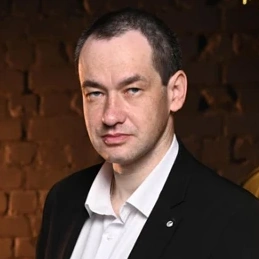
Author’s Column | Tymur Levitin on Language, Meaning and Respect
When Nothing Is Said — But Everything Is Clear
There are moments in communication when nothing is stated directly —
and yet nothing needs to be explained.
No one says:
- I understand
- It’s over
- This has changed
And still — both people know.
Not because of the words.
But because of everything around them.
Choose your language
What We Think Language Is
Most people learn language as if it were built from clear elements:
- words
- grammar
- structures
- rules
You combine them — and meaning appears.
At least, that’s the idea.
But real communication doesn’t work that way.
What Actually Carries Meaning
In real life, meaning is often not in what is said.
It’s in:
- what is not said
- what is softened
- what is avoided
- what is left unfinished
And most importantly:
👉 what both people already understand without naming it
Why Words Become Secondary
At a certain point, words stop being tools.
They become signals.
Not to explain —
but to confirm.
A phrase is not there to introduce meaning.
It’s there to acknowledge something that already exists.
How This Was Already There — In Every Line
If you look back, every phrase we examined carried more than its literal meaning:
- I just want to be with you → not about time
- there’s little love left → not one meaning, but two
- we’re tired → not a state, but a process
- you don’t hear me → not about hearing
- I’m not asking you to stay → not a request, but a position
None of them say everything directly.
But each of them points to something that doesn’t need to be said aloud.
Why This Cannot Be Taught as a Rule
There is no grammar structure for this.
No list.
No pattern.
No exercise.
You cannot learn:
- how to leave something unsaid
- how to recognize what is already understood
- how to speak without explaining
And yet — this is exactly what makes speech real.
Russian — English — Spanish: The Same Silence, Different Forms
Every language has ways to approach this.
English often tries to clarify.
Spanish tends to express.
Russian allows more to remain between the lines.
But none of them can fully formalize it.
Because this is not a linguistic system.
It is a human one.
When Language Stops Explaining
At some point, communication changes direction.
Not toward more words —
but toward fewer.
Not toward clarity —
but toward recognition.
And what matters is no longer:
- what you say
but:
👉 whether the other person already knows

Related Reading
- I’m Not Asking You to Stay
Final Thought
Real language does not always explain.
It often… assumes.
Not carelessly.
But precisely.
Because when something is already shared between two people,
saying it directly can make it weaker — not clearer.
And the highest level of communication is not the ability to say everything.
It is the ability to say just enough —
and be understood completely.
Author: Tymur Levitin — Founder & Director, Levitin Language School / Language Learnings
© Tymur Levitin
📩 Telegram: @START_SCHOOL_TYMUR_LEVITIN
📞 WhatsApp / Viber: +380 93 291 34 29