
Why Real Language Stops Demanding — And Starts Letting Go
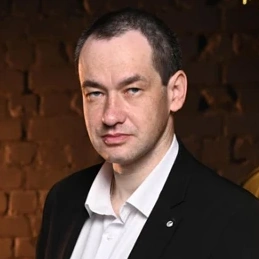
Author’s Column | Tymur Levitin on Language, Meaning and Respect
When the Most Important Words Are Not Said
There is a moment in language that rarely gets noticed.
Not when people argue.
Not when they explain.
Not even when they confess.
But when they stop asking.
Not because they don’t care —
but because they already understand.
Choose your language
https://levitintymur.com/#languages
What Disappears First
In most languages, relationships are expressed through direct forms:
- Stay with me
- Don’t go
- Listen to me
- Talk to me
These are clear.
They are active.
They try to change something.
But there is another stage —
when these sentences disappear.
Not replaced.
Just… gone.
Not Silence — But Something Else
At first glance, it may look like silence.
But it isn’t.
Because something is still being said —
just not directly.
Instead of:
- stay
you hear:
I just want to be with you… for a little while
Instead of:
- don’t leave
you hear:
even if there’s little love left
Instead of:
- listen to me
you hear:
even if you don’t hear me today
And none of these are requests.
What Has Changed
This is where language shifts from action to awareness.
The speaker no longer tries to:
- convince
- control
- correct
Because something has already been understood:
👉 what is happening cannot be fixed by words
Why English Pushes You Back to Demands
English tends to bring you back to clarity:
- Do you want to stay?
- Why don’t you listen?
- Are we still together?
These questions aim for resolution.
But real situations are not always resolved.
Sometimes, they are simply… recognized.
What Russian Allows Instead
Russian gives space for something else:
👉 speech without pressure
You can say something that:
- contains understanding
- contains distance
- contains acceptance
without explicitly stating any of it.
No:
- I accept it
- I understand
- I’m letting go
And yet — all of it is there.
What Makes This Language Adult
This is not the language of someone trying to win.
It is the language of someone who has already stopped competing.
Not because they gave up.
But because they see clearly.
The Hardest Part to Translate
You can translate every word.
But you cannot easily translate:
- the absence of demand
- the quiet shift from asking to knowing
- the moment when language stops pushing
Because this is not grammar.
It is a change in position.

Related Reading
Final Thought
At some point, language stops trying to change reality.
It begins to reflect it.
Not loudly.
Not clearly.
But honestly.
And the most important shift is not in what we say.
It is in what we stop asking for.
Author: Tymur Levitin — Founder & Director, Levitin Language School / Language Learnings
© Tymur Levitin
📩 Telegram: @START_SCHOOL_TYMUR_LEVITIN
📞 WhatsApp / Viber: +380 93 291 34 29