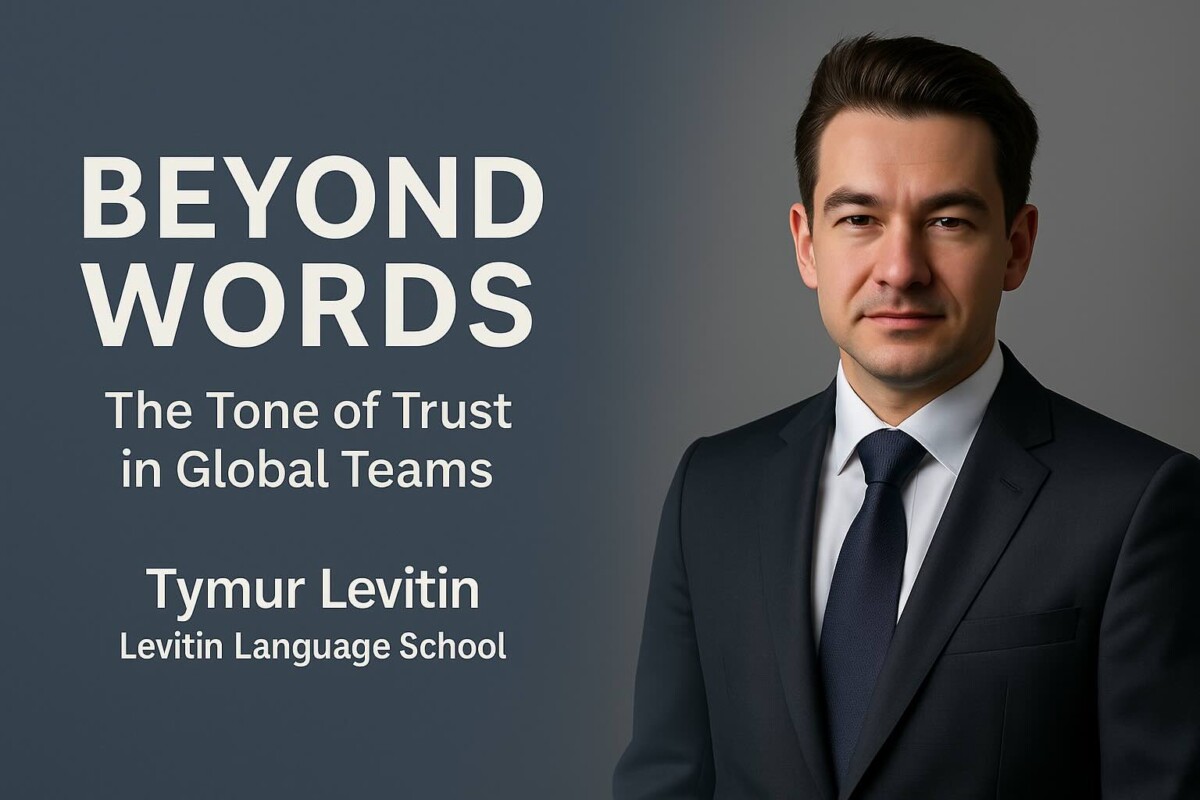

“People may forget what you said — but they will never forget how you made them feel.”
— Maya Angelou
Why Trust Is a Tone, Not a Promise
In global business, trust is not built by what you say — but by how you sound.
People don’t listen only to words. They listen to intention, energy, and rhythm.
A sentence like “I understand” can mean support, irritation, or disinterest — depending on tone.
And in international communication, this difference defines success or failure.
Words open doors.
Tone keeps them open.
The Invisible Part of Communication
Every language has a hidden layer: tone, pace, rhythm, silence.
That is where trust lives.
- Speak too fast — and you sound nervous.
- Speak too slow — and you seem unsure.
- Speak too formally — and you lose warmth.
- Speak too casually — and you lose respect.
The art of leadership in any language is to balance clarity with humanity.
Cultural Voices of Trust
🇬🇧 British Restraint
Trust is built through polite distance.
Calm tone, soft vocabulary, and quiet confidence signal respect.
Too much enthusiasm may sound artificial.
🇺🇸 American Enthusiasm
Trust comes from energy and optimism.
Phrases like “Absolutely!”, “That’s a great idea!” show engagement and drive.
But for other cultures, this can feel exaggerated — or insincere if overused.
🇩🇪 German Precision
Trust grows through structure and predictability.
A clear, firm tone communicates reliability.
Germans rarely use emotional intonation — and that’s how they express seriousness.
🇺🇦 Ukrainian Sincerity
Trust is human.
Warm tone, emotional openness, and involvement are seen as signs of authenticity.
When Ukrainians switch to English, this sincerity must stay — but in a more concise form.
🇷🇺 Russian Seriousness
Trust is earned through consistency and stability.
Calm, deliberate tone shows control and competence.
In English, this seriousness needs softening to avoid sounding distant or authoritarian.
The Sound of Leadership
A leader’s voice is not measured in volume — but in presence.
In English, calm means confident.
A quiet, balanced tone shows maturity and focus.
The vocabulary of trust includes:
appreciate, support, align, understand, together.
These are not just words — they are emotional connectors.
Building the Tone of Trust Online
In virtual communication, tone becomes even more important:
emails, Zoom calls, Slack messages — all lack physical presence.
How to create trust at a distance:
- Acknowledge — “Thank you for sharing this.”
- Respond quickly — silence feels like disinterest.
- Use warmth — “I really appreciate your effort.”
- End with connection — “Looking forward to our next step.”
Your digital tone defines your digital reputation.
Final Words: The Voice You Build
Trust doesn’t start with words.
It starts with tone — the emotional grammar of leadership.
Words build ideas.
Tone builds relationships.
If your tone is right,
you don’t need to prove your credibility — people will feel it.
✍️ Author: Tymur Levitin
Founder, director, and senior teacher at Levitin Language School
Start Language School by Tymur Levitin
© Tymur Levitin. All rights reserved.
Author’s development by Tymur Levitin — founder, director, and senior teacher of Levitin Language School.

Recommended Articles
- Translating Leadership: Why Great Managers Sound Different in English
- When Silence Speaks: The Language of What You Don’t Say
- The Tone Problem: How International Business Goes Wrong Over One Sentence


