

Levitin Language School | Career and Language Skills
Why “Business English” Often Fails (and How to Make It Work)
Everyone talks about Business English like it’s a magic formula:
“Learn formal phrases, memorize some vocabulary, add a polite ending — done.”
But in real life, it’s not that simple.
Business English is not about how your letter looks.
It’s about what you say — and whether the other side actually understands and responds.
What Most People Get Wrong About Business English
Many students believe Business English is about:
- fancy words (“kindly be advised…”),
- flawless grammar,
- and fixed templates.
What they really need is:
- clarity,
- logic,
- and precision.
A polished message with zero meaning helps no one.
Real Story: Simplicity Wins
“When I worked in a company years ago, my senior colleague wrote a perfectly formal letter. It looked good — polite, structured, professional.
But the reply was unclear. No one knew what they wanted from us.
So I rewrote the message: simpler words, clearer focus. Maybe less elegant, but more real. The result? A direct response with specific actions.
That’s when I understood:
❝Business English isn’t about sounding smart — it’s about getting things done.❞— Tymur Levitin, founder of Levitin Language School
Step One: Know What You Need It For
Before you learn “Business English,” ask yourself:
- Do I need it for emails?
- For Zoom calls?
- For contracts or negotiations?
- For internal meetings or sales pitches?
Because the English used by an HR manager, a startup founder, and a logistics officer — it’s not the same language.
Format Is Easy. Your Thinking Is What Matters.
📑 Printed Style vs Indented Style?
This is purely formatting:
- Printed Style – block style, no paragraph indents.
- Indented Style – traditional paragraph indents.
It’s about visuals — not language. Choose one, and move on.
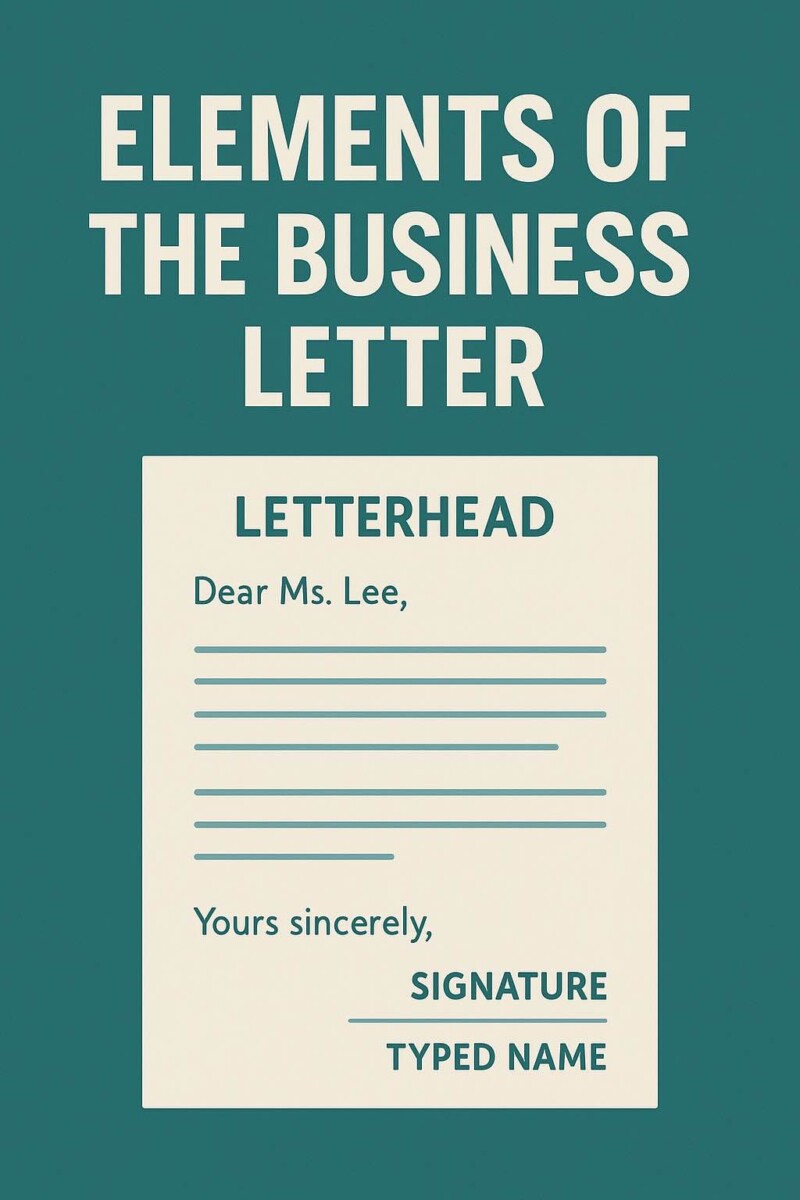
✉️ Headers and Closings: Memorized in an Hour
These are universal:
- Dear Sir or Madam, Yours faithfully
- Dear Mr./Ms. Smith, Best regards
You can learn them quickly. What takes time is this:
How do you express disagreement? Suggest alternatives? Stay polite but firm?
That’s where Business English becomes your English.
Professional Forms of Address: Keep It Simple (and Safe)
| Situation | Best Practice |
|---|---|
| You know the name and gender | Mr. / Ms. + Last Name |
| You know the name but not gender | Full Name only: “Dear Alex Morgan” |
| You don’t know who’s reading | Dear Sir or Madam |
| You write to a department | Dear Team / Dear Colleagues |
| You’re replying to a legal rep | Use Esq. only if they signed that way |
| Someone asks to be called Mx. | Use it — but only in response |
🔹 Middle names are almost never used in business letters. Just skip them.
“Formal” Doesn’t Mean “Complicated”
You were probably taught that “we are in receipt of your message” is polite.
Here’s the truth: it’s confusing and outdated.
| ❌ Don’t write this | ✅ Write this instead |
|---|---|
| We are in receipt of your request. | We received your request. |
| Kindly be advised that… | Please note that… |
| Enclosed herewith… | I’ve attached… |
| Pursuant to our conversation… | As we discussed… |
| In reference to your recent inquiry… | Regarding your message… |
Business communication is not a courtroom. You don’t need legalese — you need clarity.
Grammar: Use It to Be Precise, Not Perfect
- “We have considered your offer” ≠ “We are considering it.”
- “The issue has been resolved” ≠ “It was resolved.”
Grammar matters because time and logic matter.
It’s not about showing off — it’s about not being misunderstood.
How to Actually Learn Business English (The Right Way)
📘 1. Read articles in your field
Choose 3–5 relevant blog posts, reports, or case studies.
🧠 2. Analyze and translate them
Try to understand why certain words and phrases were used.
💬 3. Speak about them
Discuss the topics with a tutor or peer. Practice saying what you think.
🧾 4. Write like a human
Don’t copy templates. Say what you mean — then adjust it for tone.
📚 5. Build your vocabulary through use, not memorization
You don’t need 1000 words.
You need 30 that you can actually use in a sentence.
Final Words: Say What You Mean. Politely.
Business English is not a special dialect.
It’s just clear, professional communication.
You don’t have to sound like a machine. You just need to be understood — and respected.
✍️ Author: Tymur Levitin
Founder, director, and senior teacher at Levitin Language School
Start Language School by Tymur Levitin
“Speak free. Learn smart.”
© Tymur Levitin. All rights reserved.
🔗 Related Articles:
- Job Interviews in Another Language
- Best Online Language School for Busy Adults
- Why a Real Online Language School Builds Confidence Faster Than Apps
🔗 Contacts & Communities
Join us:
🌍 Main Website
🇺🇸 US Website
📢 Telegram News Channel
👥 Facebook Group
📌 Instagram by region:
- USA: @tymurlevitin
- Canada/Israel: @englishdeutschtimurlevitin
- Ukraine: @startschool.by.tymur.levitin
- Europe: @startschool.eu
💬 Messenger contacts:
- WhatsApp/Viber: +380 93 291 34 29
- Telegram: @START_SCHOOL_TYMUR_LEVITIN


