
Language. Identity. Choice. Meaning.
👉 Choose your language
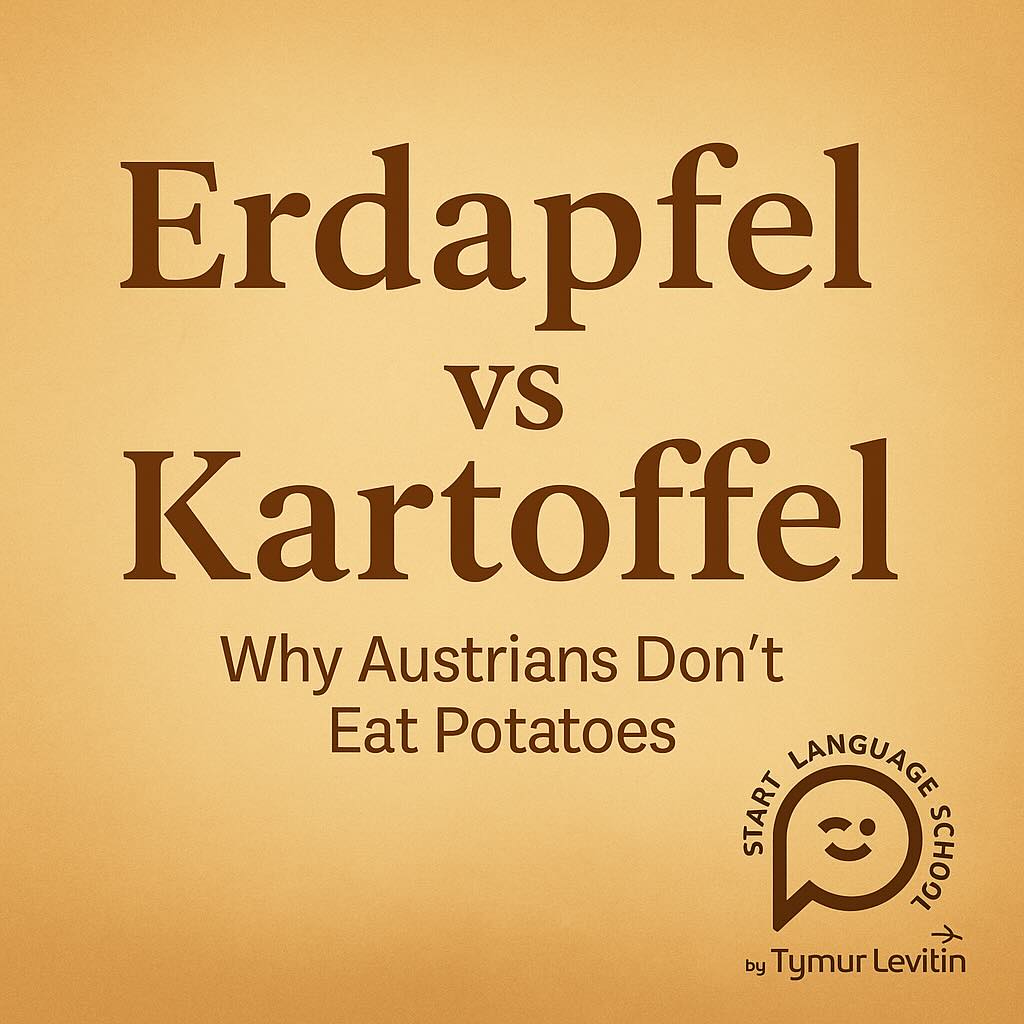
Two Words, One Vegetable
In Germany, the humble potato is a Kartoffel.
In Austria, it is an Erdapfel — literally, an “earth apple.”
Same food, different name. For learners, this is not just vocabulary, but a cultural code.
Why the Difference?
- Kartoffel comes from Italian tartufolo (truffle).
- Erdapfel comes from older German tradition: naming exotic tubers as “apples of the earth.”
So Germans borrowed from the south, Austrians stuck with their own imagery.
What Austrians Actually Hear
If you say Kartoffel in Vienna, nobody will misunderstand — but you’ll sound “northern” or “German.”
If you say Erdapfel, you sound local, natural, and 100% Austrian.
Mini Dialogues
In Germany:
— Was gibt’s zum Abendessen?
— Bratkartoffeln.
In Austria:
— Was gibt’s zum Abendessen?
— Erdäpfel mit Butter.
Beyond Potatoes
This is part of a bigger pattern: Austria often keeps older, imagery-rich words, while Germany adopts newer or borrowed ones.
Think Marille vs Aprikose (apricot), Paradeiser vs Tomate (tomato).
Cross-Language Echoes
- English: potato (via Spanish patata).
- French: pomme de terre (earth apple) — exactly like Erdapfel.
- Dutch: aardappel — same idea: earth + apple.
Conclusion
Erdapfel vs Kartoffel is not just about food. It shows how German splits regionally:
- Austria: imagery, tradition.
- Germany: borrowed terms.
For learners: both words mean “potato,” but using the right one signals cultural belonging.
🔗 Related articles
Series: Regional German
👤 Author: Tymur Levitin — founder, director & lead teacher, Levitin Language School
© Tymur Levitin, Levitin Language School


