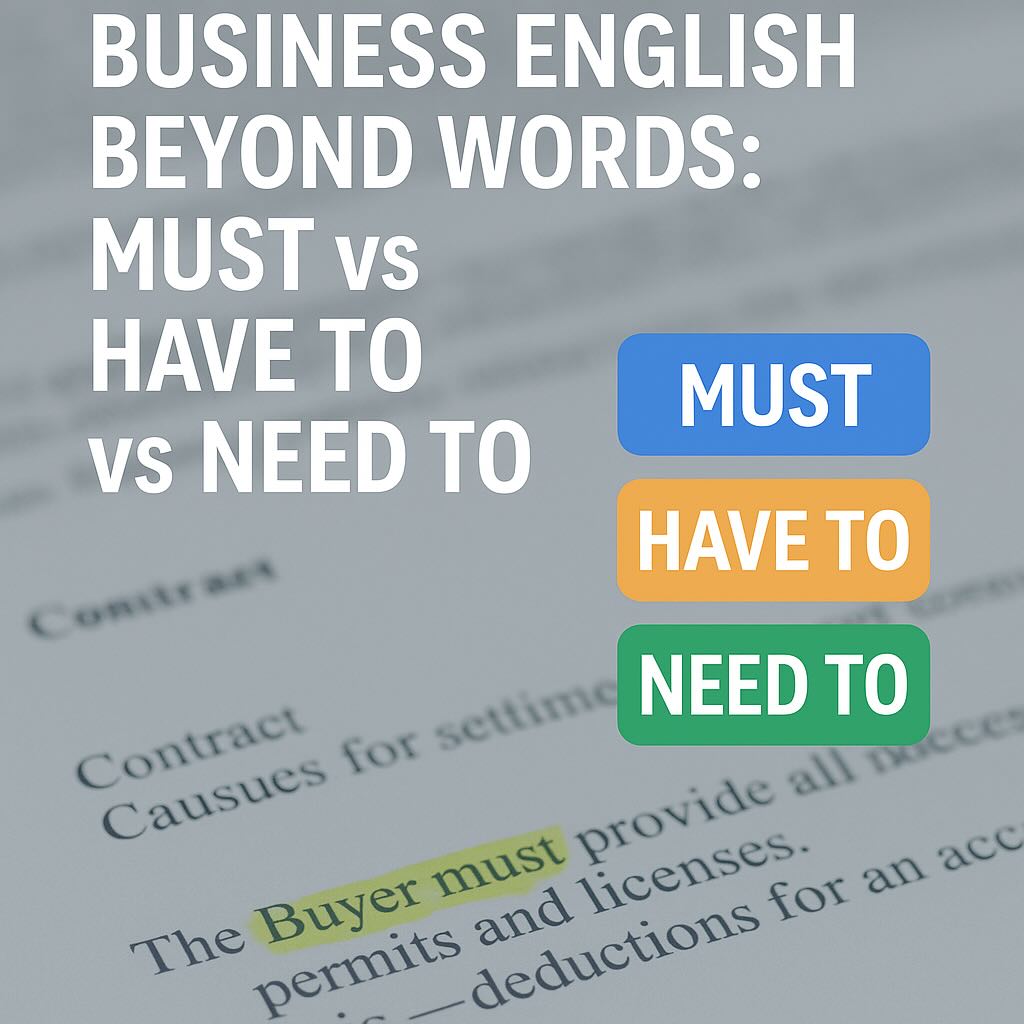

MUST vs HAVE TO vs NEED TO in Business English: Obligation or Necessity?
In business communication, obligations and necessities are everywhere: contracts, negotiations, presentations, emails. But English offers several ways to express them — must, have to, need to.
At first glance, they seem interchangeable. In reality, each carries a different weight. Misusing them can weaken a contract clause, change the tone of an email, or create the wrong impression in negotiations.
1) The Core Differences
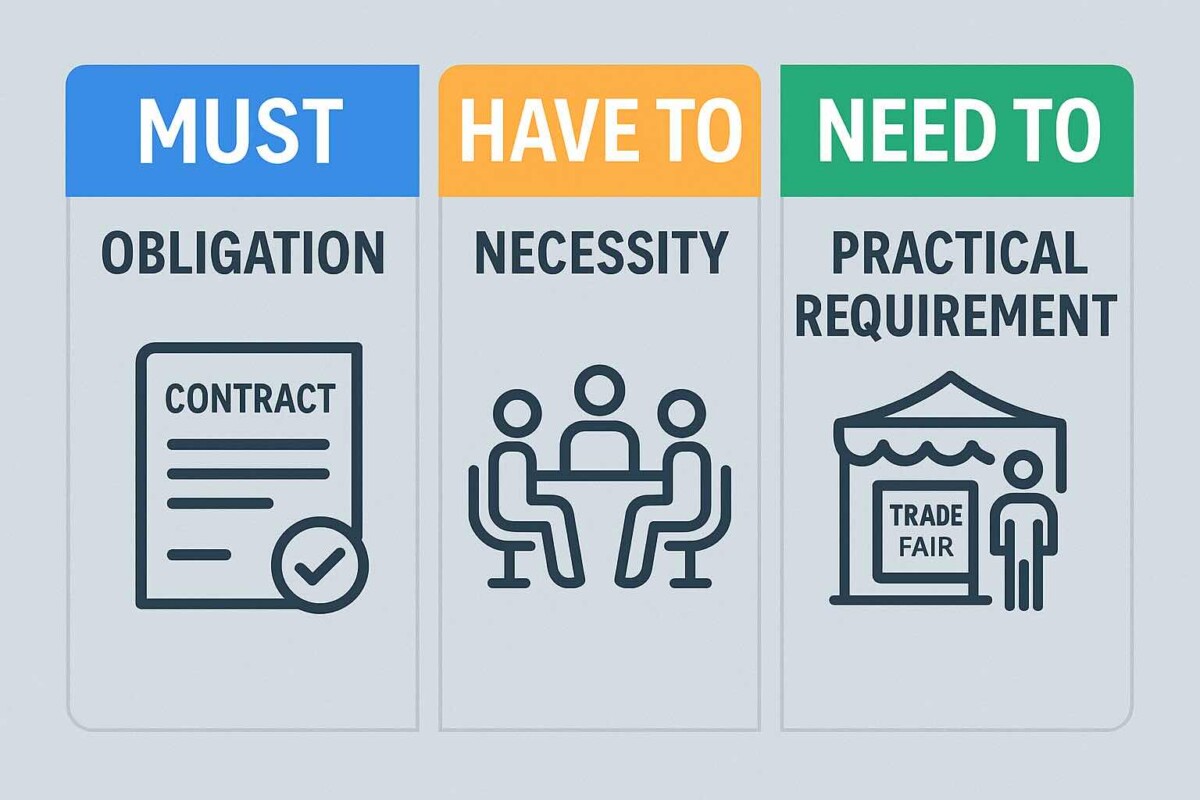
MUST — formal duty, rule, strong obligation
- Employees must comply with confidentiality requirements.
- Ukrainian: Співробітники зобов’язані дотримуватись вимог конфіденційності.
- Russian: Сотрудники обязаны соблюдать требования конфиденциальности.
Use must when:
- obligations are imposed by law, contract, or authority,
- you want maximum clarity and force.
HAVE TO — external necessity, circumstances force it
- We have to adjust the delivery schedule due to new regulations.
- Ukrainian: Ми повинні змінити графік поставки через нові норми.
- Russian: Мы должны изменить график поставки из-за новых норм.
Use have to when:
- circumstances, not authority, impose the need,
- in spoken or neutral business communication.
NEED TO — practical requirement, less formal
- You need to register online before attending the trade fair.
- Ukrainian: Вам потрібно зареєструватися онлайн перед виставкою.
- Russian: Вам нужно зарегистрироваться онлайн перед выставкой.
Use need to when:
- pointing out practical steps,
- giving instructions in customer-facing or softer contexts.
2) In Contracts and Legal English
- MUST is now widely preferred in modern drafting to express obligations. It is clear, enforceable, and avoids the ambiguity of shall.
- HAVE TO almost never appears in contracts — it sounds circumstantial, not binding.
- NEED TO is too weak for legal drafting; it suggests recommendation, not obligation.
🔎 Example:
- The Buyer must pay the Price within 30 days.
- UA: Покупець зобов’язаний сплатити Ціну протягом 30 днів.
- RU: Покупатель обязан уплатить Цену в течение 30 дней.
❌ Wrong in a contract: The Buyer has to pay… (sounds imposed by external factor, not by contract).
3) In Emails and Negotiations
- MUST → can sound too strict in emails:
- You must send the documents today → may sound like an order.
- HAVE TO → softer, situational:
- We have to finalize the report before the meeting.
- NEED TO → the most natural in polite requests:
- We need to reschedule the call.
💡 Tip: In negotiations, balance tone:
- Use must only for non-negotiables (compliance, deadlines).
- Use have to or need to to keep collaboration polite and open.
4) Typical Mistakes Professionals Make
- Overusing “must” in emails
- ❌ You must attend the meeting tomorrow.
- ✅ You need to attend the meeting tomorrow. (UA: Вам потрібно… / RU: Вам нужно…)
- Using “have to” in contracts
- ❌ The Supplier has to deliver the Goods by June 1.
- ✅ The Supplier must deliver the Goods by June 1.
- Weakening binding terms with “need to”
- ❌ The Tenant needs to pay rent by the 5th.
- ✅ The Tenant must pay rent by the 5th.
5) Translator’s Corner
- must → зобов’язаний (UA) / обязан (RU)
- have to → повинен (UA) / должен (RU)
- need to → потрібно (UA) / нужно (RU)
⚠️ Note: Ukrainian повинен and Russian должен can be used for both must and have to. Context decides. For clarity in contracts, translators often reserve зобов’язаний / обязан for must.
6) Quick Business Checklist
Before sending a contract, email, or presentation:
- Contract obligations? → use must.
- External conditions? → use have to.
- Practical, softer instruction? → use need to.
- Avoid mixing them randomly — it confuses tone and legal meaning.
Why This Matters
For a business leader, the difference between must, have to, and need to is not about grammar trivia. It’s about:
- signing a binding contract vs stating a condition,
- sounding diplomatic vs sounding authoritarian,
- building trust in cross-border negotiations.
🔗 Recommended Reading
- Shall in Business English: Obligation, Promise, or Nothing at All?
- English Conversation Practice: Overcome Fear and Speak with Confidence
- English for Job Interviews: How to Prepare
🌍 Learn with Us
👤 About the Author
Author’s profile: Tymur Levitin
Founder, Director, and Senior Teacher at Levitin Language School / Start Language School by Tymur Levitin
© Tymur Levitin


