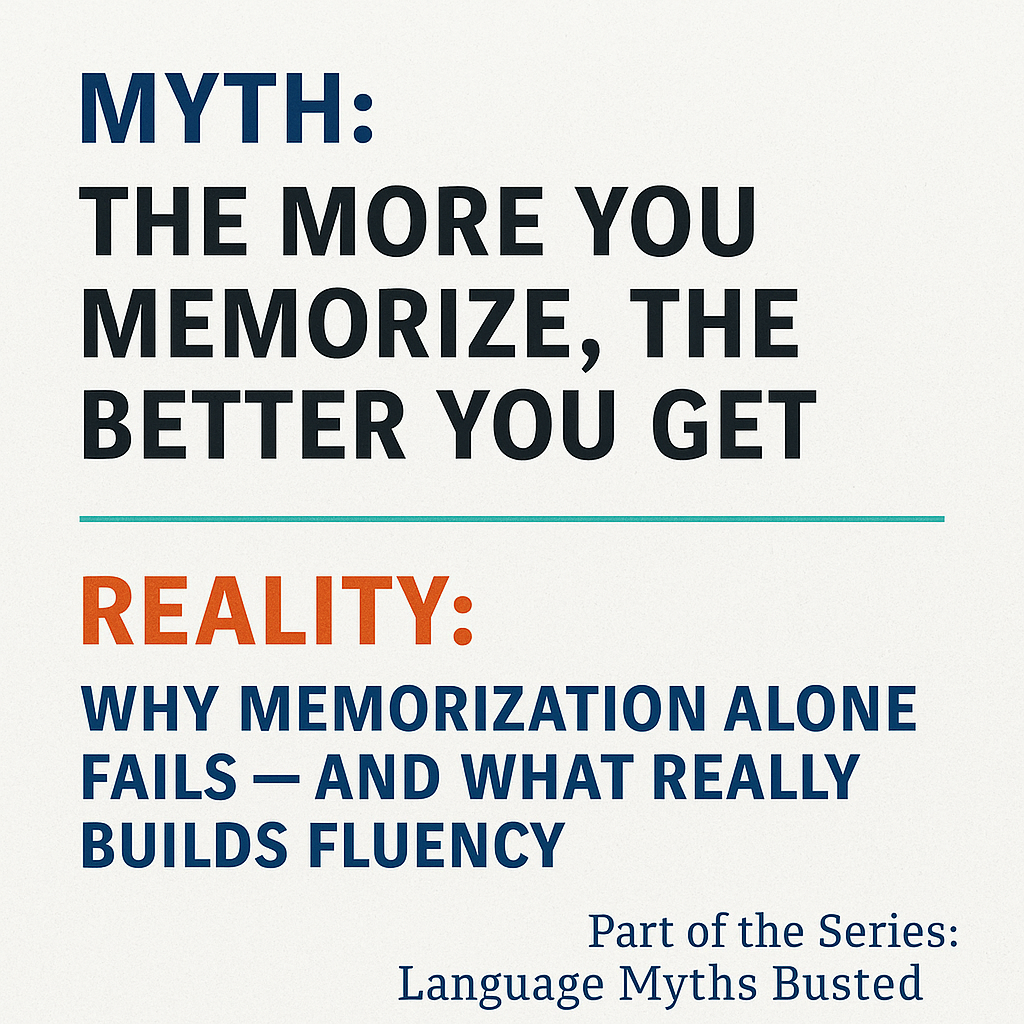

📌 The Truth Behind Memorization in Language Learning
At Levitin Language School, we often meet students who say:
“I’ve memorized all the grammar rules.”
“I know hundreds of words — why can’t I speak?”
They’ve worked hard. But they’re stuck. Why?
Because memorization is not understanding.
Language is not a list. It’s a living system of choices, intent, context, and identity.
What Memorization Can’t Give You
You can memorize:
- All 12 tenses in English
- 1000 most common words
- Every irregular verb
But you still might say:
- “I have 25 years” instead of “I’m 25 years old”
- “I very like it” instead of “I really like it”
- “I am agree” instead of “I agree”
Why?
Because these are not memory mistakes.
They’re thinking mistakes — rooted in native language structures.
And no amount of flashcards can change that.
Why Real Language Is About Logic, Not Memory
At our school, we teach:
Grammar is how people think.
Vocabulary is what people notice.
Sentence structure is how they connect ideas.
This means:
You don’t need to memorize thousands of words.
You need to see the logic behind them.
For example:
- “Should” is not the same as “must”
- “Could have” ≠ “would have”
- “I didn’t know” ≠ “If I had known”
All of these reflect mental distance, certainty, emotion, and choice — not grammar charts.
The Problem with Learning Like a Machine
Many learners treat language like programming:
“If I learn the code, I can speak.”
But human language is not code. It’s fluid. Emotional. Contextual.
Machines translate literally.
Humans translate intention.
That’s why we say at Levitin Language School:
Don’t copy sentences.
Create meanings.What to Do Instead
Here’s how we help students break the memorization myth:
- Learn patterns, not lists.
- See how native speakers build sentences from thought, not from rules.
- Question everything.
- Why this tense? Why that word? What if we changed it?
- Practice context.
- Speak with purpose. Listen for emotion. Read between the lines.
- Compare languages.
- Use your native language to find contrasts — not just translations.
Language Is Not About Perfection
We don’t aim for perfect memory.
We aim for meaningful communication.You can forget a word — and still be understood.
You can skip a rule — and still sound natural.But if you memorize blindly, you’ll never feel confident.
Final Thought: Learn to Think, Not Just to Remember
Language is not about storing information.
It’s about expressing who you are.That’s why our motto is:
Speak Free. Learn Smart.
And that’s why we say:
Forget memorization. Start understanding.
🧠 Series: Language Myths Busted
Explore more truths behind the most common language learning beliefs.
👤 Author: Tymur Levitin —
Founder and Senior Instructor at Levitin Language School
🔗 Meet the Author© Tymur Levitin
🔹 School: Start Language School by Tymur Levitin
🌍 https://levitintymur.com
🔗 Related Posts:


