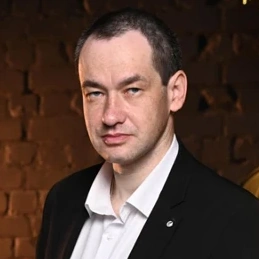
Author’s Column by Tymur Levitin
Series: Method by Tymur Levitin — Think, Understand, Doubt
Language. Identity. Choice. Meaning.
🌍 Choose your language
Your brain does not learn rules. It learns patterns.
Rules are what teachers explain after language already exists.
Patterns are how language actually works while you are using it.
This difference changes everything.
When you focus on rules, you try to remember.
When you focus on patterns, you begin to recognize.
And recognition is the real mechanism of fluency.
Why rules feel clear — but fail in real speech
Rules give the illusion of control.
They are:
- structured
- simplified
- easy to test
But real language is:
- dynamic
- contextual
- adaptive
A rule can be correct — and still useless in conversation.
Because in real speech, you don’t have time to recall.
You have time only to react.
And reaction is built on patterns.
Patterns are not memorized. They are absorbed
You don’t consciously learn patterns.
You encounter them — again and again — in slightly different forms.
Your brain starts noticing:
- what comes next
- what sounds natural
- what “fits” and what doesn’t
This is not intellectual.
This is neurological.
The moment a pattern is internalized,
you stop constructing sentences — and start producing them.
Why learners get stuck between knowledge and speech
This is the most common plateau.
You:
- know the rules
- understand explanations
- recognize correct forms
But when you speak, everything slows down.
Why?
Because rules require conscious access.
Patterns do not.
You are trying to drive using instructions instead of reflexes.
And language, like movement, depends on reflex.
Patterns connect everything you already built
Now the system becomes visible.
- Meaning gives direction
- Sound carries intention
- Doubt creates awareness
- Concepts remove translation
- Patterns create speed and stability
This is not a set of ideas.
This is a functioning mechanism.
Remove patterns — and everything collapses back into effort.
Why repetition alone is not enough
Many learners repeat sentences.
But repetition without attention creates noise, not learning.
Patterns appear only when repetition is:
- varied
- contextual
- meaningful
If you repeat the same sentence in isolation,
you memorize it.
If you encounter variation,
you understand the pattern behind it.
How to train pattern recognition
This is where real progress begins.
- Notice sequences, not words. What tends to follow what?
- Listen for structure, not vocabulary. Where does the sentence “turn”?
- Compare variations. Same idea, different forms — what changed?
- Use partial imitation. Repeat structure, change content.
- Stay inside the language. No translation, no backtracking.
Patterns don’t appear when you try to control them.
They appear when you expose yourself correctly.
Fluency is fast recognition, not fast thinking
Many believe fluent speakers think faster.
They don’t.
They recognize faster.
Recognition eliminates the need to decide every step.
It replaces effort with flow.
This is why fluent speech feels effortless —
not because it is simple,
but because it is familiar at a structural level.
When patterns take over
You know the shift has happened when:
- you stop checking yourself constantly
- you feel when something is “off” without knowing the rule
- you speak without assembling each part
- you understand variations without confusion
At this point, language stops being analytical.
It becomes intuitive.
Language is not built. It is recognized
This is the final break from traditional learning.
You don’t build sentences piece by piece.
You recognize structures and adapt them.
You don’t apply rules.
You operate inside patterns.
And that is the moment language becomes:
- faster
- lighter
- natural
Learn with us
- English: https://levitintymur.com/languages/english/
- German: https://levitintymur.com/languages/learning-german/
- Ukrainian: https://levitintymur.com/languages/ukrainian/
For students in the United States:
https://languagelearnings.com/
Author & School
Tymur Levitin — Founder and Head Teacher
Levitin Language School
Language Learnings (USA)
Global Learning. Personal Approach.
© Tymur Levitin


