
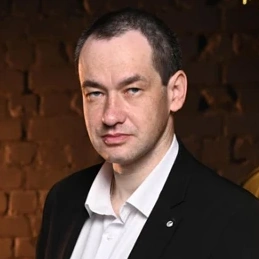
Author’s column by Tymur Levitin
Founder and Head Teacher at Levitin Language School
🔗 Start Language School by Tymur Levitin
What if the “language barrier” isn’t really about language?
“I know the words. I know the grammar. But I still can’t speak.”
Sound familiar?
That’s what students all over the world say every day. And that’s what many still call a language barrier. But let’s be honest: the real obstacle isn’t in the language — it’s in the mindset.
In fact, the more you know but don’t understand, the higher this barrier becomes.
Why knowledge ≠ mastery
Most traditional courses split language into three boxes:
- vocabulary
- grammar
- speaking
And then they suggest a linear sequence:
first words, then rules, then speech.
That approach is outdated — and ineffective.
Because language isn’t a checklist.
It’s a living system, and its components must be learned together — not one after another.
Speaking is not repeating
One of the most dangerous myths in language learning is:
“If you can repeat it, you can speak it.”
That’s not true.
If you don’t understand:
- why the sentence is built this way,
- what changes if you rearrange it,
- or how it fits the situation —
then you’re not speaking. You’re performing.
This is how many students “get by” in basic situations — until something goes off-script.
Then the whole illusion collapses.
The real “barrier” is a lack of structure
The moment a student faces something unexpected — a longer question, a different word order, an unfamiliar idiom — they freeze.
They don’t freeze because they’re weak.
They freeze because they were never taught to navigate.
Because they were taught to mimic, not to understand.
What actually helps students break through
Here’s what really works — consistently, across languages:
✅ 1. Learning in context
Vocabulary, structure, pronunciation, and grammar — taught as one system, not separately.
✅ 2. Explanation, not guessing
Don’t waste time guessing what a word means.
Ask. Get clarity. Understand why.
✅ 3. Intuition, built on structure
Intuition is powerful.
But it must be trained — through repeated, meaningful contact with the language.
✅ 4. Real speech, not scripted drills
True speech is messy.
It includes reformulations, pauses, corrections — and freedom to think aloud.
So what should you do?
Here’s what I tell every student:
📌 Don’t be afraid to make mistakes.
📌 Don’t wait until you feel “ready” to speak.
📌 Don’t throw grammar away — use it wisely.
📌 And most of all: ask for explanations. You deserve to understand.
Language is not about exams, levels, or trends.
It’s about thinking clearly, understanding deeply, speaking freely — and knowing what you’re doing.
And if you don’t feel confident speaking, it’s not because something is wrong with you.
It’s because the way you were taught wasn’t built for real communication.
Related reading (coming soon)
→ Why We Don’t Promise You’ll Speak in 30 Days
→ Best English Language Courses — What Matters Most
→ Learn English with a Private Tutor Who Helps You Think
Links will be updated after publication.
© Tymur Levitin
✍️ Author, founder, director, and lead teacher at Levitin Language School
This article is part of the author’s column:
🟦 Language Without Illusions: Tymur Levitin’s Column on Real Learning
🔜 Next in the series:
“The Full Immersion Method: What They Don’t Tell You”
Coming soon.


