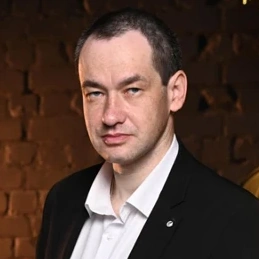
“A language is not made of words.
Words are only the visible surface of invisible thinking.”
— Tymur Levitin
For centuries, people have tried to define language.
Some called it a communication system.
Others described it as a collection of words and grammar.
Linguists built classifications.
Teachers built textbooks.
Students built notebooks full of vocabulary lists.
Yet after more than twenty years of teaching, I have come to a different conclusion.
Language is not made of words.
Language is made of relationships.
Words Mean Nothing Alone
Take any word.
Remove it from its context.
Remove the speaker.
Remove the situation.
Remove the intention.
What remains?
Almost nothing.
Meaning appears only when a word enters a relationship with another word, another person and another idea.
The word itself is only a symbol.
Language begins where symbols start interacting.
Grammar Is Not a Set of Rules
Many students see grammar as restrictions.
In reality, grammar is a navigation system.
It tells ideas where they belong.
It allows the listener to predict meaning before the sentence is complete.
Grammar is not there to make language difficult.
It is there to make communication efficient.
Vocabulary Is Memory
Meaning Is Connection
Many learners spend years expanding vocabulary.
But vocabulary alone cannot produce speech.
The human brain does not retrieve isolated words.
It retrieves networks.
Associations.
Patterns.
Experiences.
The richer these connections become, the more natural communication feels.
Language grows through organisation, not accumulation.
Every Conversation Is Shared Construction
Communication is often described as sending information.
That description is incomplete.
Real conversation is cooperative thinking.
One person begins an idea.
The other predicts it.
Adjusts it.
Expands it.
Corrects it.
Meaning is constructed together.
This is why the same sentence may create completely different reactions in different people.
The language did not change.
The relationships did.
Translation Is an Approximation
Students often search for exact equivalents.
But languages rarely overlap perfectly.
Every language divides reality differently.
Every culture highlights different distinctions.
Translation therefore becomes interpretation rather than substitution.
Learning a language means learning a new way of organising reality.
Not replacing labels.
Rebuilding perception.
A Child Never Learns a Dictionary
Children do not memorise definitions.
They observe relationships.
They hear patterns repeated.
They predict.
They imitate.
They adjust.
Language emerges naturally because the brain is discovering structure.
Adults possess the same ability.
They simply tend to trust memory more than perception.
The Brain Is Looking for Systems
Every lesson should strengthen relationships.
Between words.
Between grammar and meaning.
Between situations and reactions.
Between thought and expression.
When teaching focuses only on isolated information, the brain struggles.
When teaching reveals systems, the brain accelerates.
Because understanding is compression.
Thousands of examples become one principle.
And one principle can generate thousands of sentences.
Language Is Living Thought
A language cannot be fully contained in a textbook.
It changes.
It adapts.
It reflects culture, emotion, history and identity.
Learning a language is therefore not collecting facts.
It is entering another way of seeing the world.
That is why true fluency changes more than vocabulary.
It changes perception itself.
The question has never been:
“How many words do you know?”
The real question is:
“How many relationships can your mind build?”
Because language does not live in dictionaries.
It lives in the connections your brain creates every time you understand another human being.
Author: Tymur Levitin
© Tymur Levitin. All rights reserved.
Founder and Director of Levitin Language School


