

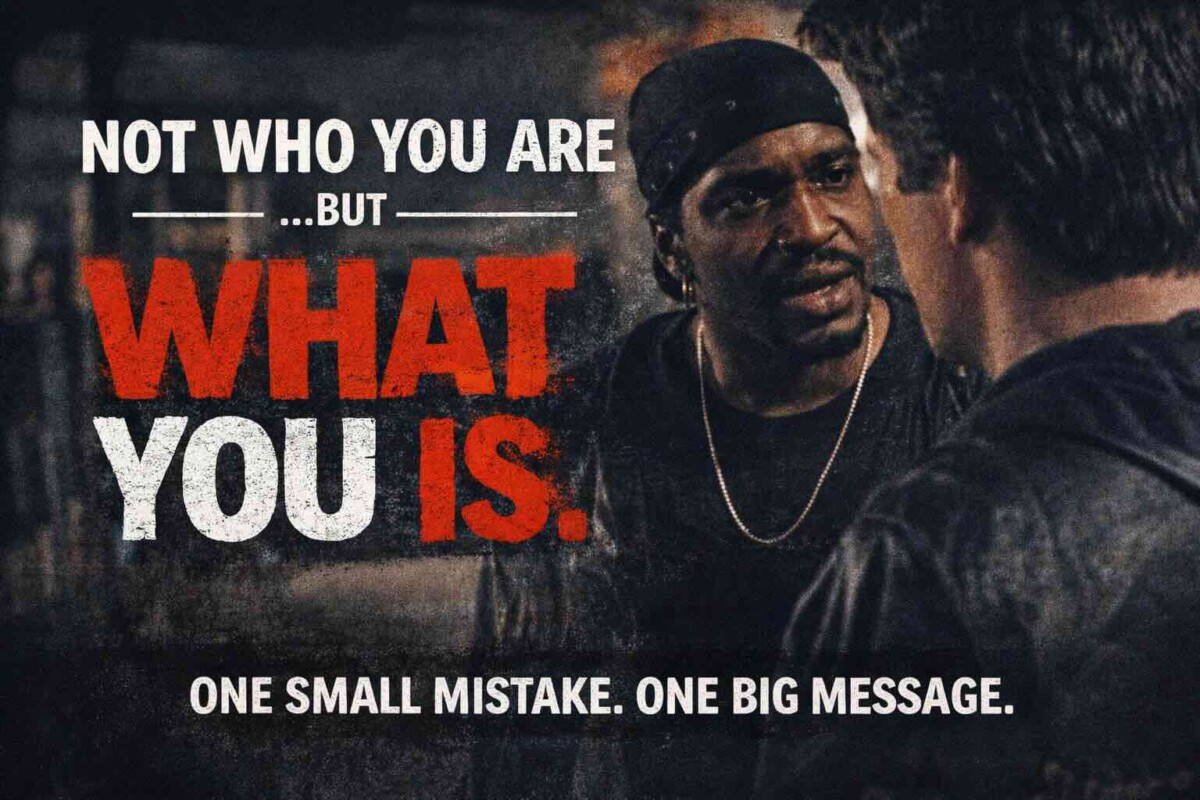
One small mistake. One big message.
What Students Say. What the World Hears.
Every teacher knows this moment:
A student says, “You was there yesterday.” Or worse: “What you is?”
It’s a small slip.
It seems harmless.
And most people would just say, “Oops, wrong verb form.”
But here’s what I tell my students:
This isn’t just about grammar. It’s about how you make people feel.
And sometimes, you don’t sound “funny.” You sound like you’re insulting them.
Let me show you why.
The Line Between “Wrong” and “Offensive”
Mistakes like you was or you is are common.
They appear in music, movies, TikTok, and casual speech — especially in dialects like African American Vernacular English (AAVE), London street slang, or certain Southern U.S. regions.
But outside those contexts?
If you say “you is” to a stranger in a formal setting — or even in a street argument — it can come across not just as incorrect…
…but as disrespectful.
The Film Example That Says It All
I once saw a scene that made it clear:
— “Do you know what I am?”
— “I don’t know who you are. I know what you is.”
Not who you are.
But what you is.
The message:
You’re not a person. You’re a thing.
It wasn’t the grammar that hurt.
It was the intention, wrapped in broken grammar.
And yes — it hit hard.
What’s So Bad About “You Is”?
In standard English, “you is” doesn’t exist.
We say:
- ✅ You are
- ✅ You were
When someone uses “you is”, it can sound like:
- You don’t respect the person you’re talking to
- You don’t care enough to speak properly
- You’re mocking them, on purpose
Even if you don’t mean it that way, that’s how it can come across.
Cross-Language Parallels: It’s Not Just English
Let’s be clear: this idea isn’t unique to English.
🇷🇺 Russian
- Кто ты такой? — “Who are you?” (harsh but still personal)
- Что ты такое? — “What are you?” (dehumanizing)
🇺🇦 Ukrainian
- Хто ти? — neutral
- Що ти таке? — loaded, insulting
🇩🇪 German
- Wer bist du? — correct, respectful
- Was bist du? — rude, strange, used to belittle someone
- Confusing “du war” instead of “du warst” sounds illiterate or arrogant — same effect as “you was”
So yes — switching “who” to “what”, or “are” to “is”, sends a message.
Even if your grammar is weak, your words still carry emotional weight.
Why I Tell My Students This on Day One
Most teachers will just say, “That’s wrong.”
I say:
“If you say this to someone in a tense moment — they may not correct you. They may just walk away. Or punch you.”
It’s not about being perfect.
It’s about being aware.
Because language is not only rules — it’s respect.
If you say you is, you was, what you is — it can sound like:
- You don’t respect the other person
- You learned from memes, not people
- Or worse — you’re trying to be tough, and failing badly
Real English Means Knowing What NOT to Say
I don’t teach language just to pass exams.
I teach it to survive.
To connect. To build trust. To avoid mistakes you didn’t even know you were making.
When you learn English with me — I won’t just tell you what’s right.
I’ll tell you why it matters.
Because you don’t just need grammar.
You need social instinct in a new language.
And that’s what I give my students — from day one.
Speak free. Global learning. Personal approach.
Author: Tymur Levitin — Founder, Director, and Senior Instructor at Levitin Language School / Start Language School by Tymur Levitin
© Tymur Levitin, 2026


