Language, Culture, and Meaning
Language, Culture, and Meaning
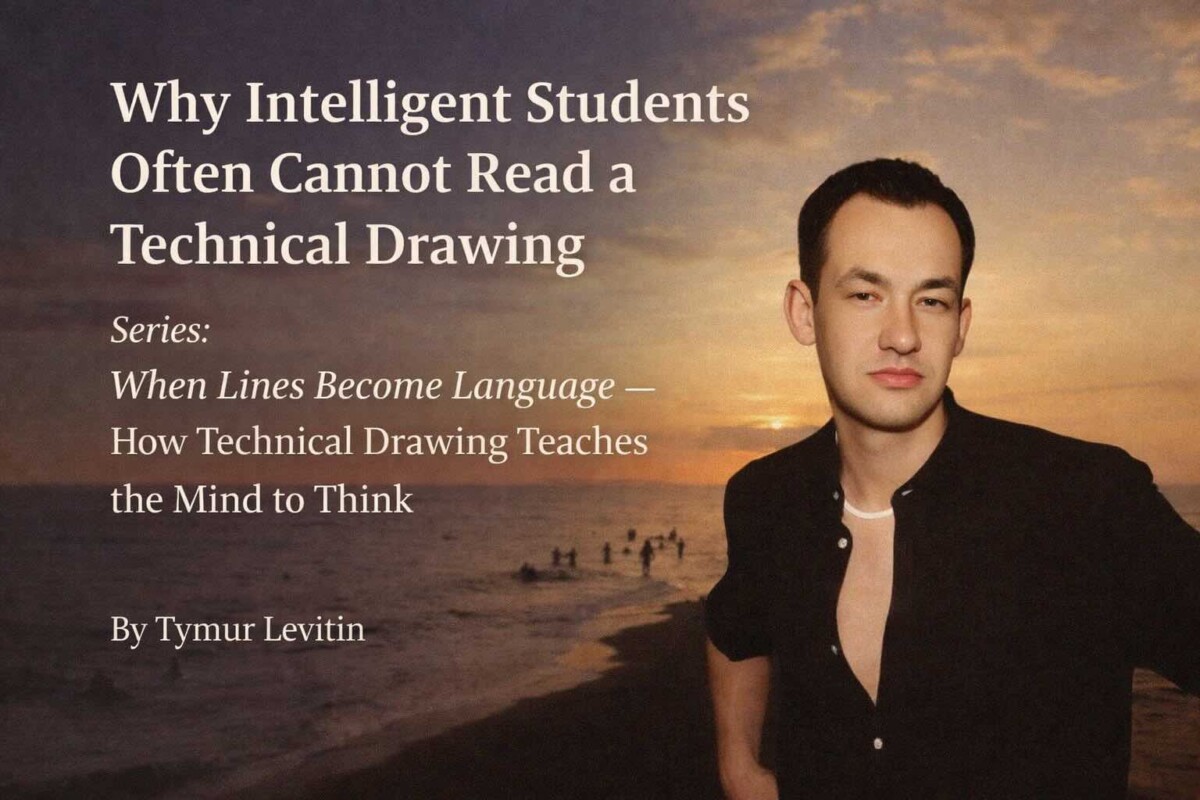
Engineering Thinking, Spatial Grammar, and the Language of Lines Series: When Lines Become Language — How Technical Drawing Teaches the Mind to Think Most people believe that technical drawing is simply a skill of drawing lines. In reality, it is something very different. Technical drawing is a language. And like any language, it has its […]
 Tymur Levitin
Language, Culture, and Meaning
Why English, German, and Slavic Languages Organize Time Differently Many students believe grammar is universal. Past is past.Present is present.Future is future. But once you start learning several languages, something surprising happens. You realize that languages do not organize time the same way. They do not even look at it the same way. Time Is […]
Tymur Levitin
Language, Culture, and Meaning
When Languages Mix, But Not Always the Way You Think Many people have heard the word Spanglish.They usually imagine something exotic — a strange hybrid language somewhere between English and Spanish. But the reality is more complicated. Sometimes Spanglish really is a linguistic phenomenon.And sometimes the word is used incorrectly — to describe something that […]
Tymur Levitin
Language, Culture, and Meaning
Category: Language, Culture, and Meaning The Illusion of Universal Words Many learners believe that some words are universal.“Beautiful.”“Nice.”“Wonderful.” At first glance, they seem simple and transparent. A student opens a dictionary, finds a translation, and assumes the meaning travels intact from one language to another. But languages rarely work that way. What looks like a […]
Tymur Levitin
Language, Culture, and Meaning
Some words are accidents.Others are cultural fossils. German Kater is both. It means a male cat.It also means a hangover. And the more you think about it, the more disturbing — and brilliant — that connection becomes. The Word That Refuses to Stay in One Meaning In German: In Polish: In English: In Russian and […]
Tymur Levitin
 Tymur Levitin