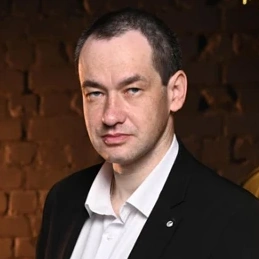
“The brain does not keep what it never uses.”
— Tymur Levitin
Many language learners become frustrated by the same experience.
They learn fifty new words.
The next day they remember thirty.
A week later they remember ten.
A month later they believe they have forgotten almost everything.
The conclusion seems obvious:
“I have a bad memory.”
In reality, that conclusion is usually wrong.
Your Brain Is Designed To Forget
Forgetting is not a flaw.
It is a survival mechanism.
Every day your brain receives enormous amounts of information.
If it stored everything forever, finding useful information would become impossible.
So the brain constantly asks one question:
“Is this information important?”
If the answer is no, the connection weakens.
If the answer is yes, the connection grows stronger.
Language follows exactly the same principle.
Recognition Is Different From Recall
Many students think they forgot a word.
Then they see it in a sentence and understand it immediately.
This means the word was never completely lost.
Recognition is easier than active recall.
Active speaking requires the brain to find the word without external help.
That process naturally takes longer to develop.
Repetition Alone Is Not Enough
Reading the same vocabulary list ten times is not the same as using those words in real communication.
Passive repetition creates familiarity.
Active use creates memory.
That is why students often remember words connected to personal experiences much longer than words learned from isolated lists.
Context Builds Stronger Memory
Your brain prefers stories over lists.
A single conversation using five new words creates richer neural connections than memorizing fifty isolated translations.
Meaning, emotion, situation, and interaction all strengthen memory.
Language grows through context.
Not through accumulation.

Why Forgotten Words Often Return
Many learners experience an interesting phenomenon.
They believe a word has disappeared forever.
Months later they suddenly hear it again.
Instantly they understand it.
The word was never erased.
The pathway simply became inactive.
Reactivation is often much easier than first acquisition.
The Goal Is Not Permanent Memory
Even native speakers forget words.
Nobody keeps every word equally active.
The goal is to strengthen the vocabulary you actually use.
Words connected to your life, work, hobbies, studies, and conversations naturally become part of your active language.
Unused vocabulary quietly moves into passive memory until needed again.
This is normal.
Speak More To Remember More
Students often think:
“First I will remember everything. Then I will speak.”
Real language development works in the opposite direction.
Speaking itself strengthens memory.
Every conversation reinforces vocabulary.
Every attempt builds stronger retrieval pathways.
The best vocabulary exercise is often a real discussion.
Final Thought
Do not measure your progress by the number of forgotten words.
Measure it by the number of words that return naturally when you need them.
That is how living languages work.
Learn Languages With Understanding, Not Memorization
Explore our programs:
https://levitintymur.com/#languages
Read more articles:
https://levitintymur.com/blog/
Contact Levitin Language School
Website:
https://levitintymur.com
Telegram:
@START_SCHOOL_TYMUR_LEVITIN
WhatsApp:
+380932913429
Viber:
+380932913429
Individual online language lessons, academic subjects in foreign languages, translation services, exam preparation, and personalized educational support for students worldwide.
© Tymur Levitin
Founder & Director
Levitin Language School
https://levitintymur.com
All rights reserved.


