“You do not truly speak a language until you hear its music.”
Most people believe that learning a language means memorizing words and mastering grammar.
They spend years studying verb tables, sentence structure and vocabulary lists.
Yet when they finally speak, something still feels different.
Native speakers immediately recognize them as learners—not because of grammar mistakes, but because the melody is missing.
Language Is More Than Words
Human speech consists of several layers.
- vocabulary
- grammar
- pronunciation
- meaning
- prosody
Prosody is the rhythm, stress, intonation, tempo and pauses that give speech its natural flow.
It is the invisible musical score behind every sentence.
Without it, language becomes technically correct but emotionally flat.
With it, even simple phrases sound alive.
Why Italian Sounds Like Singing
Many people describe Italian as the most musical language in the world.
That impression is not accidental.
Italian has:
- clear open vowels
- regular stress patterns
- smooth syllable timing
- expressive pitch movement
Instead of isolated sounds, words connect into flowing melodic phrases.
Even ordinary conversation often resembles a performance.
The listener perceives not only information but emotion.
Spanish Carries Energy
Spanish has its own musical identity.
Its rhythm is quick, dynamic and forward-moving.
Syllables tend to have similar duration, creating a continuous pulse that keeps speech energetic.
The frequent rolling r, open vowels and strong stress patterns create a feeling of warmth and movement.
This is one reason Spanish often sounds passionate even during everyday conversation.
French Flows Like a River
French music comes from different mechanisms.
Instead of strong word stress, French relies on phrase rhythm.
Words connect through liaison, vowels blend together, consonants soften and nasal sounds create unique resonance.
The result is continuous flowing speech without sharp interruptions.
To learners, French often sounds elegant precisely because its melody exists across the entire sentence rather than inside individual words.
Prosody Exists in Every Language
Many learners assume only Romance languages are musical.
In reality, every language has its own soundtrack.
English alternates between stressed and unstressed syllables, creating a strong rhythmic contrast.
German organizes speech through powerful stress and precise timing.
Japanese builds meaning through pitch patterns.
Chinese uses lexical tones that directly distinguish words.
Arabic combines rhythm with emphatic consonants and long vowels.
Even languages that outsiders consider “harsh” possess highly organized musical systems.
Every language sings—but each sings differently.
Why Grammar Alone Never Creates Natural Speech
This explains a common classroom phenomenon.
A student knows every tense.
Their grammar is almost perfect.
Their vocabulary is impressive.
Yet native speakers instantly recognize a foreign accent.
The reason is often not pronunciation of individual sounds.
It is prosody.
The stress appears in unexpected places.
Pauses occur unnaturally.
Intonation follows the speaker’s native language instead of the target language.
The words are correct.
The music is borrowed from somewhere else.

Continue Exploring the Way Languages Really Work
If you enjoyed this article, you may also like:
Together, these articles explore one central idea: real fluency is built not only through vocabulary and grammar, but through cognition, rhythm, meaning and the natural music of language.
Children Learn Melody Before Grammar
Babies imitate rhythm long before they understand vocabulary.
They copy pitch, pauses and emotional contours months before speaking their first words.
Their brains first absorb the music of communication.
Only later do words fill that structure.
Adults often reverse the process.
They learn dictionaries first and melody last.
This is one reason progress toward natural speech can feel slow.
Why Listening Is More Important Than Memorizing
If your goal is to sound natural, listening changes from passive exposure into active training.
Instead of asking:
What words did they use?
ask:
Where did the voice rise?
Where did it slow down?
Which word received emphasis?
Where was the pause?
This develops prosodic awareness.
Over time, your speech begins to imitate not only vocabulary but native rhythm itself.
Prosody Is Part of Thinking
At Levitin Language School, we view language as a way of thinking—not merely a collection of rules.
Prosody reflects how speakers organize information inside their minds.
It signals importance, emotion, certainty, irony and intention.
The same sentence can become a question, a joke, a warning or a compliment simply by changing its melody.
In this sense, prosody is not decoration.
It is meaning itself.
The Music Behind Fluency
Many learners spend years trying to eliminate their accent.
A more productive goal is to learn the rhythm of the language.
When vocabulary, grammar and melody begin working together, speech changes dramatically.
You no longer sound like someone translating sentence by sentence.
You sound like someone thinking in the language.
And that is the moment fluency truly begins.
Author
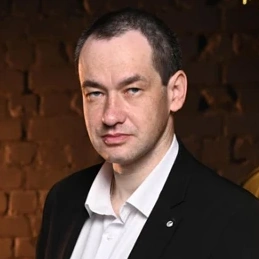
Tymur Levitin
Founder & Director, Levitin Language School
Global Learning. Personal Approach.
📚 Learn languages through understanding, cognition and real communication.
Telegram: @START_SCHOOL_TYMUR_LEVITIN
WhatsApp / Viber: +380 93 291 34 29
© Tymur Levitin


