german communication style
German
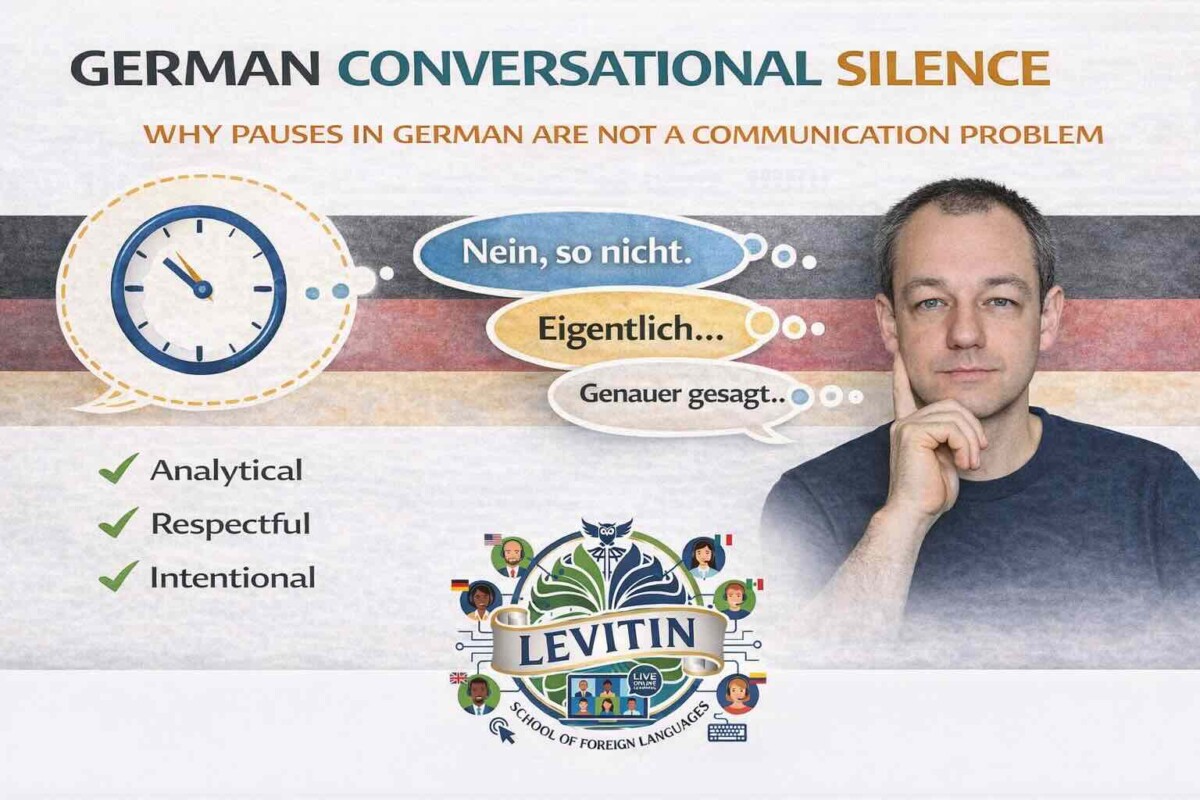
In many conversations, silence is uncomfortable. People rush to fill it. They add words.They repeat themselves.They soften statements.They try to maintain the flow. But in German communication, silence often has a different function. A pause is not necessarily a problem. Sometimes, it is simply thinking. This article continues our German communication series and explores one […]
 Tymur Levitin
German
You say something. A German responds: Nein, so nicht.Das stimmt nicht ganz.Eigentlich…Genauer gesagt… And suddenly, you feel corrected. Embarrassed. Interrupted. Challenged. But in many German interactions, correction is not confrontation.It is calibration. This article continues our German communication series and explores a phenomenon that many learners misunderstand: immediate clarification and correction culture. The Speed of […]
Tymur Levitin
German
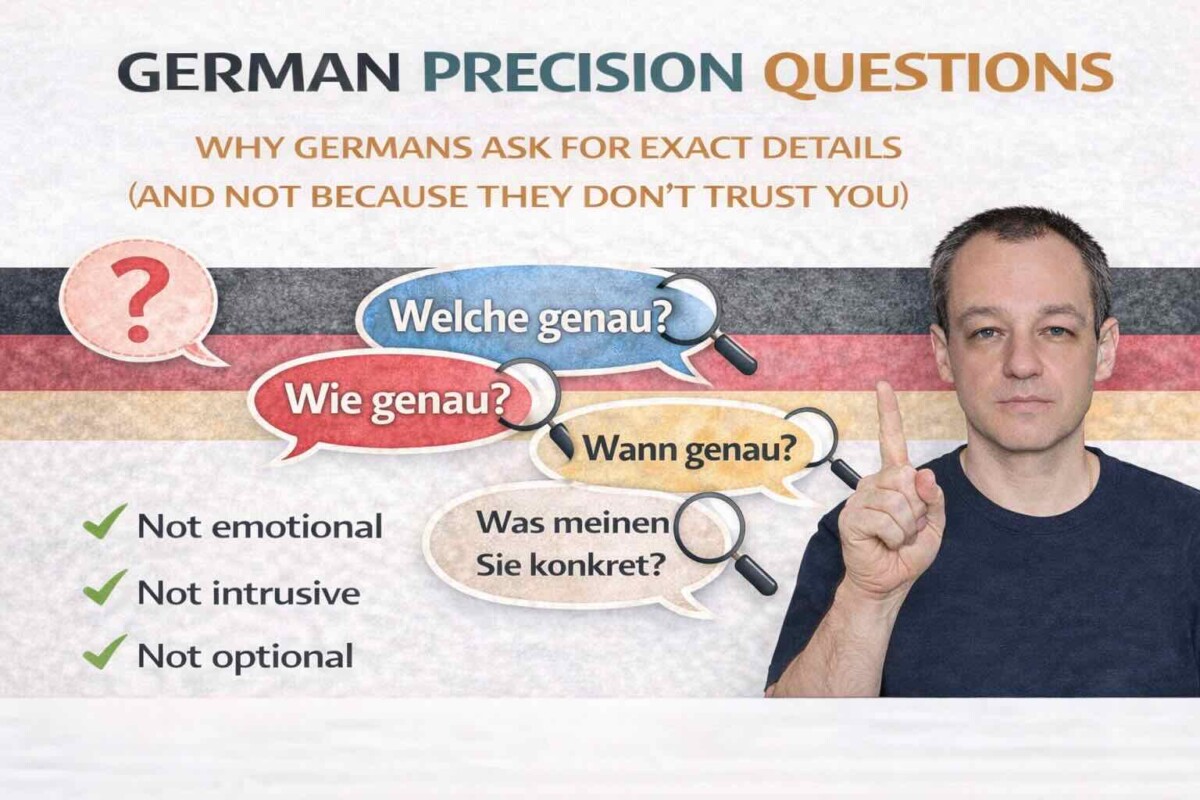
You explain something. You think it is clear. A German listener responds: And suddenly, you feel interrogated. Are they doubting you?Are they challenging you?Are they suspicious? In most cases — no. This article continues our German communication series and explores one of the most misunderstood features of German interaction: precision questioning. The Cultural Reflex Toward […]
Tymur Levitin
German
If you come from a language culture where enthusiasm is verbalized, emotions are amplified, and agreement is intensified, German can feel… restrained. You say something exciting. The response is: Interessant.Gut.Ja. And you think: “Is that all?” This article continues our German communication series and explores a subtle but powerful phenomenon: German emotional minimalism — the […]
Tymur Levitin
German
If you are learning German, you have probably been told that ja means “yes.” Technically, that is correct. Functionally, it is often wrong. In real communication, ja can signal agreement, politeness, impatience, acknowledgment, irony, soft contradiction — and sometimes it does not mean agreement at all. This article continues our German communication series and explores […]
Tymur Levitin
German
Author: Tymur LevitinFounder, Director & Senior Instructor — Levitin Language School© Tymur LevitinGlobal Learning. Personal Approach. Why German Sounds “Too Direct” — And Why That’s a Misunderstanding Many learners describe German as rude, cold, or too blunt.Yet native speakers rarely perceive it that way. The problem is not directness.The problem is precision. German does not […]
Tymur Levitin
German
(Choose your language here: https://levitintymur.com/#languages) You ask a German a simple question. Kommst du morgen? And you expect a simple answer: Ja.Nein. But instead you hear: Morgen habe ich Frühschicht.Ich muss lange arbeiten.Ich bin den ganzen Tag unterwegs. No “yes”.No “no”. And yet… the answer is perfectly clear. For a learner this feels strange.For a […]
Tymur Levitin
German
Before you start:👉 Choose your language: https://levitintymur.com/#languages When Silence Feels Uncomfortable — But Isn’t Many learners notice something unsettling in German conversations. There are pauses.There is silence.No one rushes to fill it. For people from more emotionally expressive or talk-driven cultures, this feels: But in German, silence is not absence of communication.It is communication. This […]
Tymur Levitin
German
Many learners experience the same moment: You understand every word.The grammar is correct.But the tone feels… harsh. German often sounds rude to people who learned politeness through softeners, indirectness, and emotional cushioning. But German politeness works differently. This article explains why German directness is not rudeness, how politeness actually functions in German, and why many […]
Tymur Levitin
Author’s Column | Tymur Levitin on Language, Meaning and Respect
🔗 Choose your language Not every “no” is a “no.” In many languages, communication is direct. Clear. Immediate.But German isn’t always like that. And that surprises a lot of students. They ask:“Why do Germans say ‘Ich weiß nicht, ob das geht’ instead of just ‘Nein’?”Or:“Why do textbooks use so many ‘vielleicht’, ‘meistens’, ‘normalerweise’, ‘eventuell’?” The answer is simple:Because German is not a direct language — […]
Tymur Levitin
 Tymur Levitin