
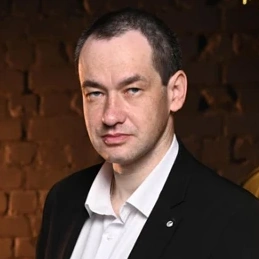
Author’s column by Tymur Levitin — founder, director and teacher of Levitin Language School / Start Language School by Tymur Levitin
🕊️ Introduction. The song of my time
We used to sing this song with a guitar. In the yard, in the kitchen, on the staircase. Some sang aloud, some silently, but all — sincerely. And everyone thought of something personal. Because “The Little Flock” is not just a text. It was something that lived inside us before we even knew how to name it.
I first heard the track by the band Bratja Karamazovy in 1997. But the real understanding came much later — at the end of school, in the final years before university. The end of an era — not pompous, but quiet, inward. For everyone it was different, but something in this song united us. I remember: when it played, for a moment it became clear who you were, with whom you stood, and why you were still holding on.
Today, the younger generation will hardly understand this song. They simply have nothing to connect it with. The older generation — perhaps they will perceive it differently, but still not completely. But those who grew up within these lines, who know by heart not the words but the pain between them — they will understand. Without explanations.
And yet it is worth explaining. Not only to preserve the memory of a generation that “goes to the sky.” But also because in the language of this song lies an entire layer of culture, emotions, and concepts that cannot be translated literally. Not into English. Nor into German. Nor into Spanish. Not even into the language of those born later.
Perhaps the most honest thing is to admit: this song cannot be translated. Because it is not a text. It is a code. Written not with words — but with time. And codes are not translated. You either know them. Or you don’t.
I. Who are the “Bratja Karamazovy” and what is their image?
The band was founded in 1990 in Dnipropetrovsk (some sources say Kyiv). The name was given to them by Yuri Shevchuk, with whom the musicians maintain a close friendship.
Frontman Oleg Karamazov embodies the figure of a simple, everyday hero who sings without pathos. His image lies on the fine line between the ordinary and the symbolic. He sings plainly, evenly, almost dryly. But this creates an inner strength: the suffering lies not in the voice but in the pauses.
In the 2021 clip (a new version of “The Little Flock”), the faces of friends and idols appear — Yuri Shevchuk, Andrei Makarevich, Yevgeni Margulis, Alexei Romanov, and others. Each of them is a symbol of the time. Not a concert crowd, but collective memory. The frontman said: the text came to him in a dream. “There was only one way out — to go to the sky. The road stretches on and continues.”
II. Line-by-line analysis with translations and commentary
First stanza
Жека! — А? — Мы сдохли давно.
Вот наши могилы, а на могилах кресты!
Жека! — Ну, что? — Я знаю одно:
вытекло время, но руки чисты!
- «Жека!» — not just a name. It’s a street call, a signal, impossible to translate.
- «Мы сдохли давно» — сдохли is not “died,” but a rough, slangy “croaked.”
- EN: We’ve been dead long ago — too neutral, loses the harshness.
- DE: Wir sind längst verreckt — very crude, overly physical.
- ES: Estamos muertos hace tiempo — softer, sarcasm disappears.
- UA: Ми здохли давно — keeps the authentic 90s slang.
- «Вытекло время» — a unique metaphor, stronger than “time ran out.”
- EN: Time bled out — dramatic, works well.
- DE: Die Zeit ist ausgelaufen — sounds like about a clock, too technical.
- ES: El tiempo se ha escapado — lighter, dramatism fades.
- UA: Витеков час — organic and poetic.
- «Руки чисты» — not about hygiene but about moral code.
- EN: Hands are clean — formal, sterile.
- DE: Die Hände sind rein — correct, but lacks tension.
- ES: Las manos están limpias — everyday tone.
- UA: Руки чисті — carries cultural and ethical weight.
Second stanza
Холодно в земле и кончился ток,
Вставай браток — нам надо идти!
А кто-то ещё ждёт слоёный пирог,
А кому-то охота поплескаться в крови!
- «Холодно в земле и кончился ток» — not physics, but a metaphor of disconnection from life.
- EN: It’s cold underground, and the current is gone — sounds too electrical.
- DE: Kein Strom mehr — very dry, technical.
- ES: Ya no hay corriente — banal, like a power outage.
- UA: Закінчився струм — metaphorical, vivid in Ukrainian.
- «Вставай, браток» — браток is a 90s slang word, not just “brother.”
- EN: Get up, bro — too hip-hop, wrong context.
- DE: Bruder — solemn, too serious.
- ES: Hermano — too religious.
- UA: Браток — keeps the authentic slang tone.
- «Слоёный пирог» — ironic, absurd image.
- EN: layered pie — sounds silly.
- DE: Blätterteigkuchen — comical.
- ES: pastel de capas — appetizing, absurdity lost.
- UA: Шарований пиріг — retains absurd flavor.
- «Плескаться в крови» — shocking and ironic at the same time.
- EN: splash in blood — childish.
- DE: im Blut planschen — crude, almost physical.
- ES: chapotear en sangre — emotional, irony fades.
- UA: Покупатися в крові — chilling and authentic.
Chorus
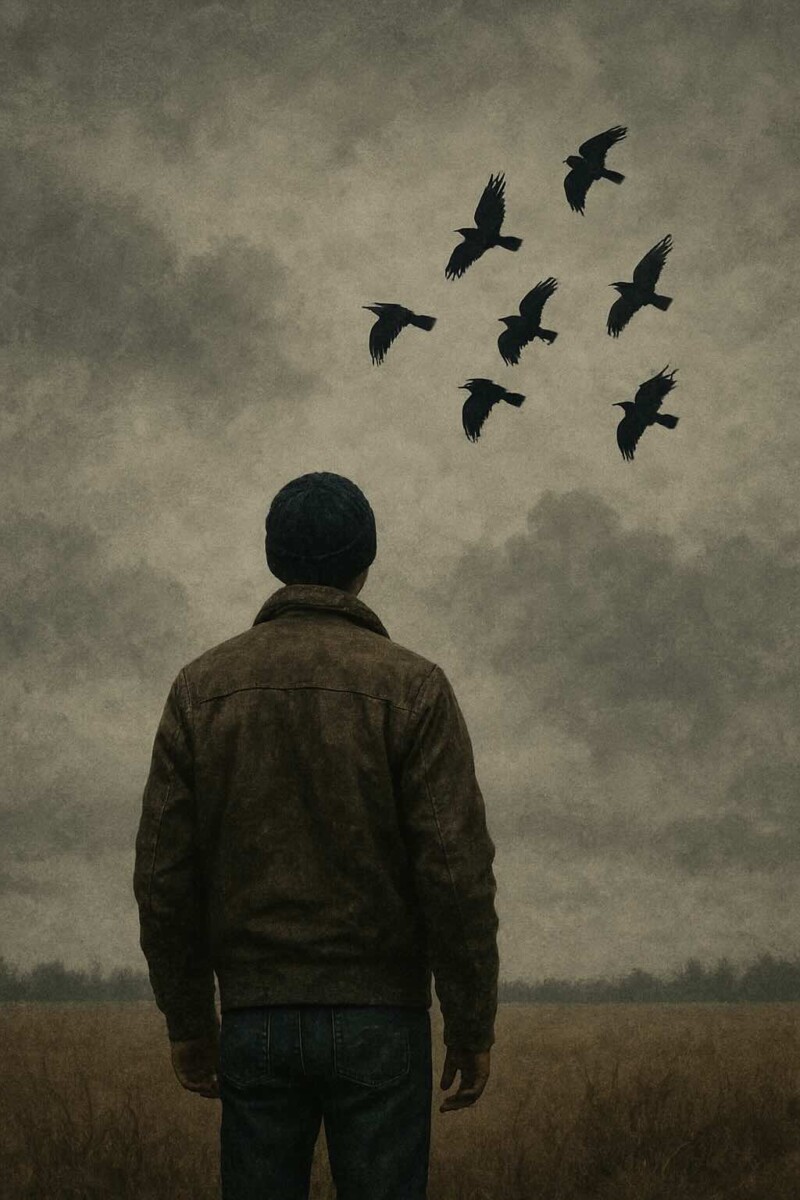
Наша маленькая стая уходит в небо. (×6)
Смотри — нас здесь больше нет.
- «Маленькая стая» — not flock or pack, it’s about a small brotherhood.
- EN: Our little pack — animalistic, wrong connotation.
- DE: Unser kleines Rudel — also animal-related.
- ES: Nuestra pequeña manada — herd-like.
- UA: Маленька зграя — natural and powerful.
- «Уходит в небо» — not religious, but about leaving the game.
- EN: fading to the sky — closer to the meaning.
- DE: geht in den Himmel — church-like.
- ES: se va al cielo — religious tone.
- UA: йде в небо — neutral, authentic.
- «Смотри — нас здесь больше нет» — a statement, not a threat.
- EN: Look — we’re not here anymore — correct.
- DE: Schau – wir sind nicht mehr hier — too dry.
- ES: Mira – ya no estamos aquí — adequate.
- UA: Дивись — нас тут більше нема — natural, powerful.
Final lines
Пусть сами ломают своих каменных баб,
На фонарных столбах столько свободных мест,
Но только без нас, слышишь? Без нас!
- «Каменные бабы» — stone idols, archaic statues, sarcastic image.
- EN: stone idols — too biblical.
- DE: Steinerne Götzen — close, solemn.
- ES: ídolos de piedra — clear, sarcasm fades.
- UA: кам’яні баби — rooted in local culture.
- «Фонарные столбы» — an image of 90s violence. Literal in translation, but reality disappears.
- EN: lampposts — flat.
- DE: Laternenpfähle — direct, cultural weight lost.
- ES: postes de luz — neutral.
- UA: ліхтарні стовпи — directly tied to 90s context.
- «Но только без нас» — the key point: refusal to take part.
- EN: without us — firm.
- DE: Ohne uns — strong.
- ES: sin nosotros — simple.
- UA: без нас — sharp, categorical.
III. Ukrainian parallels
🎵 Mertvyi Piven — “We Won’t Die in Paris”
“We won’t die in Paris, now I know it for sure…”
Gentler, but at its core the same honesty: the rejection of illusions, the truth of the end.
🎵 Tartak — “I Am Already Gone”
“I am already gone! The wind carries me across the land…”
Not death, but disappearance. Physically present, but already absent to the world. The same honesty — in another language.
📌 Translating “The Little Flock” into Ukrainian is impossible. But you can feel it — through these songs.
IV. What does this song bring to language learning?
- It teaches distinguishing literal translation from real meaning.
- It shows students that “Zheka! Huh?” cannot be translated, but can be understood.
- It allows the analysis of metaphors (“time has bled out,” “hands are clean”) and searching for analogues.
- It inspires exercises: write your own text in the spirit of “the little flock” — but in your own language.
📚 Such songs teach honesty. And honesty is itself a language.
V. Finale. The road is always one
We thought we were choosing our own way. That we could turn aside. That we could come back. But everyone has only one road. And each one walks it in their own way. Sometimes with someone beside you. Sometimes alone. Sometimes in silence.
This song reminds us: you can leave in different ways. But the real choice is — how to walk. With clean hands. With a brother by your side. With the understanding that in the end — the road leads to one place.
We sang this song with a guitar. And everyone thought of their own world. And if someone now reads these lines — it means our little flock still exists somewhere.
And let it go to the sky —
but only together.
© Author’s work by Tymur Levitin — founder, director, and head teacher of Levitin Language School / Start Language School by Tymur Levitin
🔗 Also recommended:
- “Girl, Baby, Детка”: one word — two worlds
- Stop Memorizing. Start Thinking.
- Real Language Is Never Literal
- Understanding Realia in Translation
- How to Make Online Language Learning Fun and Productive
🌍 Versions of this article in other languages
- 🌐 Russian version
- 🇺🇦 Ukrainian version
- 🇩🇪 German version
- 🇬🇧 You are reading the English version
- 🇪🇸 Spanish version
- 🇫🇷 French version


