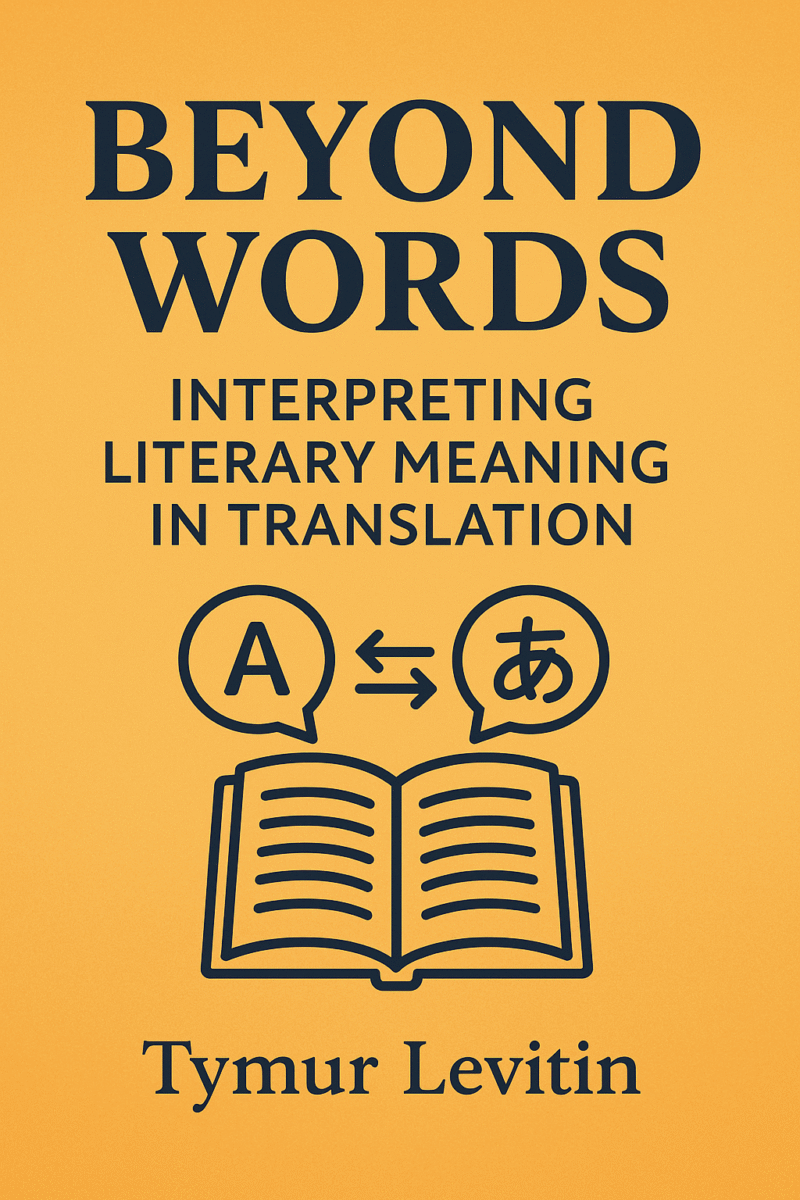
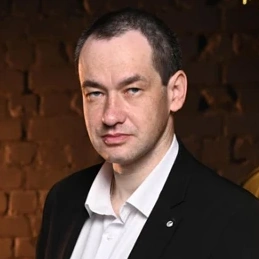
© Tymur Levitin, Founder and Director of Start Language School by Tymur Levitin
Introduction
Translating fiction is more than finding the right words — it’s about finding the right rhythm, tone, and emotional equivalent in another language. Drawing from more than two decades of experience teaching and translating between Ukrainian, Russian, English, and German, I’ve developed a practical and intuitive approach to navigating linguistic and cultural differences. This article, based on my academic research and professional translation work, explores the key strategies behind emotionally faithful literary translation.
Beyond Literal Meaning: The Core Dilemma
When translating fiction, the translator is constantly negotiating between fidelity and fluency. A word-for-word approach often results in awkward phrasing or loss of meaning, while a more liberal one risks distorting the author’s original voice. The task becomes especially challenging when dealing with emotionally charged or culturally specific content.
“A good translator knows multiple possible renderings. A great translator doesn’t even need to think about them anymore.”
The Translator’s Triangle: Author – Language – Reader
Successful literary translation requires balancing three core forces:
- Authorial Intent – preserving the author’s tone, emotion, and subtext.
- Linguistic Structure – ensuring grammatical and stylistic compatibility.
- Reader Reception – adapting to the target audience’s cultural expectations.
In practice, this means making conscious decisions: Should humor be preserved or adapted? Should metaphors remain or be replaced? These are not simply technical questions — they are interpretive acts.
Comparative Analysis in Action
This article draws on a comparative analysis between two literary classics:
- All Quiet on the Western Front by Erich Maria Remarque
- The Catcher in the Rye by J.D. Salinger
Both novels present distinctive challenges — from military jargon and trauma-driven narration to colloquial American teenage slang. In my translation study, I examined Ukrainian renderings of excerpts from both books, showing how emotional equivalence was often more valuable than lexical accuracy.
“The translator must not only know what a word means but also what it feels like to a native speaker.”
🔗 Related Reading
🧭 This article expands on concepts introduced in our previously published work, Understanding Realia in Translation: Cultural Nuances Across Languages. While that article focused on cultural specifics, this one dives deeper into the translator’s strategic decisions when adapting narrative texts and preserving stylistic and emotional accuracy.
From Theory to Intuition
One of the key conclusions of my work is that over time, theory becomes instinct. Early-career translators often second-guess every structure, rule, or dictionary entry. With experience, those decisions happen subconsciously — rooted in an internalized sense of what “sounds right” in both languages.
This doesn’t mean rules are discarded. It means rules have been absorbed.
Real-World Application in Education
As founder and lead educator at Start Language School by Tymur Levitin, I integrate these principles into language instruction. Our method is built on real communication, not textbook drills. Many of our teachers are not just language experts — they are professional translators, linguists, and practicing educators from around the world. Their experiences shape unique teaching styles that prioritize clarity, adaptability, and real-life language use.
Our team’s strength lies in its diversity — not just of backgrounds, but of approaches.
Final Thoughts
Great translation is invisible. When done right, the reader feels — not the translator — but the story. This invisibility, however, is built on a visible mastery of both language and interpretation.
For language learners, aspiring translators, and educators alike, the journey begins with rules and ends with resonance.
Author: Tymur Levitin
Founder, Director, and Lead Translator
Start Language School by Tymur Levitin
🌍 https://levitintymur.com
🇺🇸 https://languagelearnings.com


