Skip to content

German auxiliary verbs

Sein vs Haben — How to Choose the Right Auxiliary Verb in German
Sein vs Haben — How to Choose the Right Auxiliary Verb in German | LEVITIN SCHOOL
German

Sein vs Haben — How to Choose the Right Auxiliary Verb in German

Choose your language → Most learners of German stumble over one classic problem: should I use haben or sein as the auxiliary verb? In English, the answer is simple — we almost always use have. But in German, the choice between haben and sein follows strict rules, with some surprising exceptions. Let’s make it clear. […]

Tymur Levitin | LEVITIN SCHOOL Tymur Levitin
• 25.09.2025 • 2 min read
Read full article

German auxiliary verbs

German Modal Verbs Made Easy: Können, Müssen, Wollen | LEVITIN SCHOOL
21.09.2025

German Modal Verbs Made Easy: Können, Müssen, Wollen

German

🔗 Choose your language Modal verbs are essential for building useful German sentences. At the A1 level, the most common are können (can), müssen (must), and wollen (want). They help you express ability, necessity, and desire. This guide explains how to use them with simple rules and examples. How Modal Verbs Work A modal verb […]

Tymur Levitin | LEVITIN SCHOOL Tymur Levitin
Read more →
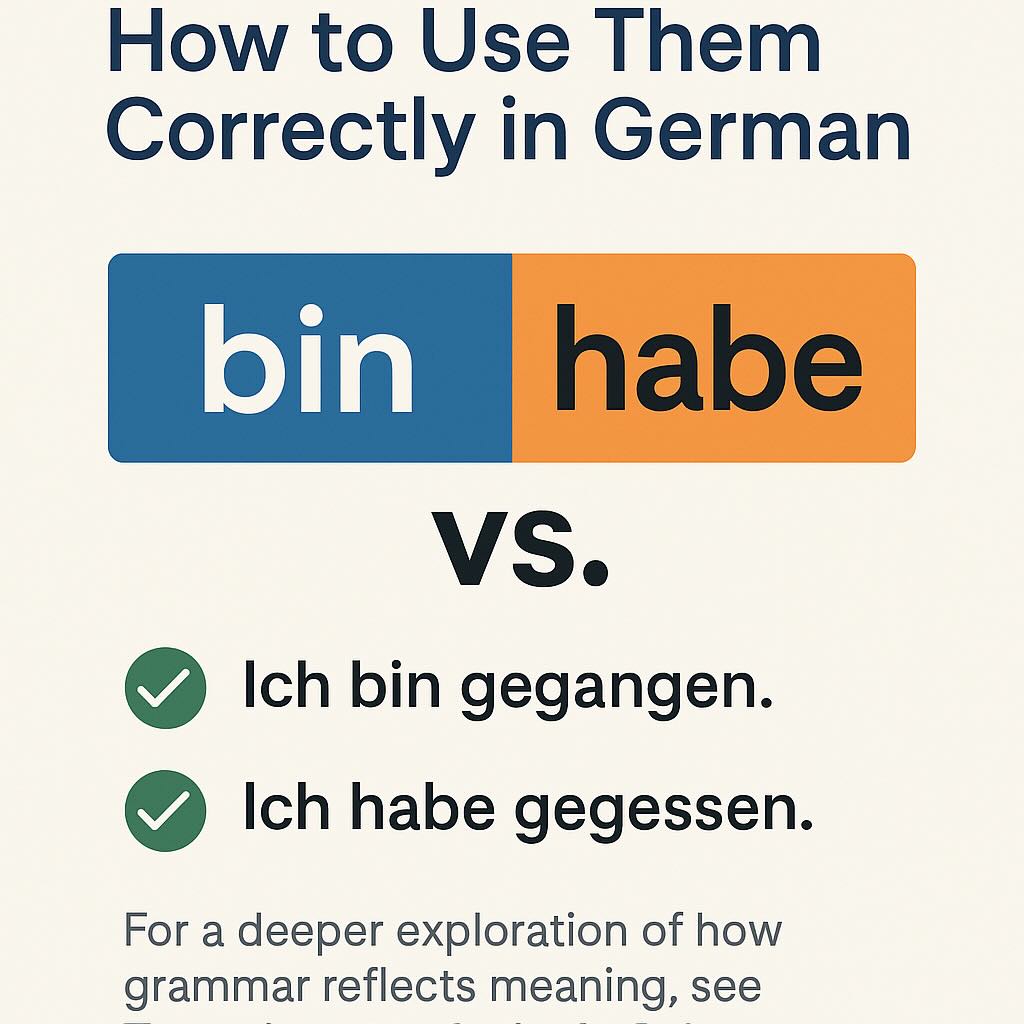
Sein vs. Haben: How to Use Them Correctly in German | LEVITIN SCHOOL
18.09.2025

Sein vs. Haben: How to Use Them Correctly in German

German

🔗 Choose your language When learning German, two of the first verbs you meet are sein (to be) and haben (to have). They are not only important as main verbs but also as auxiliary verbs for building the past tense (Perfekt). Many beginners get confused about when to use sein and when to use haben. […]

Tymur Levitin | LEVITIN SCHOOL Tymur Levitin
Read more →