German grammar for beginners
German
🔗 Choose your language: https://levitintymur.com/#languages German personal pronouns are one of the first grammar topics every beginner learns. They replace nouns and help you build basic sentences. This guide explains German subject pronouns in a clear and simple way, with examples and common mistakes. What Are German Personal Pronouns? Personal pronouns replace the subject of […]
 Tymur Levitin
German
🔗 Choose your language Modal verbs are essential for building useful German sentences. At the A1 level, the most common are können (can), müssen (must), and wollen (want). They help you express ability, necessity, and desire. This guide explains how to use them with simple rules and examples. How Modal Verbs Work A modal verb […]
Tymur Levitin
German
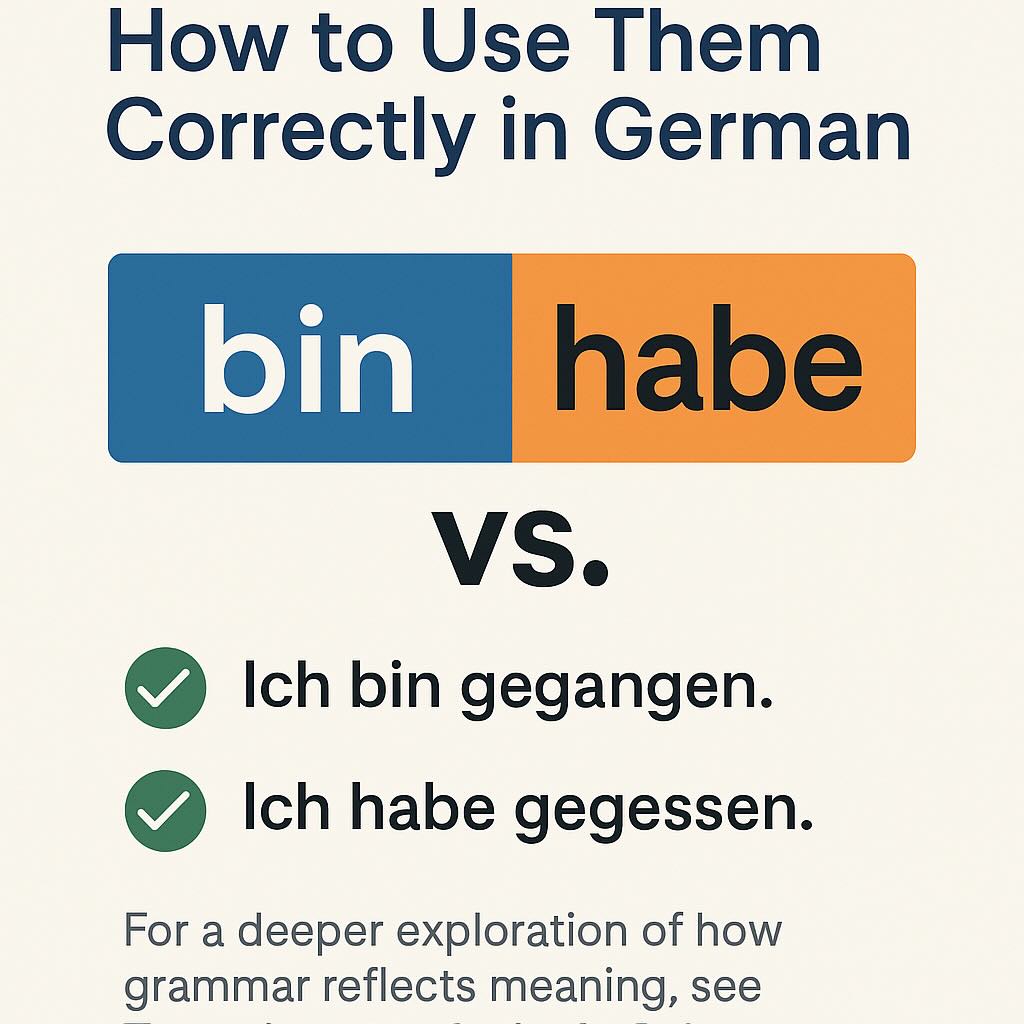
🔗 Choose your language When learning German, two of the first verbs you meet are sein (to be) and haben (to have). They are not only important as main verbs but also as auxiliary verbs for building the past tense (Perfekt). Many beginners get confused about when to use sein and when to use haben. […]
Tymur Levitin
German
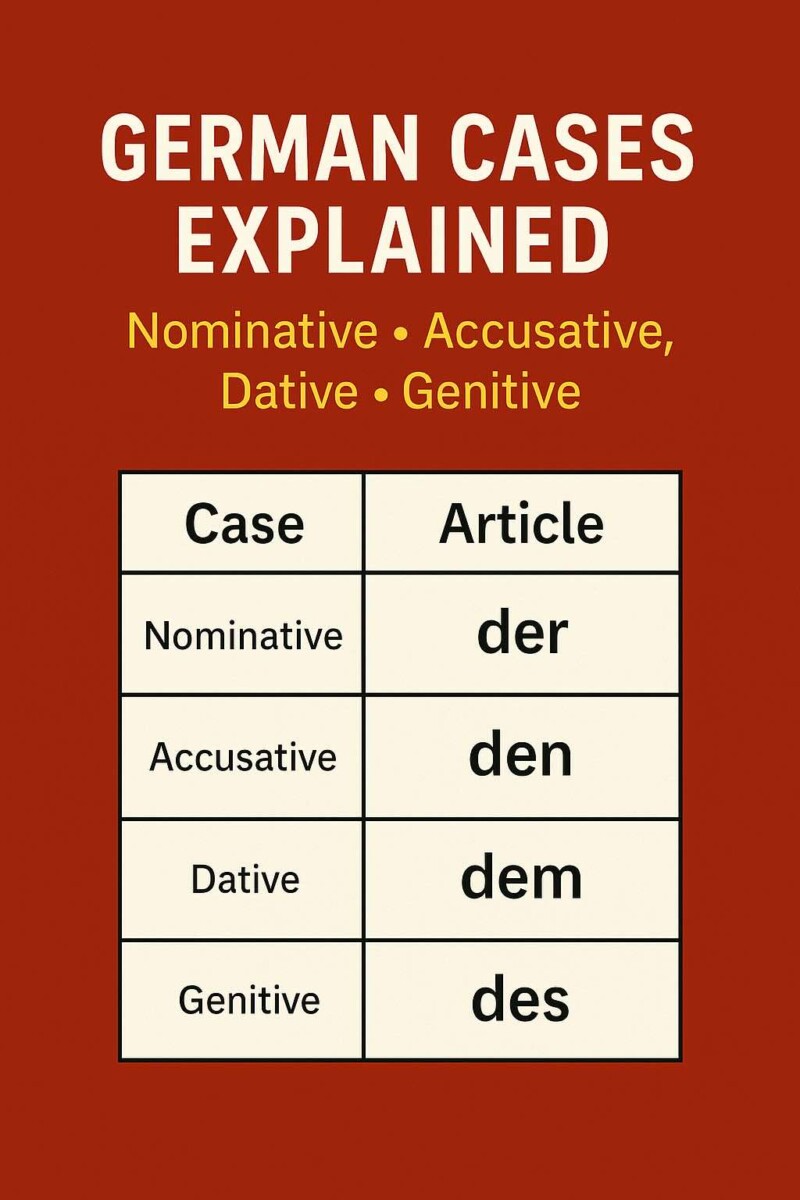
🔗 Choose your language German grammar is famous for its four cases. At first, they may look scary — but once you understand the system, cases make perfect sense. This guide explains the basics of the nominative, accusative, dative, and genitive with clear rules and examples. What Are Cases in German? Cases show the role […]
Tymur Levitin
German
🔗 Choose your language Learning German can be challenging, and many learners repeat the same mistakes again and again. The good news: once you know these typical errors, you can avoid them easily. Here are the 10 most common German grammar mistakes — with quick fixes and examples. 1. Wrong Word Order ❌ Ich Deutsch […]
Tymur Levitin
German
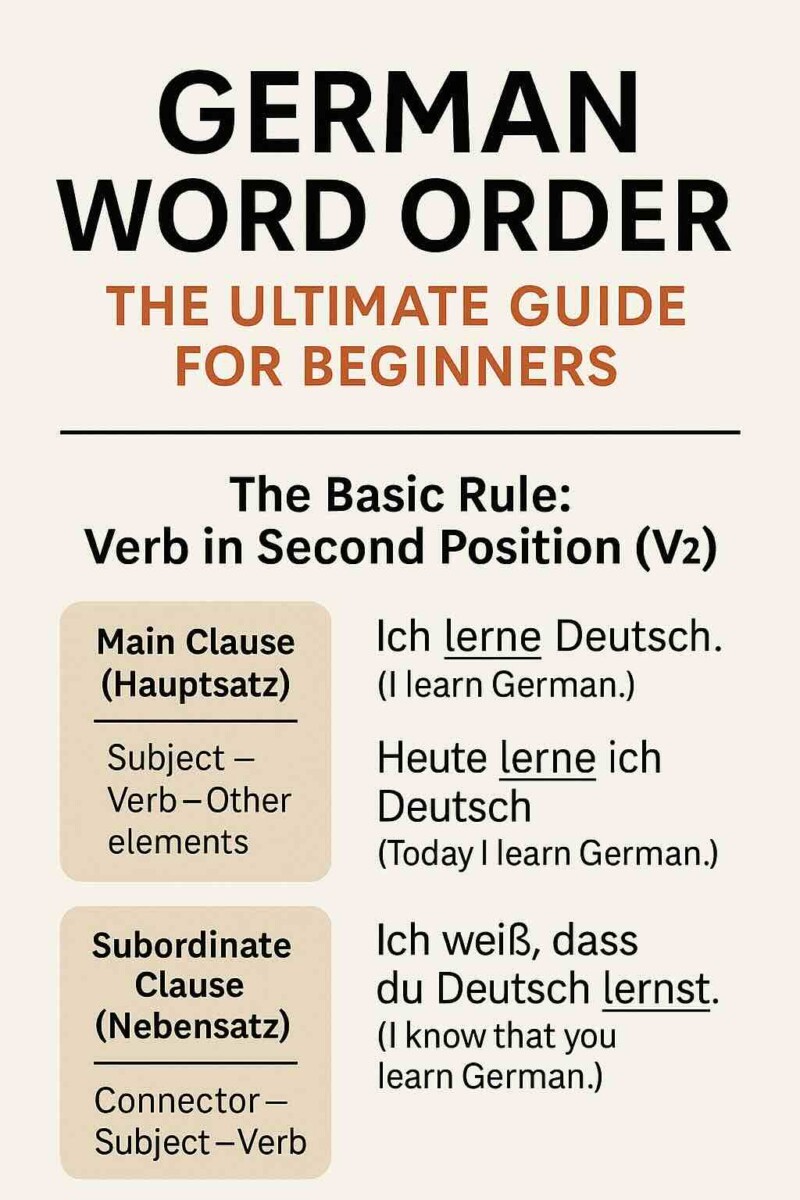
🔗 Choose your language One of the first challenges for German learners is word order. At first, it seems complicated — but German word order follows clear rules. Once you understand the patterns, you can build correct sentences with confidence. The Basic Rule: Verb in Second Position (V2) In a main clause (Hauptsatz), the conjugated […]
Tymur Levitin
German
🔗 Choose your language German adverbs can look similar but carry different nuances. A common confusion for learners is between schon and bereits. Both often translate as already, but they are not always interchangeable. The Simple Rule Schon: Everyday Usage Schon is flexible and used constantly in daily conversations. Examples: It can also mean yet […]
Tymur Levitin
German
🔗 Choose your language When learning German, many students are confused by the two past tenses: Perfekt and Präteritum. Both describe past actions, but they are not used in the same way. This guide gives you the simple rules, with examples and common mistakes to avoid. The Simple Rule That’s the easiest rule to start […]
Tymur Levitin
German
🔗 Choose your language Learning German can feel tricky at first, especially when you meet relative clauses. But don’t worry — once you understand the basic rules, relative clauses become a simple and powerful tool to make your sentences richer. What Is a Relative Clause? A relative clause is a part of a sentence that […]
Tymur Levitin

 Tymur Levitin