Skip to content

learn English German Ukrainian online

Present Simple vs Present Continuous in English, German and Ukrainian (with Russian Parallels)
Comparative Linguistics

Present Simple vs Present Continuous in English, German and Ukrainian (with Russian Parallels)

🔎 Explore structured programs in English, German or Ukrainian at Levitin Language School. Why “I work” and “I am working” Are Not the Same Many learners think this is just grammar. It isn’t. The difference between: is not about forms —it is about how a language sees time. When we compare English, German and Ukrainian, […]

Tymur Levitin | LEVITIN SCHOOL Tymur Levitin
• 04.06.2026 • 2 min read
Read full article

learn English German Ukrainian online

Can, May and “Можна”: Expressing Permission in English, German and Ukrainian (with Russian P...
28.04.2026

Can, May and “Можна”: Expressing Permission in English, German and Ukrainian (with Russian Parallels)

Comparative Linguistics

Why Permission Is More Complex Than It Seems Many learners believe that asking permission is simple. You say: “Can I…?” But language is rarely that simple. In English, German and Ukrainian, permission and possibility are expressed differently.And when students transfer patterns from Slavic languages into English or German, subtle mistakes appear. Understanding these differences is […]

Tymur Levitin | LEVITIN SCHOOL Tymur Levitin
Read more →
Articles and Zero Articles in English, German and Ukrainian (with Russian Parallels)
17.03.2026

Articles and Zero Articles in English, German and Ukrainian (with Russian Parallels)

Comparative Linguistics

🔎 Explore structured programs in English, German or Ukrainian at Levitin Language School. Why Articles Confuse Learners More Than Tenses Students often say:“Tenses are hard.” In reality, articles are harder. Why? Because articles reflect how a language sees reality. English and German use articles structurally.Ukrainian does not.Russian also does not. And this difference changes how […]

Tymur Levitin | LEVITIN SCHOOL Tymur Levitin
Read more →
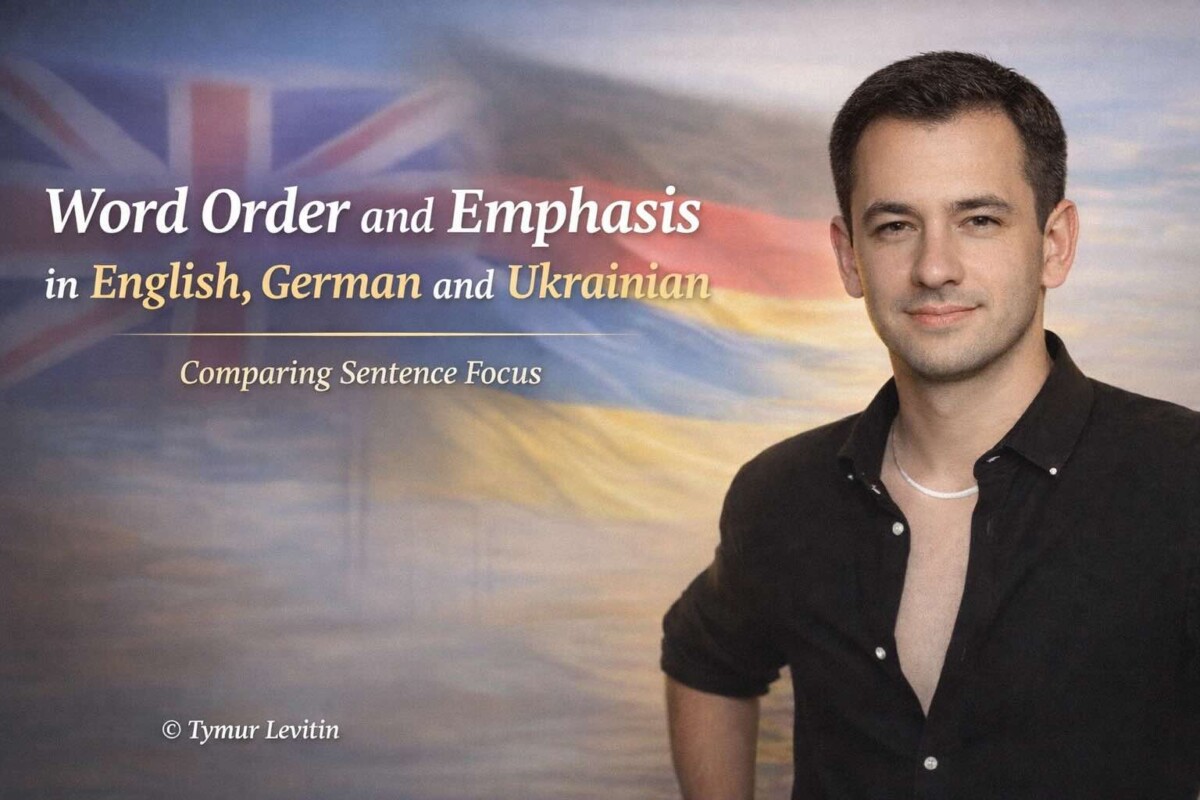
Word Order and Emphasis in English, German and Ukrainian (with Russian Parallels)
24.02.2026

Word Order and Emphasis in English, German and Ukrainian (with Russian Parallels)

Online Language Learning

🔎 If you want to explore any of these languages in depth, you can choose your direction here:English, German or Ukrainian — structured programs at Levitin Language School. Why Word Order Is Never Neutral Many learners believe that word order is just grammar. It isn’t. Word order is emphasis.Word order is intention.Word order is power. […]

Tymur Levitin | LEVITIN SCHOOL Tymur Levitin

Read more →