learn English grammar online
English
Choose your language → Three very common English verbs often confuse learners: look, see, and watch. They all relate to vision, but they are not the same.The difference is not about vocabulary — it’s about how attention works. Once you understand this, you will never mix them again. The Core Difference The simplest way to […]
 Tymur Levitin
English
Choose your language → Many English learners think speak and talk mean exactly the same thing. In many situations they can be interchangeable.But in real English they carry slightly different meanings and are used in different contexts. Understanding this difference will make your speech sound much more natural. The Core Difference The easiest way to […]
Tymur Levitin
English
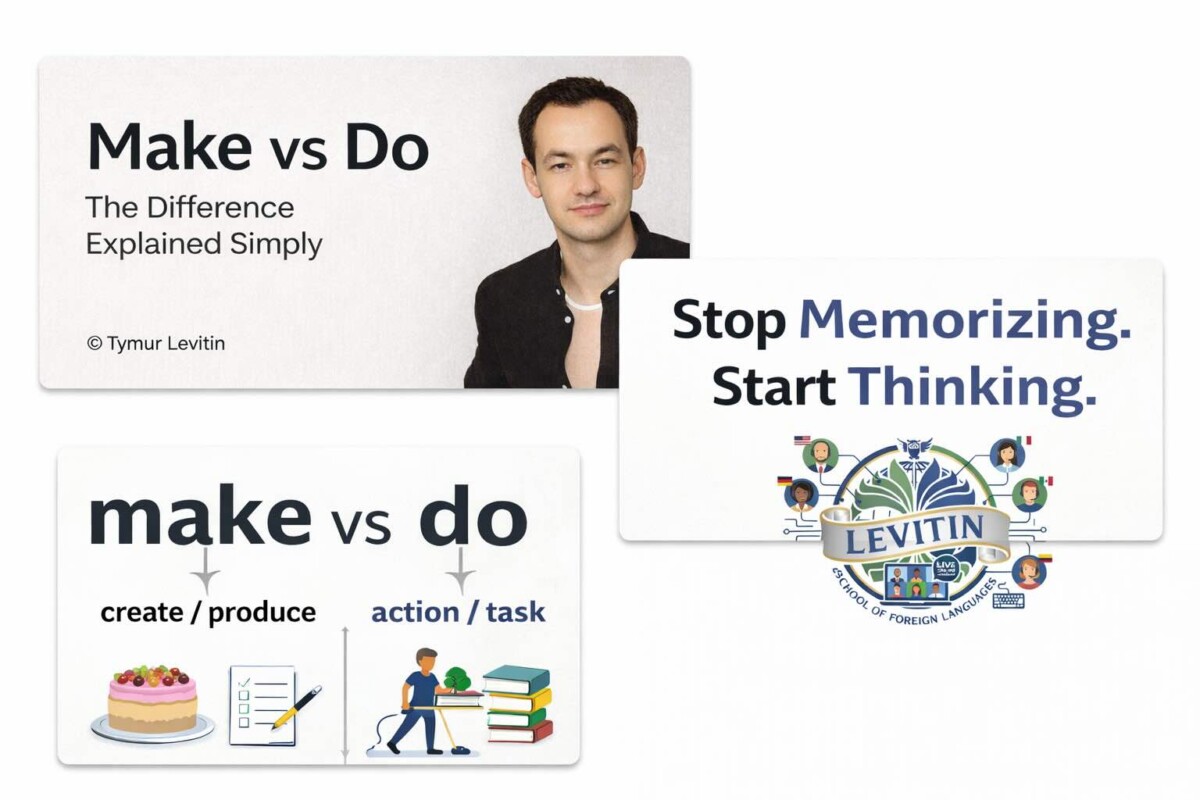
Choose your language → Two very common verbs confuse English learners all the time: make and do. Both are used constantly in everyday speech, and both can translate into the same verb in many languages.But in English they follow a simple logic. Once you see the pattern, the confusion disappears. The Core Difference The easiest […]
Tymur Levitin
English
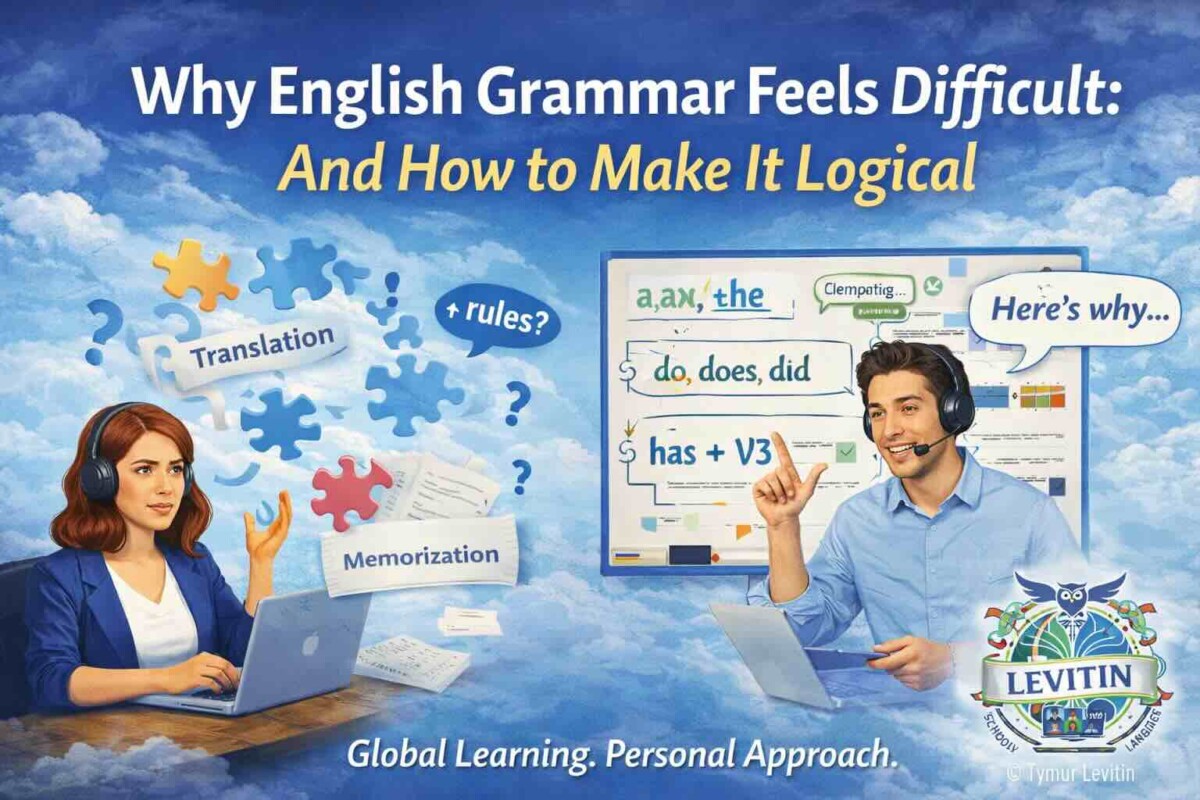
For many learners, English grammar feels confusing and sometimes even chaotic. Students often say: “English grammar has too many rules.”“Nothing seems logical.” But the truth is different. In most cases, English grammar does not feel difficult because it is complex. It feels difficult because it is explained incorrectly. Understanding the logic behind English grammar changes […]
Tymur Levitin
English
Choose your language → Two verbs cause constant confusion for English learners: say and tell. Both are used when someone speaks or gives information.But in English they follow different grammatical patterns — and that’s where most mistakes appear. Let’s make the difference clear. The Core Difference The easiest rule is this: In simple terms: Using […]
Tymur Levitin
English
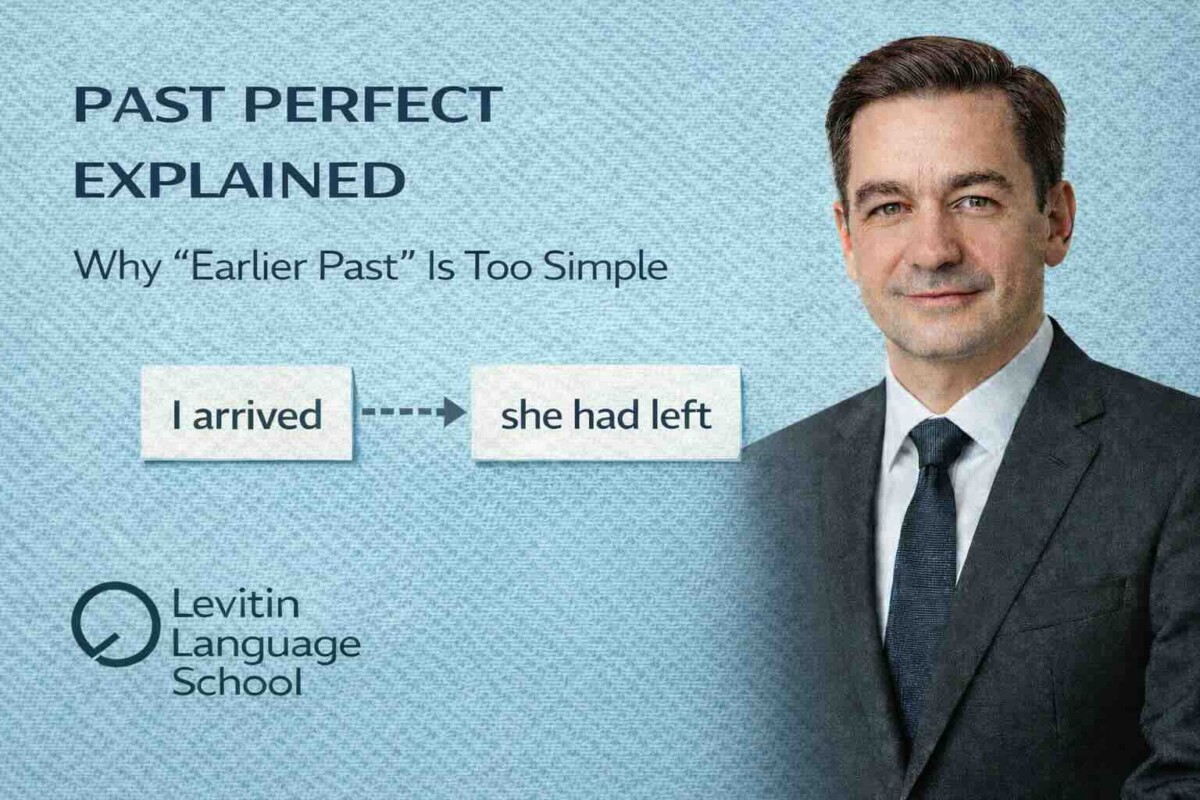
Most grammar books define Past Perfect like this: “Use Past Perfect for an action that happened before another past action.” Technically correct.Conceptually shallow. Past Perfect is not about “earlier.”It is about priority and background status inside the past. And until you see that distinction, it will always feel mechanical. Past Perfect Is About Past Perspective […]
Tymur Levitin
English
Many learners reduce Past Continuous to a formula: was / were + verb-ing Technically correct.Conceptually incomplete. Past Continuous is not about grammar structure.It is about background perspective inside the past. And if you misunderstand that, you will misuse it for years. Past Continuous Is About Internal Time Past Simple moves events forward: She opened the […]
Tymur Levitin
English
Most textbooks reduce Past Simple to one word: Finished. But that explanation is incomplete — and often misleading. Past Simple is not just about something being “over.”It is about something being locked inside a completed time frame. And that distinction changes everything. Past Simple Is About Separation Past Simple describes actions that belong to a […]
Tymur Levitin
English
Most learners are told a comforting lie very early in their English journey:Present Perfect is a past tense. It isn’t.And this misunderstanding is one of the main reasons people keep mixing Present Perfect, Past Simple, and even Present Simple, no matter how many rules they memorize. This article explains what Present Perfect really is, why […]
Tymur Levitin

 Tymur Levitin