Skip to content

Interesting information

Interesting information

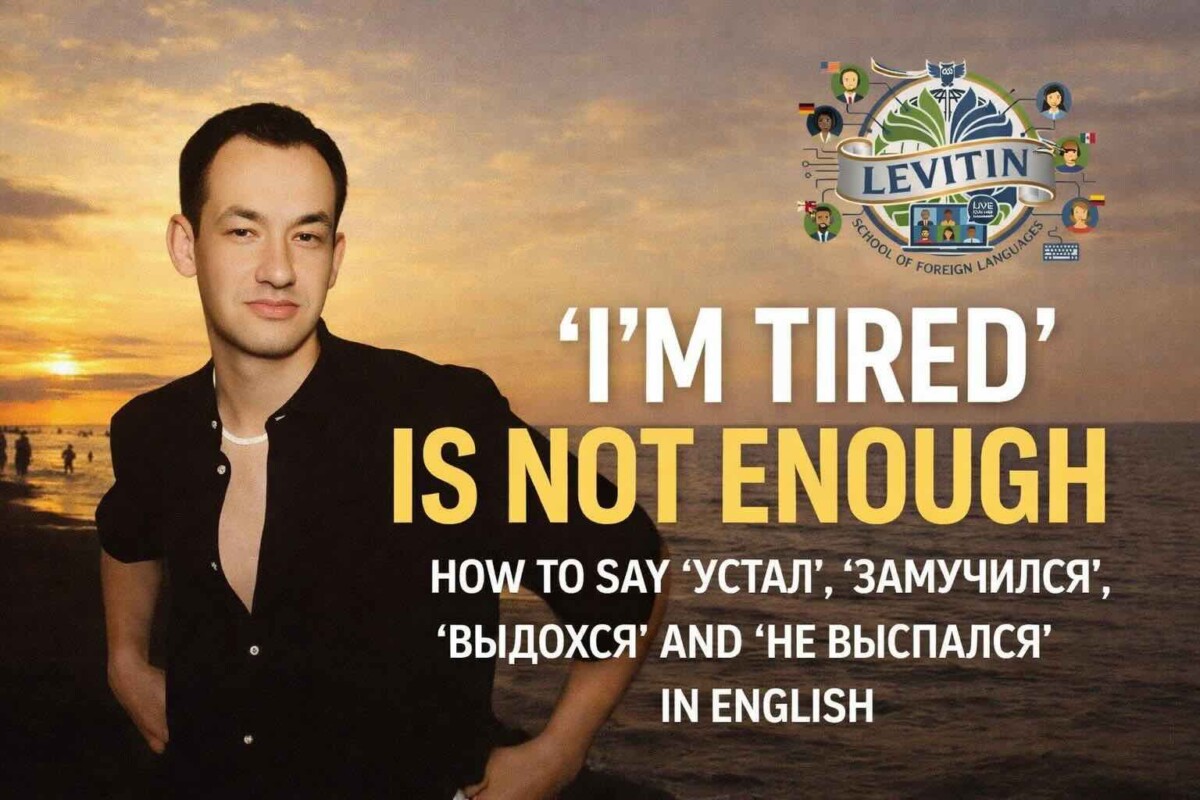
I’m Tired Is Not Enough: How to Say «Устал», «Вымотался», «Выдохся» and «Не Выспался» in Eng...
28.03.2026

I’m Tired Is Not Enough: How to Say «Устал», «Вымотался», «Выдохся» and «Не Выспался» in English

Interesting information

Interesting Information By Tymur Levitin Founder, Director and Senior Educator at Levitin Language School Global Learning. Personal Approach. ![Banner: A tired but thoughtful person sitting after a long day with the text “I’m Tired Is Not Enough”] There is a moment every language learner experiences. You come home after a long day and say one […]

Tymur Levitin | LEVITIN SCHOOL Tymur Levitin
Read more →
What Is Muscle Soreness? Understanding ‘Krepatúra’ in English | LEVITIN SCHOOL
27.03.2026

What Is Muscle Soreness? Understanding ‘Krepatúra’ in English

Interesting information

Choose your language: https://levitintymur.com/#languages The Word We Feel but Can’t Translate: What Is “Krepatúra”? In Slavic languages, we have a word for that funny post-workout pain: krepatúra. It’s not medical, but everyone knows what it means — that sweet ache in your muscles the day after training. In English, however, there’s no one-word equivalent. So […]

Tymur Levitin | LEVITIN SCHOOL Tymur Levitin
Read more →
You Don’t Think in a Language. You Translate Until You Can’t. | LEVITIN SCHOOL
26.03.2026

You Don’t Think in a Language. You Translate Until You Can’t.

Interesting information

Many learners believe they need to “start thinking” in a foreign language. They wait for a moment when translation disappearsand direct thinking appears naturally. That moment rarely comes on its own. Because what most learners call “thinking”is actually translation under pressure. What Really Happens in Your Head When learners try to speak, they often: This […]

Tymur Levitin | LEVITIN SCHOOL Tymur Levitin
Read more →
Perfection Is the Enemy of Language Learning | LEVITIN SCHOOL
26.03.2026

Perfection Is the Enemy of Language Learning

Interesting information

Many language learners believe progress requires perfection. They wait for: Only then do they feel ready to speak. Unfortunately, language does not reward perfection. It rewards participation. Why Perfection Feels Necessary Perfection feels safe. If everything is correct, you avoid: This mindset works well in many academic environments. But language is not an academic exercise. […]

Tymur Levitin | LEVITIN SCHOOL Tymur Levitin
Read more →
When Words Change Relationships: How Language Redefines Emotional Distance | LEVITIN SCHOOL
26.03.2026

When Words Change Relationships: How Language Redefines Emotional Distance

Interesting information

Language does not only describe relationships.Very often, it redefines them. A single word can transform how two people relate to each other.Not gradually, but instantly. One moment two people share a history.The next moment language replaces that history with a new label. This phenomenon appears in many languages and cultures, and it reveals something fundamental […]

Tymur Levitin | LEVITIN SCHOOL Tymur Levitin
Read more →
When Language Rewrites Reality: The Power of Saying “We Are Only Acquainted” | LEVITIN SCHOOL
26.03.2026

When Language Rewrites Reality: The Power of Saying “We Are Only Acquainted”

Interesting information

Language, Memory, and Emotional Reality Across Cultures There are moments in life when a single phrase changes the emotional reality between two people. Not gradually.Not through explanation.But instantly — through language. One such example appears in an old Russian romance whose central line reads: «Мы только знакомы. Как странно…»(Literally: “We are only acquainted. How strange…”) […]

Tymur Levitin | LEVITIN SCHOOL Tymur Levitin
Read more →
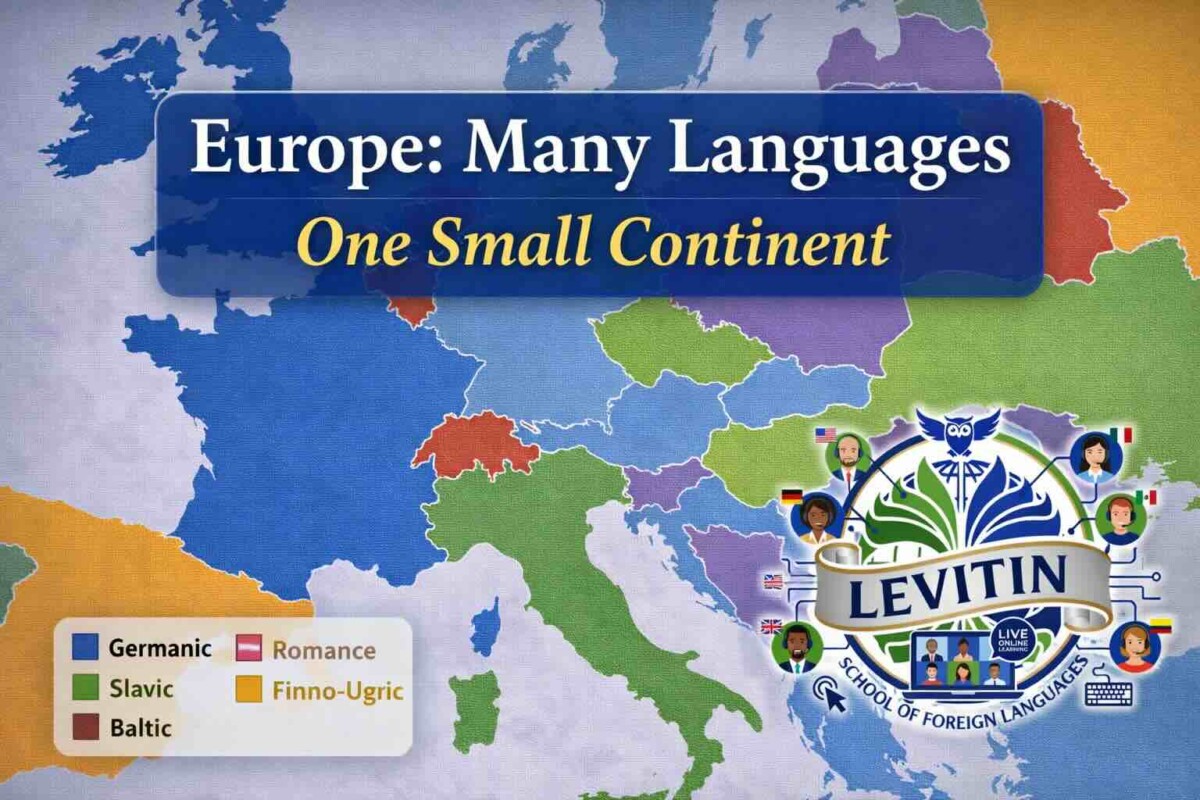
Why Europe Has So Many Languages in Such a Small Space | LEVITIN SCHOOL
22.03.2026

Why Europe Has So Many Languages in Such a Small Space

Interesting information

When people first look at the linguistic map of Europe, they often feel surprised. Compared to continents such as North America or Australia, Europe appears extremely fragmented linguistically. Countries located only a few hundred kilometers apart may use completely different languages. But the real question is not just why Europe has many languages. The deeper […]

Tymur Levitin | LEVITIN SCHOOL Tymur Levitin
Read more →
When Does a Dialect Become a Language? The Politics of Linguistics | LEVITIN SCHOOL
22.03.2026

When Does a Dialect Become a Language? The Politics of Linguistics

Interesting information

People often ask a simple question when studying languages: What is the difference between a language and a dialect? At first glance, the answer seems linguistic. But in reality, the difference is often political, historical and cultural, not purely linguistic. The examples of Luxembourg and Switzerland illustrate this perfectly. Luxembourgish: From Dialect to National Language […]

Tymur Levitin | LEVITIN SCHOOL Tymur Levitin
Read more →
Why Germans Often Don’t Understand Switzerland: The Reality of Swiss German | LEVITIN SCHOOL
22.03.2026

Why Germans Often Don’t Understand Switzerland: The Reality of Swiss German

Interesting information

Many language learners assume that if they learn German, they will automatically understand people in Switzerland. In reality, this is often not the case. A person who speaks fluent standard German may arrive in Zurich, hear local speech, and suddenly feel as if they are listening to a completely different language. This phenomenon is known […]

Tymur Levitin | LEVITIN SCHOOL Tymur Levitin
Read more →
Why Such a Small Country Needs So Many Languages: The Luxembourg Paradox | LEVITIN SCHOOL
22.03.2026

Why Such a Small Country Needs So Many Languages: The Luxembourg Paradox

Interesting information

When people look at the map of Europe, one country often raises a simple question: How can such a tiny country have such a large economic influence? That country is Luxembourg. With a population of around 660,000 people and an area of just over 2,500 square kilometers, Luxembourg is smaller than many cities. Yet it […]

Tymur Levitin | LEVITIN SCHOOL Tymur Levitin
Read more →