German sentence structure
German
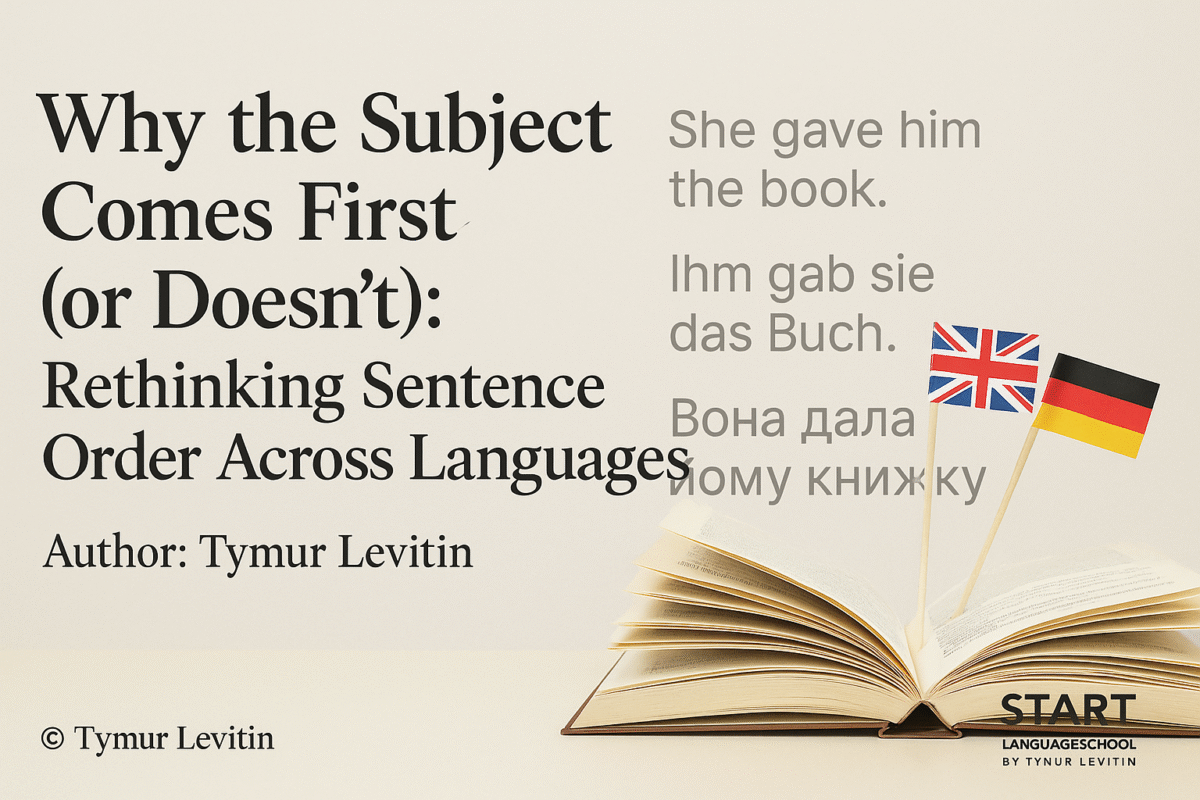
Category: German Grammar for Beginners One of the biggest differences between English and German is sentence structure. In English, the word order is usually simple: Subject + Verb + Object German often begins the same way, but the verb position can change. That is why many beginners understand individual German words but still feel confused […]
 Tymur Levitin
German
(You can choose your language here: https://levitintymur.com/#languages) In the previous articles of this series, we discovered something uncomfortable for learners:native speakers do not follow rules while speaking.They make decisions. And this leads to a deeper question. If a German speaker does not “build” a sentence step by step…then when does the sentence actually begin? Surprisingly […]
Tymur Levitin
German
German learners often feel something strange. They know the rules.They know the tables.They know where the verb “should” go. And yet, when Germans speak — it doesn’t sound like rules. It sounds… intentional. Not correct.Not incorrect.Intentional. And this is exactly where most courses fail. They teach you how to construct a sentence. But a native […]
Tymur Levitin
German
When people start learning German, they are usually given a simple survival tool:a table. After weil — verb at the end.After denn — normal word order.After dass — verb at the end.After und — nothing changes. Students memorize it.They pass tests.They even reach B2 or C1. And then something strange happens. They understand grammar — […]
Tymur Levitin
German
Before you start:👉 Choose your language: https://levitintymur.com/#languages When Grammar Is Right but Something Feels Off Many learners reach a frustrating stage in German: And still, native speakers react differently than expected. They understand you — but they don’t hear you as natural. This article explains why correct German can still sound wrong — and how […]
Tymur Levitin
German
🔗 Choose your language Learning German can feel tricky at first, especially when you meet relative clauses. But don’t worry — once you understand the basic rules, relative clauses become a simple and powerful tool to make your sentences richer. What Is a Relative Clause? A relative clause is a part of a sentence that […]
Tymur Levitin
Author’s Column | Tymur Levitin on Language, Meaning and Respect
👉 Choose your language 🌍 Read this article in other languages: German version Ukrainian version Russian version At Start Language School by Tymur Levitin, we teach our students to think in full sentences, not fragments — and that means understanding not just what to say, but how to structure it. Many language learners struggle with word order, especially when switching […]
Tymur Levitin
Author’s Column | Tymur Levitin on Language, Meaning and Respect
Choose your language The Trap of “What?” — One Question Leads Nowhere You ask a student: “What’s the object in this sentence?” They hesitate.Because what? can mean many things in German: One question alone leaves you guessing.It doesn’t reveal how the sentence really works. Grammar Is Not About Forms — It’s About Relationships Words don’t stand alone.They […]
Tymur Levitin
Author’s Column | Tymur Levitin on Language, Meaning and Respect
📌 Choose your language English | DE | UA | RU {VIDEO_EN} | {VIDEO_DE} | {VIDEO_UA} | {VIDEO_RU} 1. German Word Order Isn’t Grammar — It’s a Map of Attention German word order is one of the most misunderstood topics among learners.Not because the rules are complicated — they’re not — but because the logic behind […]
Tymur Levitin

 Tymur Levitin