German

Blasen: From Blowing to Slang in German | LEVITIN SCHOOL
22.09.2025

Blasen: From Blowing to Slang in German

Author’s Column | Tymur Levitin on Language, Meaning and Respect

Language. Identity. Choice. Meaning.👉 Choose your language Why This Word Surprises Learners At first glance, blasen seems simple: it means to blow. But in German slang, blasen has another meaning: to perform oral sex. This is where German shows its “double life”: an innocent verb in one context, and explicit slang in another. Everyday Uses […]

Tymur Levitin | LEVITIN SCHOOL Tymur Levitin
Read more
How to Use Articles in German: Der, Die, Das for Beginners | LEVITIN SCHOOL
22.09.2025

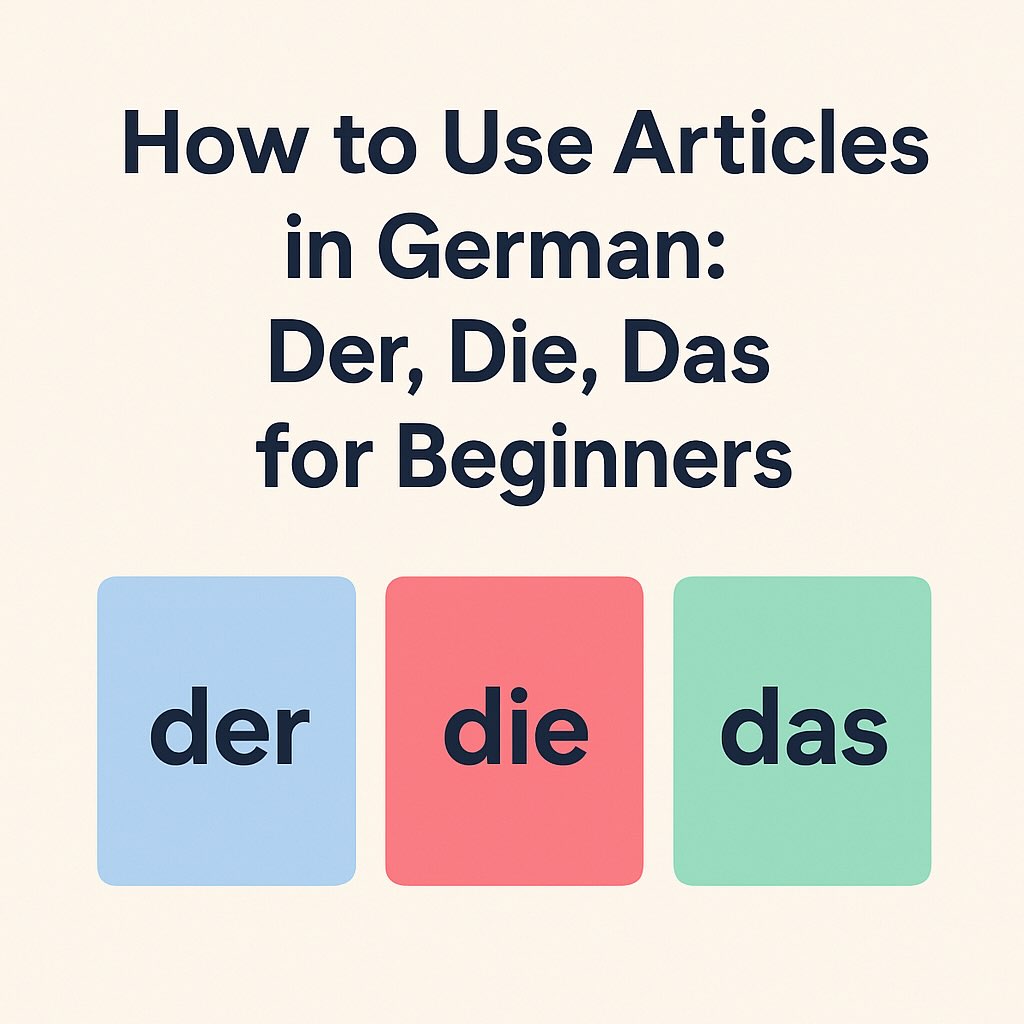
How to Use Articles in German: Der, Die, Das for Beginners

German

🔗 Choose your language For many beginners, the hardest part of German grammar is learning articles: der, die, das. Unlike English, every German noun has a gender — masculine, feminine, or neuter. This guide explains the basics of German articles with simple rules and examples. The Three German Articles Examples: Articles in the Four Cases […]

Tymur Levitin | LEVITIN SCHOOL Tymur Levitin
Read more
German Modal Verbs Made Easy: Können, Müssen, Wollen | LEVITIN SCHOOL
21.09.2025

German Modal Verbs Made Easy: Können, Müssen, Wollen

German

🔗 Choose your language Modal verbs are essential for building useful German sentences. At the A1 level, the most common are können (can), müssen (must), and wollen (want). They help you express ability, necessity, and desire. This guide explains how to use them with simple rules and examples. How Modal Verbs Work A modal verb […]

Tymur Levitin | LEVITIN SCHOOL Tymur Levitin
Read more
Kaffee in Austria: A Drink, a Place, and the Accent That Matters | LEVITIN SCHOOL
20.09.2025

Kaffee in Austria: A Drink, a Place, and the Accent That Matters

Author’s Column | Tymur Levitin on Language, Meaning and Respect

Language. Identity. Choice. Meaning.👉 Choose your language Why Coffee Isn’t Just Coffee If you order Kaffee in Austria, you’re not only asking for a drink. You’re stepping into a cultural tradition.Even the stress of the word changes meaning: One word, different accents, and a whole world of identity. How Austrians Order Coffee That single shift […]

Tymur Levitin | LEVITIN SCHOOL Tymur Levitin
Read more
Complete Guide to Learning German Online | LEVITIN SCHOOL
20.09.2025

Complete Guide to Learning German Online

German

Language. Identity. Choice. Meaning.👉 Choose your language Why Learn German Online? German is one of the most spoken languages in Europe, with over 100 million native speakers. Whether for work, study, or culture, German opens doors to Germany, Austria, Switzerland — and far beyond. Learning German online means: Levels of German: From A1 to C2 […]

Tymur Levitin | LEVITIN SCHOOL Tymur Levitin
Read more
Ich komme gleich: When “I’m coming soon” Means More Than You Think | LEVITIN SCHOOL
20.09.2025

Ich komme gleich: When “I’m coming soon” Means More Than You Think

Author’s Column | Tymur Levitin on Language, Meaning and Respect

Language. Identity. Choice. Meaning.👉 Choose your language Why This Phrase Traps Learners German is often praised for its logic and precision — but sometimes one tiny phrase shows how much context matters. In everyday German, kommen means to come, to arrive.In sexual slang, kommen also means to orgasm. So the innocent Ich komme gleich can […]

Tymur Levitin | LEVITIN SCHOOL Tymur Levitin
Read more
“Don’t Write Me Letters, Dear Countess”: A Song to Homeland, Not to a Woman | LEVITIN SCHOOL
20.09.2025

“Don’t Write Me Letters, Dear Countess”: A Song to Homeland, Not to a Woman

Author’s Column | Tymur Levitin on Language, Meaning and Respect

“Не пишите мне писем, дорогая графиня…”— sung under guitars in courtyards, passed across generations First Encounter: Why This Song Matters I was fifteen, the youngest in a group where the oldest was forty-one.Someone played this under a guitar. Not a concert, a life. And I didn’t hear the ceremonial “не хочу умирать” (I don’t want […]

Tymur Levitin | LEVITIN SCHOOL Tymur Levitin
Read more
The Language I Live: Flieg nicht so schnell, Leben | LEVITIN SCHOOL
19.09.2025

The Language I Live: Flieg nicht so schnell, Leben

Author’s Column | Tymur Levitin on Language, Meaning and Respect

Author’s Column by Tymur Levitin «О, не лети так, жизнь, слегка замедли шаг…»— Rauf Kubaev, О, не лети так, жизнь «Flieg nicht so schnell, Leben…»— German rendering There are songs where a man begs for love.There are songs where he thanks for the years that passed.And then there are songs like this one — where […]

Tymur Levitin | LEVITIN SCHOOL Tymur Levitin
Read more
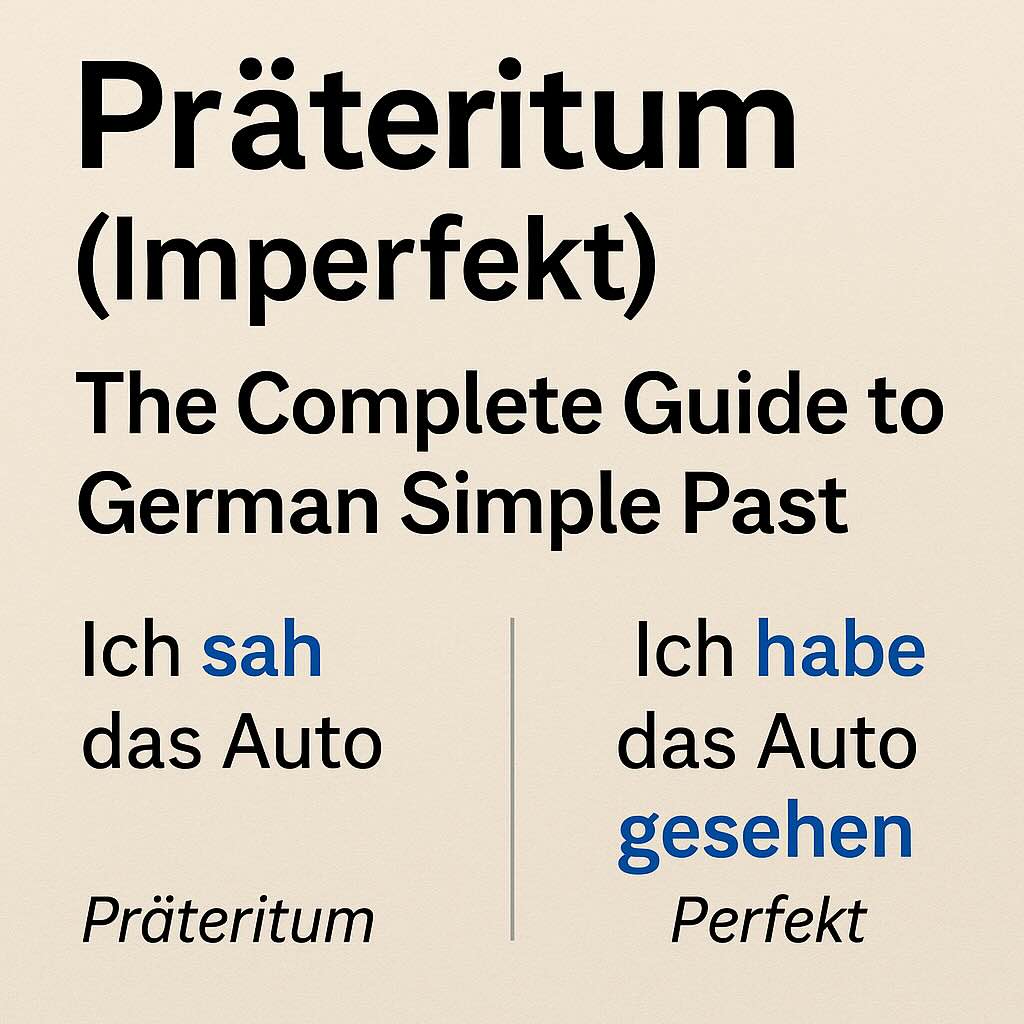
Präteritum (Imperfekt) — The Complete Guide to German Simple Past | LEVITIN SCHOOL
19.09.2025

Präteritum (Imperfekt) — The Complete Guide to German Simple Past

Author’s Column | Tymur Levitin on Language, Meaning and Respect

“Präteritum is not just ‘the written past.’ It is the tense of bare fact, narrative distance, and German identity.” — Tymur Levitin Choose your language Introduction: Beyond “Written Past” Every learner hears: That is not false, but it hides the real picture.Präteritum is the tense of facts, narration, and formality. It is the tense that […]

Tymur Levitin | LEVITIN SCHOOL Tymur Levitin
Read more
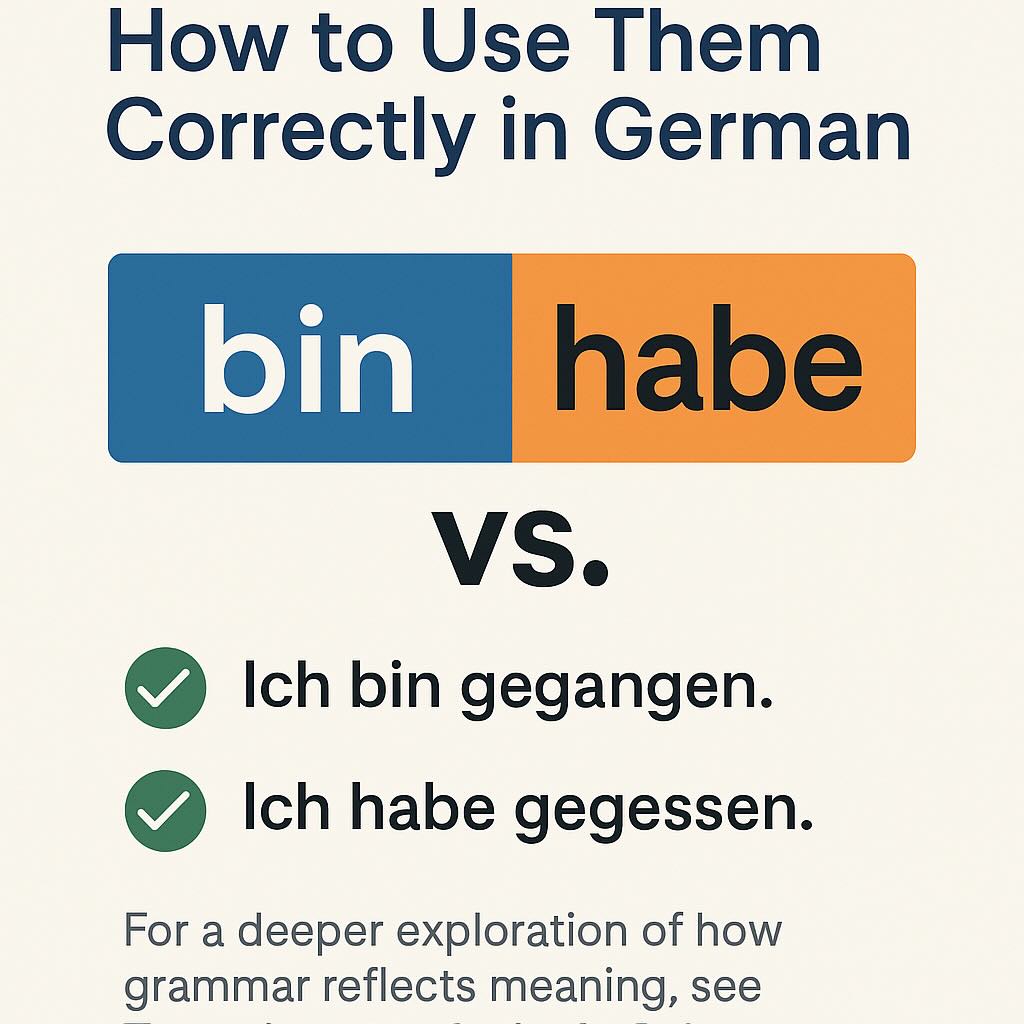
Sein vs. Haben: How to Use Them Correctly in German | LEVITIN SCHOOL
18.09.2025

Sein vs. Haben: How to Use Them Correctly in German

German

🔗 Choose your language When learning German, two of the first verbs you meet are sein (to be) and haben (to have). They are not only important as main verbs but also as auxiliary verbs for building the past tense (Perfekt). Many beginners get confused about when to use sein and when to use haben. […]

Tymur Levitin | LEVITIN SCHOOL Tymur Levitin
Read more