English

Tense Shift and Its Blind Spots: A Full Comparison of English, German, Ukrainian, and Russian
12.09.2025

Tense Shift and Its Blind Spots: A Full Comparison of English, German, Ukrainian, and Russian

Author’s Column | Tymur Levitin on Language, Meaning and Respect

🗂️ Category: Online Language Learning 🗣️ Introduction We all know the basic formula:👉 He said, “I am coming.” → He said he was coming. But when you compare British and American English, German, Ukrainian, and Russian, the story becomes much deeper. This article digs all the way down to the atomic level of tense shift. […]

Tymur Levitin | LEVITIN SCHOOL Tymur Levitin
Read more
MUST vs HAVE TO vs NEED TO in Business English: Obligation or Necessity? | LEVITIN SCHOOL
11.09.2025

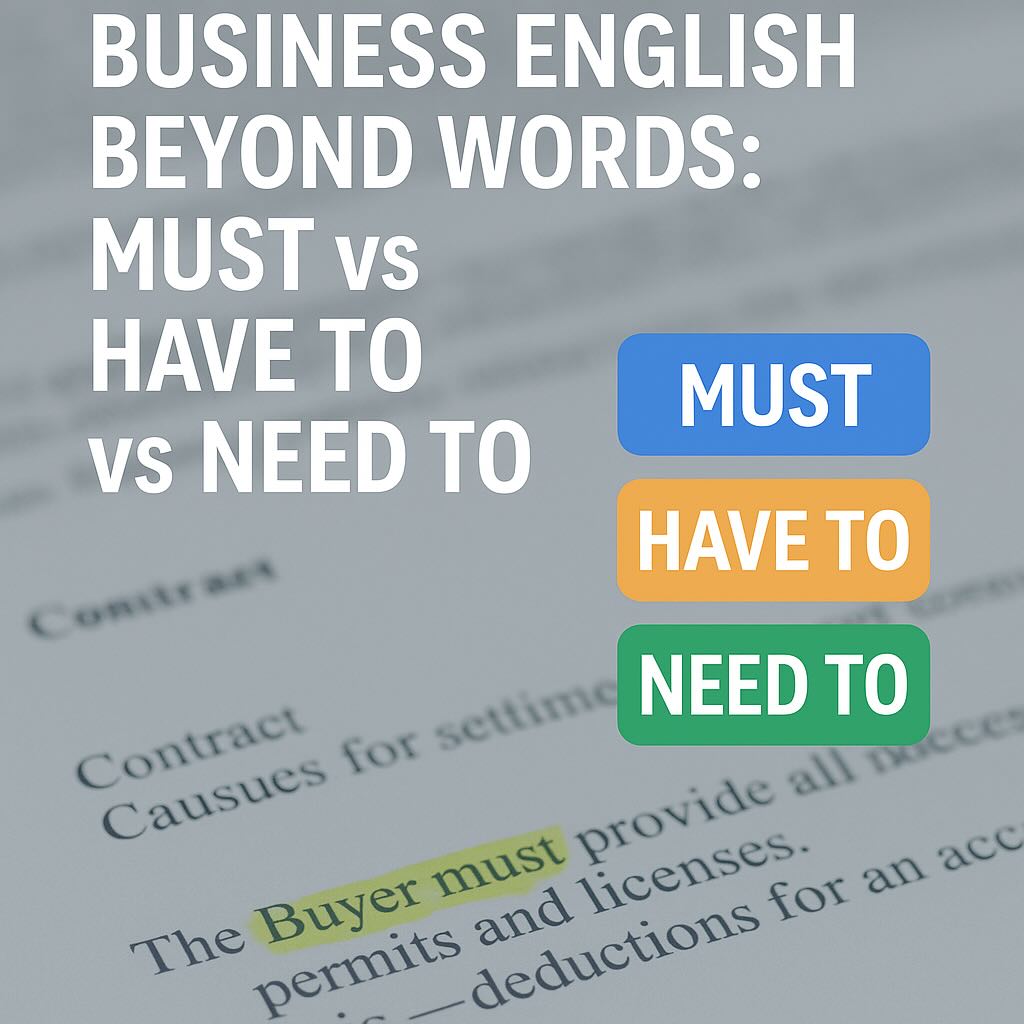
MUST vs HAVE TO vs NEED TO in Business English: Obligation or Necessity?

Author’s Column | Tymur Levitin on Language, Meaning and Respect

👉 Choose your language MUST vs HAVE TO vs NEED TO in Business English: Obligation or Necessity? In business communication, obligations and necessities are everywhere: contracts, negotiations, presentations, emails. But English offers several ways to express them — must, have to, need to. At first glance, they seem interchangeable. In reality, each carries a different […]

Tymur Levitin | LEVITIN SCHOOL Tymur Levitin
Read more
Past Simple vs Present Perfect: When to Use Which? | LEVITIN SCHOOL
10.09.2025

Past Simple vs Present Perfect: When to Use Which?

English

👉 Choose your language Why These Tenses Confuse Learners Both Past Simple and Present Perfect describe past events. The difference is not always clear, especially for learners whose native languages use only one past form. Let’s break it down step by step. Past Simple — Finished Time We use Past Simple when the action is […]

Tymur Levitin | LEVITIN SCHOOL Tymur Levitin
Read more
English for Business Meetings: Speak Professionally and Confidently Online | LEVITIN SCHOOL
10.09.2025

English for Business Meetings: Speak Professionally and Confidently Online

Career & Language Skills

🌍 Choose your language Introduction In today’s global workplace, many important decisions are made in English-language business meetings. Whether online or in person, your ability to speak clearly and professionally can determine the outcome of negotiations, teamwork, and career growth. At Levitin Language School | Start Language School by Tymur Levitin, we help professionals gain […]

Tymur Levitin | LEVITIN SCHOOL Tymur Levitin
Read more
Business Day vs Working Day: Why They Are Not the Same | LEVITIN SCHOOL
10.09.2025

Business Day vs Working Day: Why They Are Not the Same

Author’s Column | Tymur Levitin on Language, Meaning and Respect

Choose your language: https://levitintymur.com/#languages Introduction At first glance, “business day” and “working day” seem interchangeable. Yet in contracts, banking, and labor law, they create different rights and obligations. A deadline in business days may expire earlier than one in working days. A vacation entitlement in working days is not the same as in calendar days. […]

Tymur Levitin | LEVITIN SCHOOL Tymur Levitin
Read more
How to Translate Legal Terminology from Eastern European Court Systems Includes documents in...
10.09.2025

How to Translate Legal Terminology from Eastern European Court Systems Includes documents in Russian, Ukrainian, and other legal contexts — with translation into English and German

Author’s Column | Tymur Levitin on Language, Meaning and Respect

📌 Choose your language: 🔗 https://levitintymur.com/#languages ✍️ Author’s Column by Tymur Levitin — founder, director, and senior teacher at Start Language School by Tymur Levitin / Levitin Language School© Tymur Levitin. All rights reserved. Translation logic, examples, and structure — original author methodology. ⚖️ Why Legal Translation from Eastern Europe Requires Extra Care Legal documents […]

Tymur Levitin | LEVITIN SCHOOL Tymur Levitin
Read more
How to Translate English Court Terms into German, Ukrainian, and Russian | LEVITIN SCHOOL
09.09.2025

How to Translate English Court Terms into German, Ukrainian, and Russian

Author’s Column | Tymur Levitin on Language, Meaning and Respect

📘 Legal terminology that’s easy to misread — and dangerous to mistranslate 👤 Author: Tymur Levitin — founder, director, and senior teacher at Levitin Language School 📍 Choose your language:🔗 https://levitintymur.com/#languages ⚖️ Why English Legal Terms Require More Than Just Translation English court terminology is widely used around the world — in legal contracts, immigration, […]

Tymur Levitin | LEVITIN SCHOOL Tymur Levitin
Read more
What’s the Difference Between Business Day, Banking Day, Working Day, and Calendar Day?
09.09.2025

What’s the Difference Between Business Day, Banking Day, Working Day, and Calendar Day?

Author’s Column | Tymur Levitin on Language, Meaning and Respect

Deadlines, transfers, and vacation—clear rules across countries Choose your language: https://levitintymur.com/#languages Why this topic matters Have you ever waited for your salary or a bank transfer, only to hear: “It’s not a business day”?Or tried to calculate your vacation and realized it depends on whether the law says calendar days or working days? In contracts, […]

Tymur Levitin | LEVITIN SCHOOL Tymur Levitin
Read more
SHALL in Business English: Obligation, Promise, or Nothing at All? | LEVITIN SCHOOL
09.09.2025

SHALL in Business English: Obligation, Promise, or Nothing at All?

Author’s Column | Tymur Levitin on Language, Meaning and Respect

👉 Choose your language In Business English, tiny words decide big outcomes. Shall is one of those words.Schoolbooks often say shall = will. Real business doesn’t. In contracts, emails, and at the negotiating table, using (or avoiding) shall changes meaning, leverage, and risk. Key takeaways (read this first) 1) What grammar says vs what business […]

Tymur Levitin | LEVITIN SCHOOL Tymur Levitin
Read more
Present Simple vs Present Continuous: Easy Guide + Examples | LEVITIN SCHOOL
09.09.2025

Present Simple vs Present Continuous: Easy Guide + Examples

Author’s Column | Tymur Levitin on Language, Meaning and Respect

👉 Choose your language Why These Two Tenses Are Confusing For many learners, Present Simple and Present Continuous feel almost the same. Both describe something happening in the present. But their logic is different. Once you see the difference, you won’t mix them again. Present Simple — Facts and Habits We use Present Simple for: […]

Tymur Levitin | LEVITIN SCHOOL Tymur Levitin
Read more