English

Reported Commands Explained — Why English Changes Orders into Actions | LEVITIN SCHOOL
10.03.2026

Reported Commands Explained — Why English Changes Orders into Actions

English

Many learners understand reported statements. Many understand reported questions. But commands behave differently. When English reports a command, it does not keep the imperative form. It transforms the structure completely. And that transformation reveals how English treats authority and intention. Direct Commands A direct command uses the imperative. Close the door.Call me tomorrow.Stop talking. The […]

Tymur Levitin | LEVITIN SCHOOL Tymur Levitin
Read more
Reported Questions Explained — Why English Removes the Question | LEVITIN SCHOOL
10.03.2026

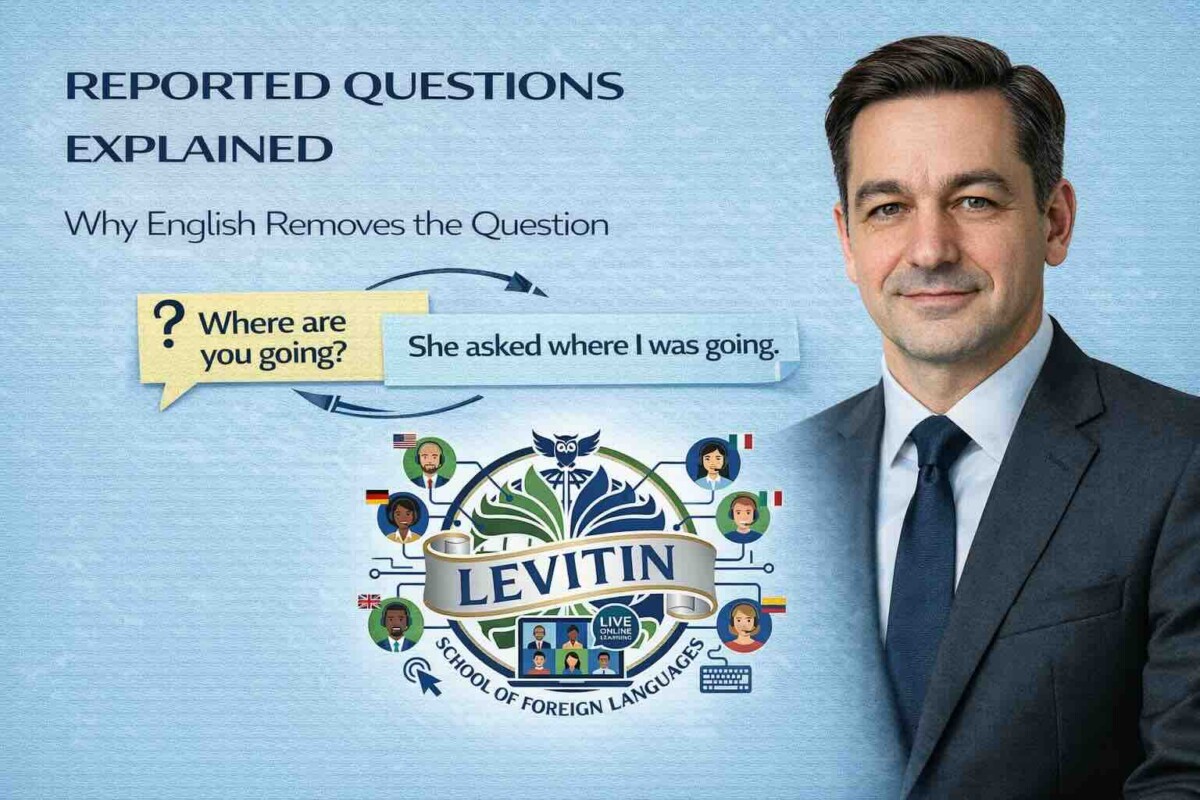
Reported Questions Explained — Why English Removes the Question

English

Many learners expect reported questions to behave like normal questions. You simply repeat the question structure. But English does something surprising. It removes the question structure completely. And that is the key idea. The First Big Change Direct question: Where are you going? Reported question: She asked where I was going. Notice what disappeared. There […]

Tymur Levitin | LEVITIN SCHOOL Tymur Levitin
Read more
Reported Speech Explained — Why English Changes Your Words | LEVITIN SCHOOL
10.03.2026

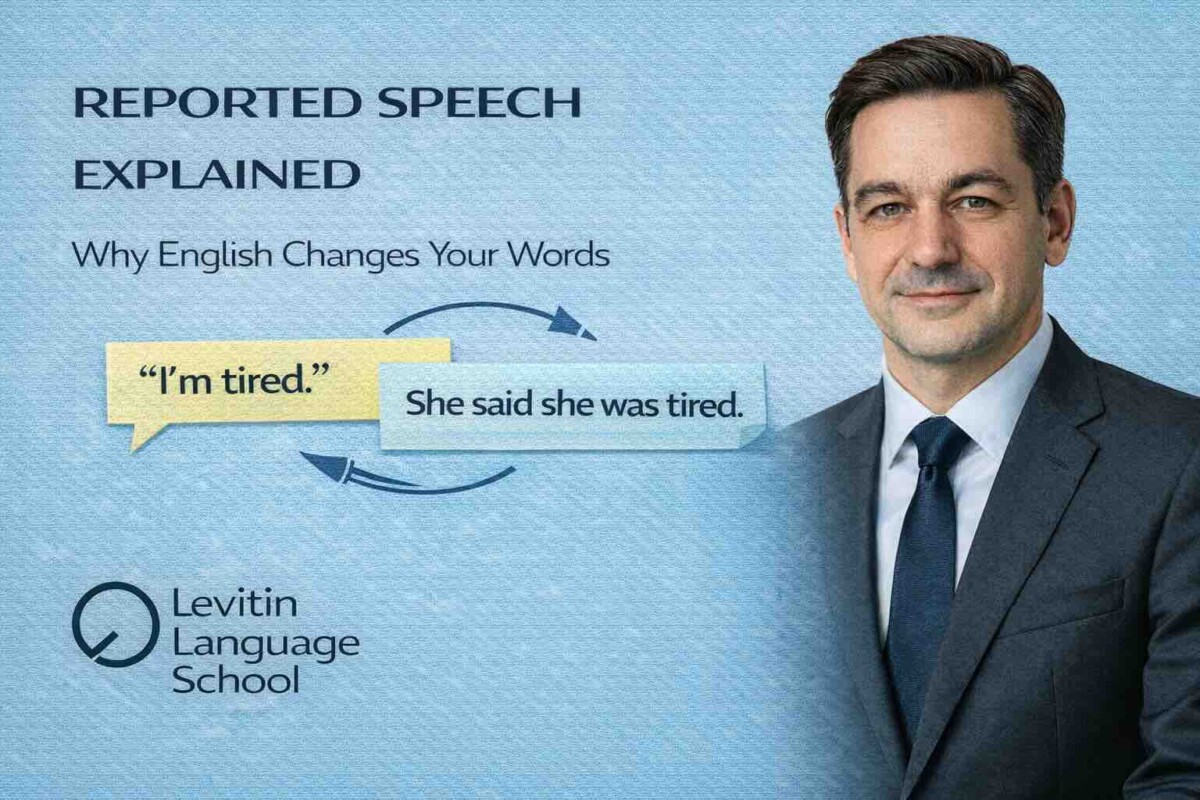
Reported Speech Explained — Why English Changes Your Words

English

Many learners think reported speech is a simple transformation. Direct speech becomes indirect speech. Change the pronouns.Move the tense back. And the job is done. But this view misses the real point. Reported speech is not about grammar. It is about ownership of information. Direct Speech Belongs to the Speaker When someone speaks directly, the […]

Tymur Levitin | LEVITIN SCHOOL Tymur Levitin
Read more
Already vs Yet — Explained Simply | LEVITIN SCHOOL
04.03.2026

Already vs Yet — Explained Simply

English

Choose your language → Learners often know the grammar, but still sound “non-native” because of two small words: already and yet. Both talk about time, both appear with the Present Perfect, and both confuse students for the same reason: many languages don’t split this meaning the way English does. Let’s make it clear — in […]

Tymur Levitin | LEVITIN SCHOOL Tymur Levitin
Read more
Sequence of Tenses Explained — Why Time Does Not Always Move Forward | LEVITIN SCHOOL
04.03.2026

Sequence of Tenses Explained — Why Time Does Not Always Move Forward

English

Students often believe time in English moves in a straight line. Past → Present → Future. But real English does not follow a line. It follows logic of reference. And that is where Sequence of Tenses begins. The Core Rule — But Not the Whole Truth You were probably told: “If the main verb is […]

Tymur Levitin | LEVITIN SCHOOL Tymur Levitin
Read more
Future Perfect Continuous Explained — Why It Is Not Just “Will Have Been + Verb-ing”
01.03.2026

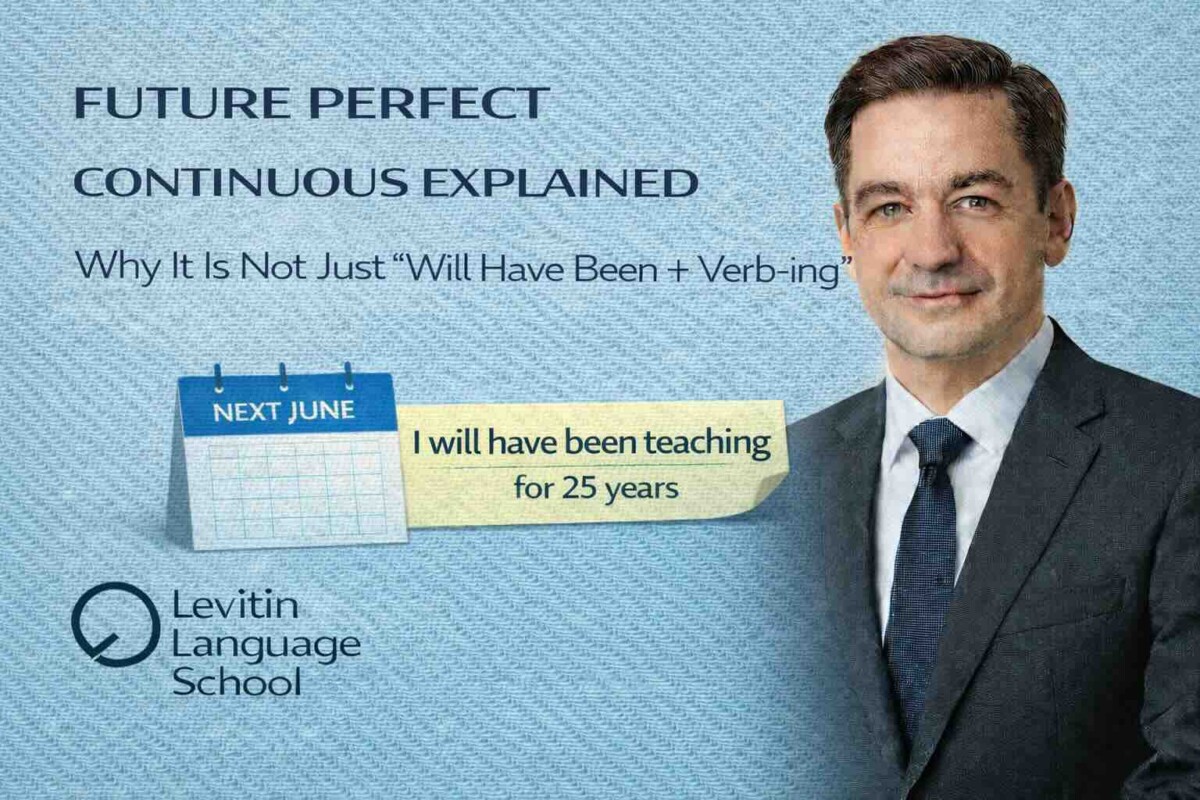
Future Perfect Continuous Explained — Why It Is Not Just “Will Have Been + Verb-ing”

English

At first glance, Future Perfect Continuous looks intimidating: will have been + verb-ing Students usually memorize the formula and move on. But the structure is not about grammar difficulty. It is about measuring duration from a future perspective. And that difference changes everything. The Real Function Future Perfect Continuous answers one question: How long will […]

Tymur Levitin | LEVITIN SCHOOL Tymur Levitin
Read more
Since vs For — Explained Simply | LEVITIN SCHOOL
24.02.2026

Since vs For — Explained Simply

English

Choose your language → One of the most common mistakes English learners make is confusing since and for. Both are used to talk about time, but they are not the same. Let’s clear it up once and for all. The Core Difference Think of it this way: since answers when it started, and for answers […]

Tymur Levitin | LEVITIN SCHOOL Tymur Levitin
Read more
Why “Katz” Means Hangover — And Why a Cat Is Never Just a Cat | LEVITIN SCHOOL
24.02.2026

Why “Katz” Means Hangover — And Why a Cat Is Never Just a Cat

English

There are words that look simple.And then there are words that open cultural trapdoors. “Katz.”In one language it sounds like a surname.In another — like a cat.In yet another — like the morning after a very bad decision. This is not just a linguistic coincidence. It is a cultural map. And once you see it, […]

Tymur Levitin | LEVITIN SCHOOL Tymur Levitin
Read more
“I Love You” Is Not the Same in Every Language | LEVITIN SCHOOL
24.02.2026

“I Love You” Is Not the Same in Every Language

English

Author’s Column by Tymur LevitinLanguage. Identity. Choice. Meaning. “Love is universal. The way we say it is not.”— Tymur Levitin Most students believe they understand the phrase I love you. They can translate it.They can pronounce it.They know when to say it. But they rarely understand what it actually carries inside different cultures. And this […]

Tymur Levitin | LEVITIN SCHOOL Tymur Levitin
Read more