English

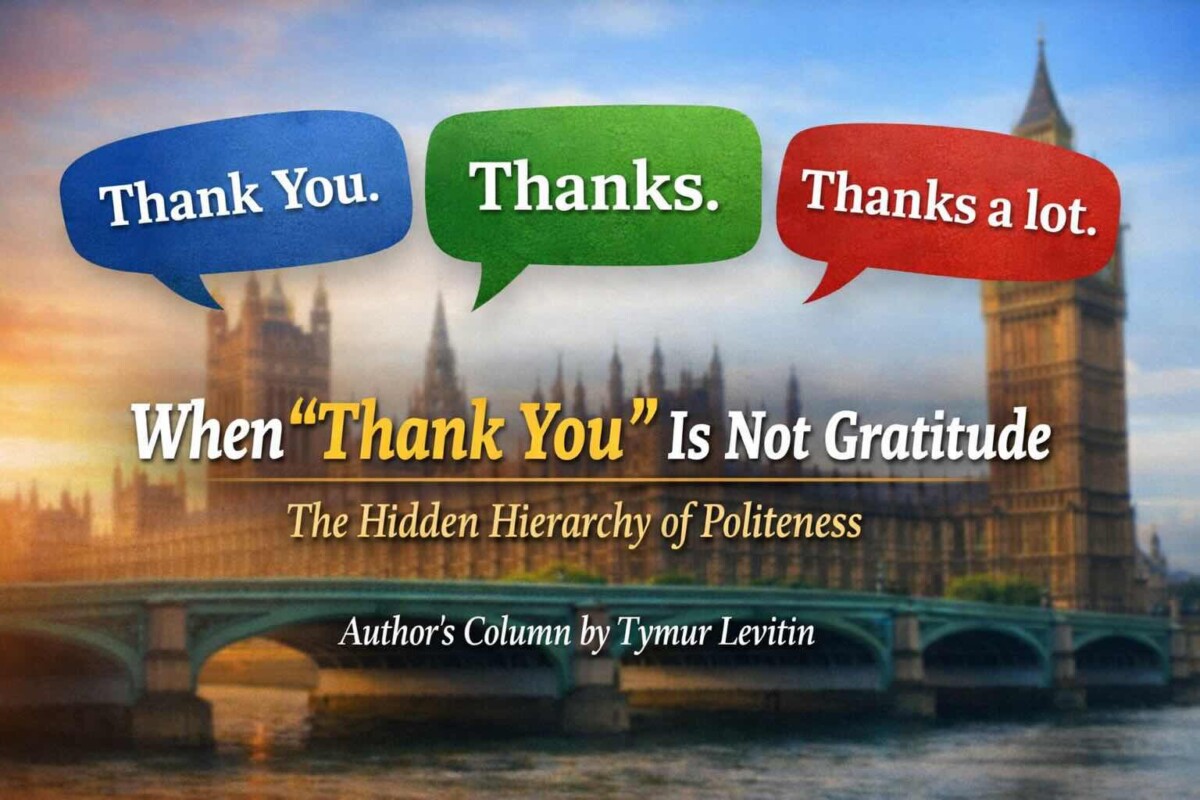
When “Thank You” Is Not Gratitude: The Hidden Hierarchy of Politeness | LEVITIN SCHOOL
24.02.2026

When “Thank You” Is Not Gratitude: The Hidden Hierarchy of Politeness

English

Author’s Column by Tymur LevitinLanguage. Identity. Choice. Meaning. “Politeness is not in the phrase. It’s in the power dynamic.”— Tymur Levitin Most students believe they understand thank you. They can translate it.They can pronounce it.They use it daily. And yet — they often don’t understand what it really does in a conversation. This article is […]

Tymur Levitin | LEVITIN SCHOOL Tymur Levitin
Read more
Will and Shall: Two Futures, Two Wills | LEVITIN SCHOOL
24.02.2026

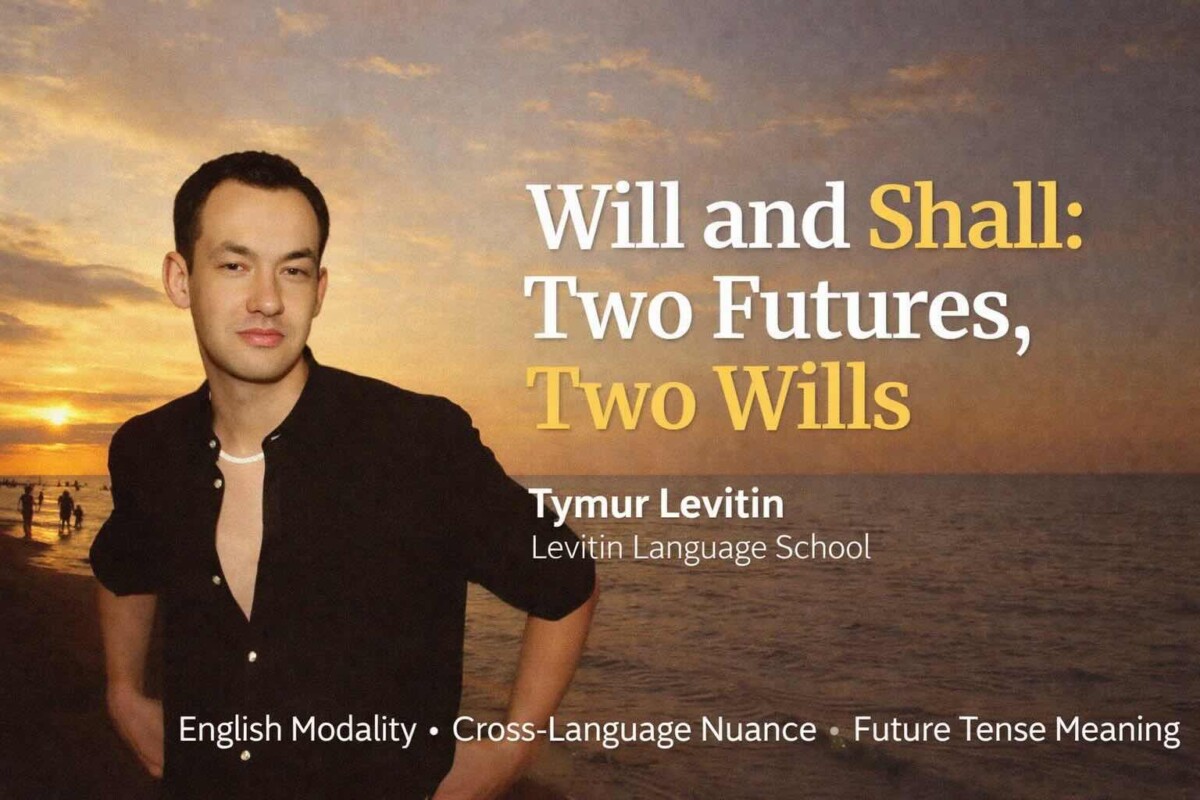
Will and Shall: Two Futures, Two Wills

English

There are two futures in English. Most textbooks pretend there is only one. Students are told: “Will is the future. Shall is old-fashioned.”Simple. Clean. Convenient. And completely misleading. Because will and shall do not merely describe time.They describe force. They describe who decides. They describe where the power sits — inside the speaker or outside […]

Tymur Levitin | LEVITIN SCHOOL Tymur Levitin
Read more
Red as a Crab, Blue as Drunk, Green as Young | LEVITIN SCHOOL
24.02.2026

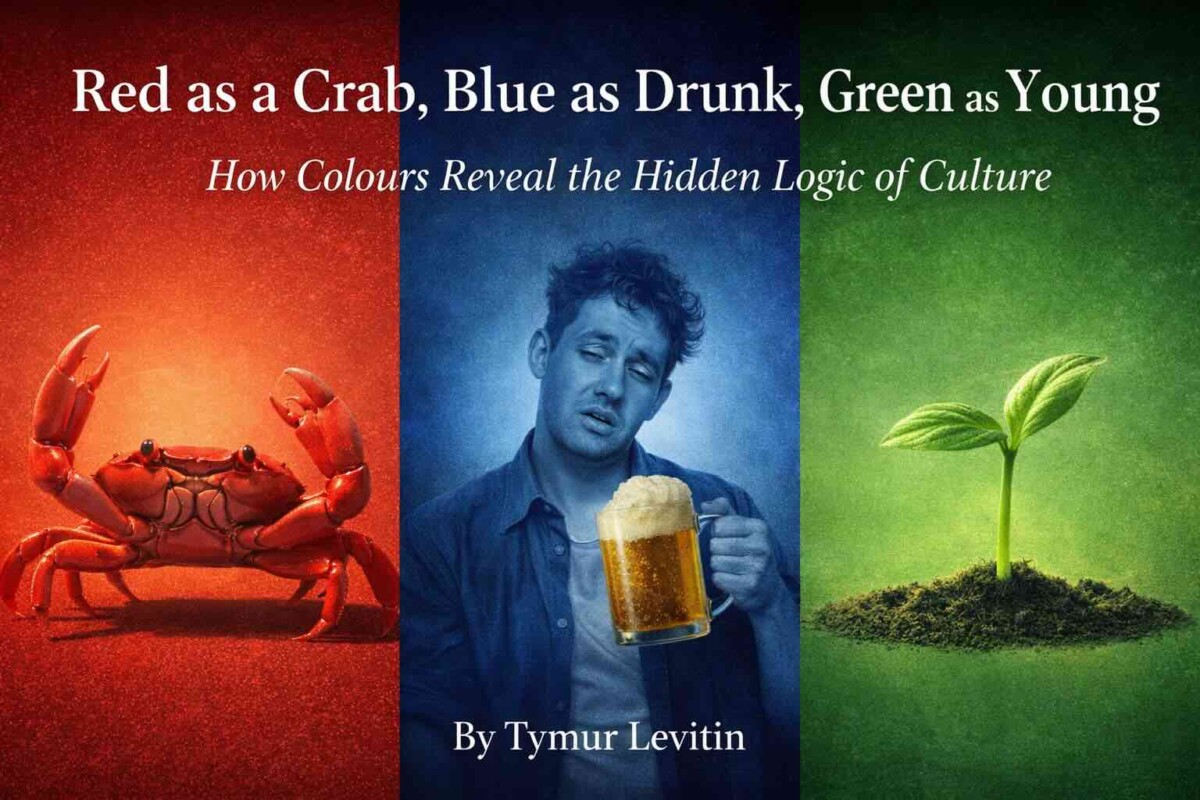
Red as a Crab, Blue as Drunk, Green as Young

English

How Colours Reveal the Hidden Logic of Culture We think colours are universal. Red is red.Green is green.Blue is blue. But the moment you step into another language, colour stops being visual — and becomes cultural. And this is where misunderstandings begin. Red Is Not Always Just Red In English, someone embarrassed is “red as […]

Tymur Levitin | LEVITIN SCHOOL Tymur Levitin
Read more
You Talk About Bread, I Talk About the Sky | LEVITIN SCHOOL
24.02.2026

You Talk About Bread, I Talk About the Sky

English

Why Idioms Reveal the Way We Think — Not Just the Way We Speak There is a Polish proverb that has always fascinated me: „Ty o chlebie, ja o niebie.”You talk about bread, I talk about the sky. At first glance it sounds poetic. Almost lyrical. But in reality it describes something painfully common: two […]

Tymur Levitin | LEVITIN SCHOOL Tymur Levitin
Read more
Why Are You Telling Me This? | LEVITIN SCHOOL
24.02.2026

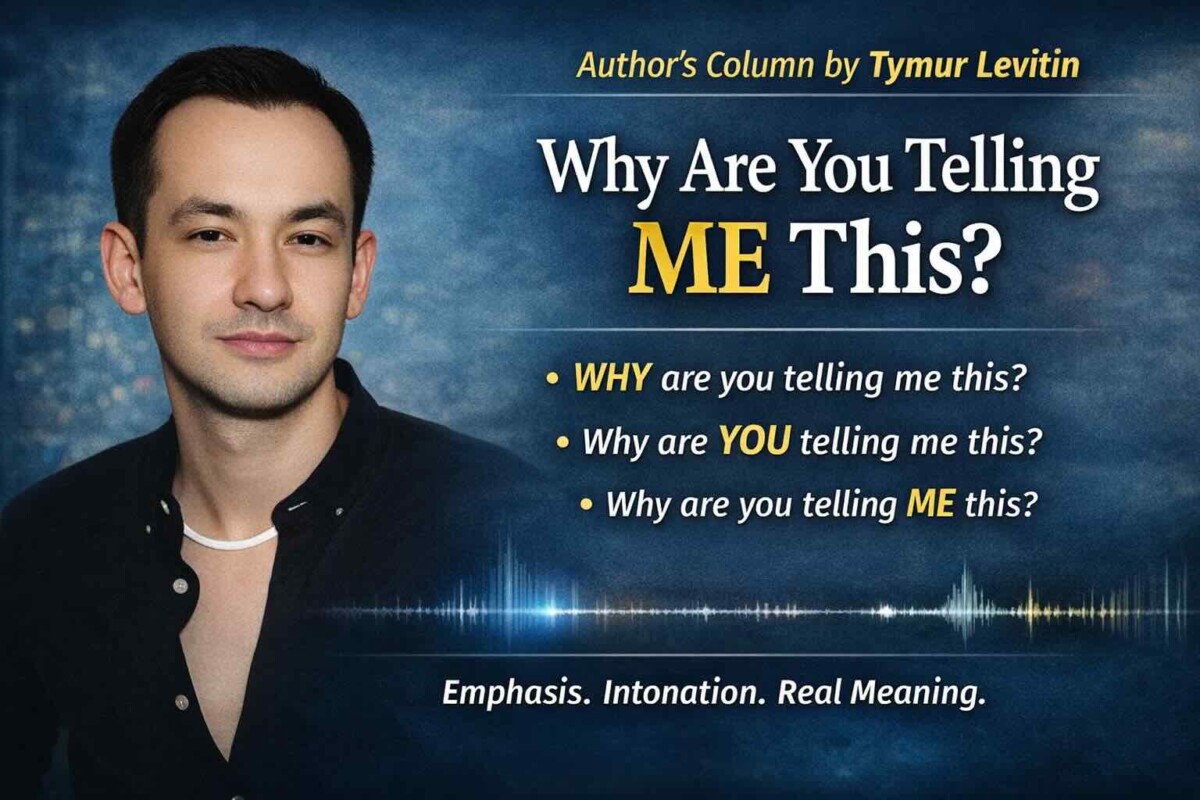
Why Are You Telling Me This?

Beyond Grammar: Real Meaning in Real Speech

Author’s Column by Tymur LevitinLanguage. Identity. Choice. Meaning. There is a moment in communication when grammar stops mattering. The sentence is correct.The structure is clean.The words are neutral. And yet — the atmosphere changes. Let’s take a simple question: Why are you telling me this? On paper, it is harmless. In reality, it can be […]

Tymur Levitin | LEVITIN SCHOOL Tymur Levitin
Read more
It’s Not What You Say — It’s What You Emphasize | LEVITIN SCHOOL
24.02.2026

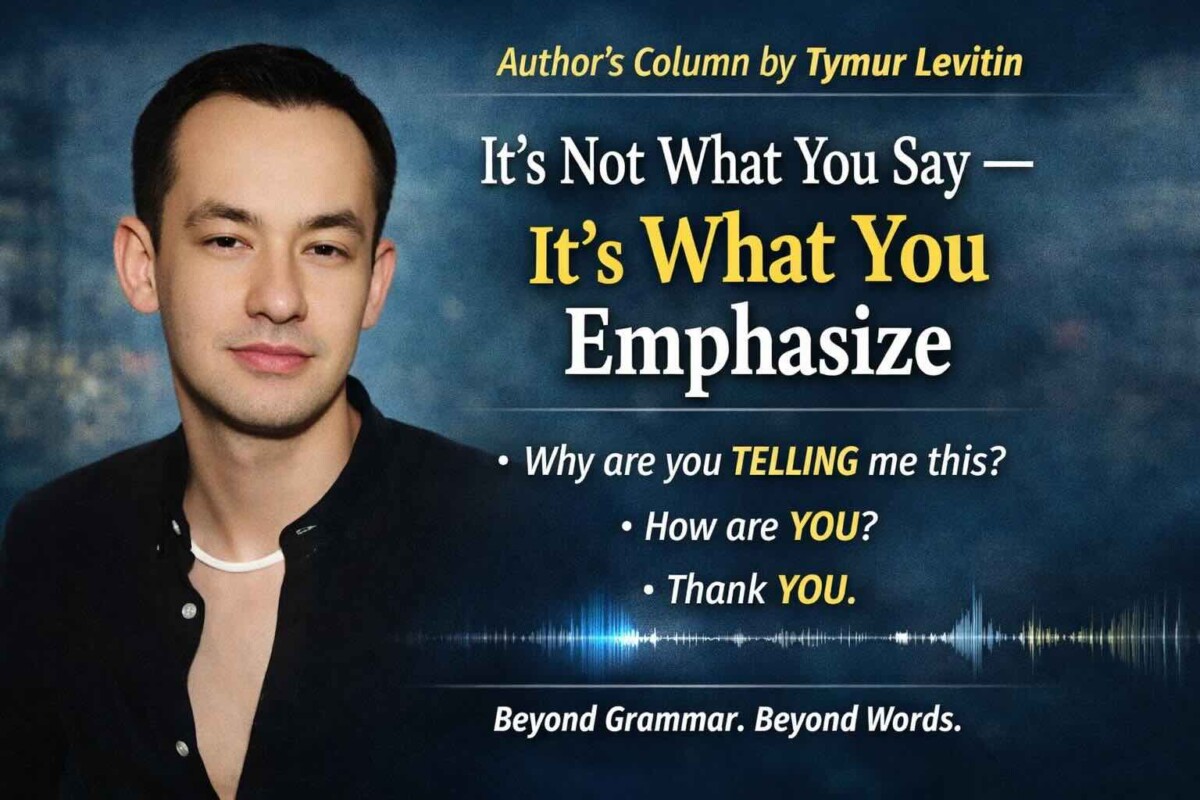
It’s Not What You Say — It’s What You Emphasize

Beyond Grammar: Real Meaning in Real Speech

Author’s Column by Tymur LevitinLanguage. Identity. Choice. Meaning. There is a layer of language that grammar books almost never explain. Not because it is unimportant.But because it is difficult to formalize. You can learn vocabulary.You can memorize tenses.You can master articles, prepositions, cases, and word order. And still completely misunderstand — or be misunderstood. Because […]

Tymur Levitin | LEVITIN SCHOOL Tymur Levitin
Read more
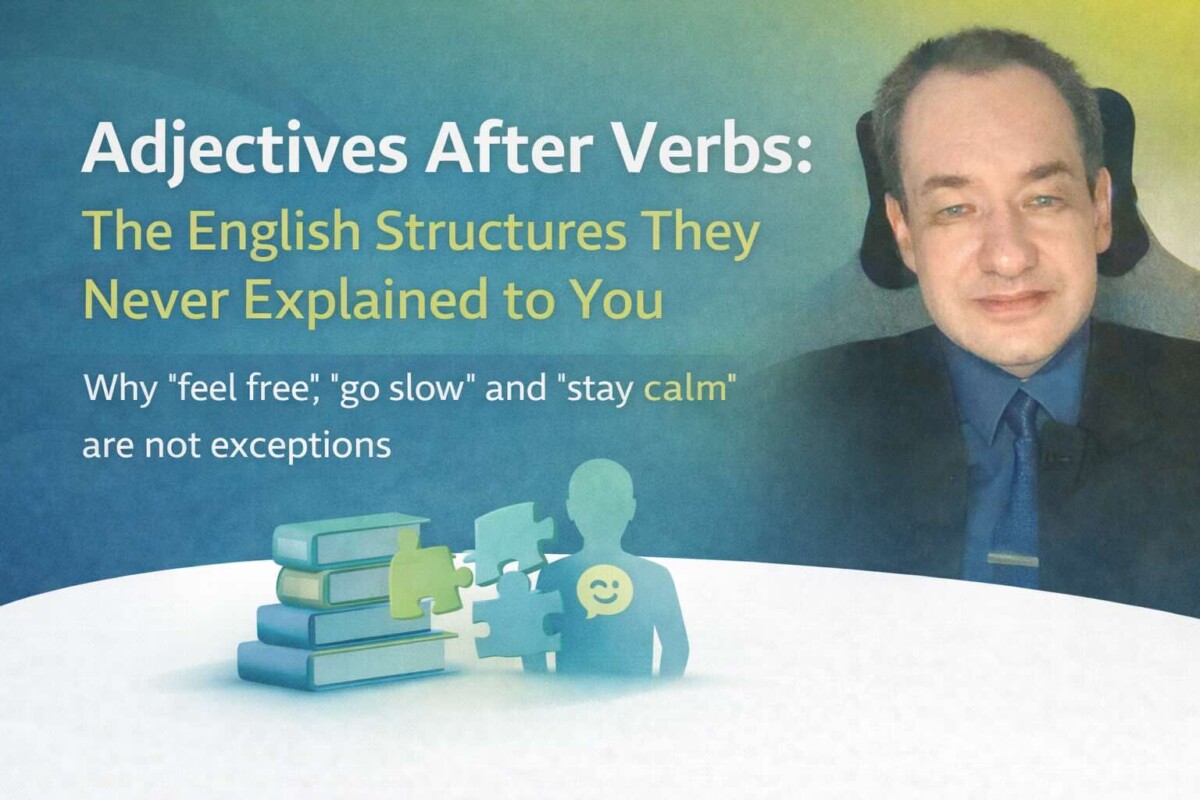
Adjectives After Verbs: The English Structures They Never Explained to You | LEVITIN SCHOOL
24.02.2026

Adjectives After Verbs: The English Structures They Never Explained to You

English

If you were taught that verbs require adverbs,this article will feel uncomfortable. If you were told that adjectives describe nouns and adverbs describe verbs,you were given a simplification — not the system. Because English calmly produces structures like: No -ly.No apology.No exception label. And the real question is not “Why is this allowed?”The real question […]

Tymur Levitin | LEVITIN SCHOOL Tymur Levitin
Read more
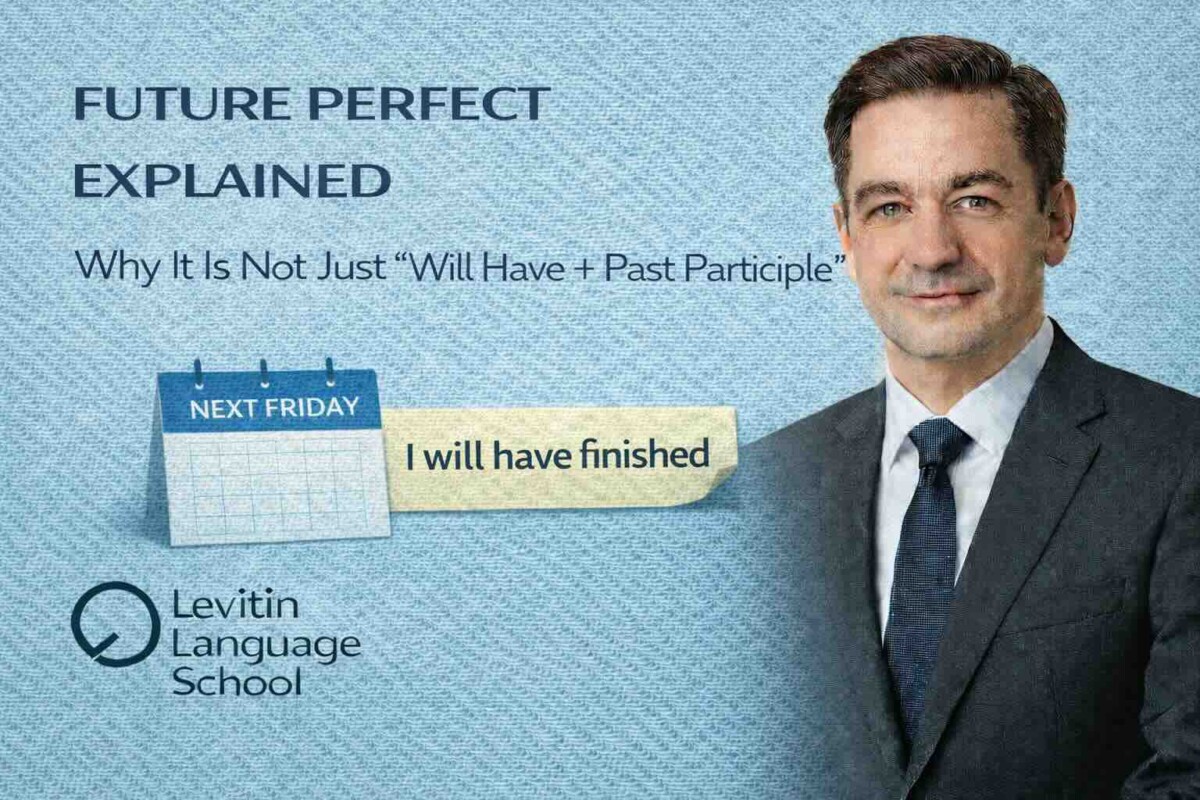
Future Perfect Explained — Why It Is Not Just “Will Have + Past Participle” | LEVITIN SCHOOL
24.02.2026

Future Perfect Explained — Why It Is Not Just “Will Have + Past Participle”

English

When students first encounter Future Perfect, they usually see this formula: will have + past participle And they are told: “It describes an action that will be completed before a certain time in the future.” Technically correct. Structurally incomplete. Because Future Perfect is not about “completion before.” It is about looking back from a future […]

Tymur Levitin | LEVITIN SCHOOL Tymur Levitin
Read more
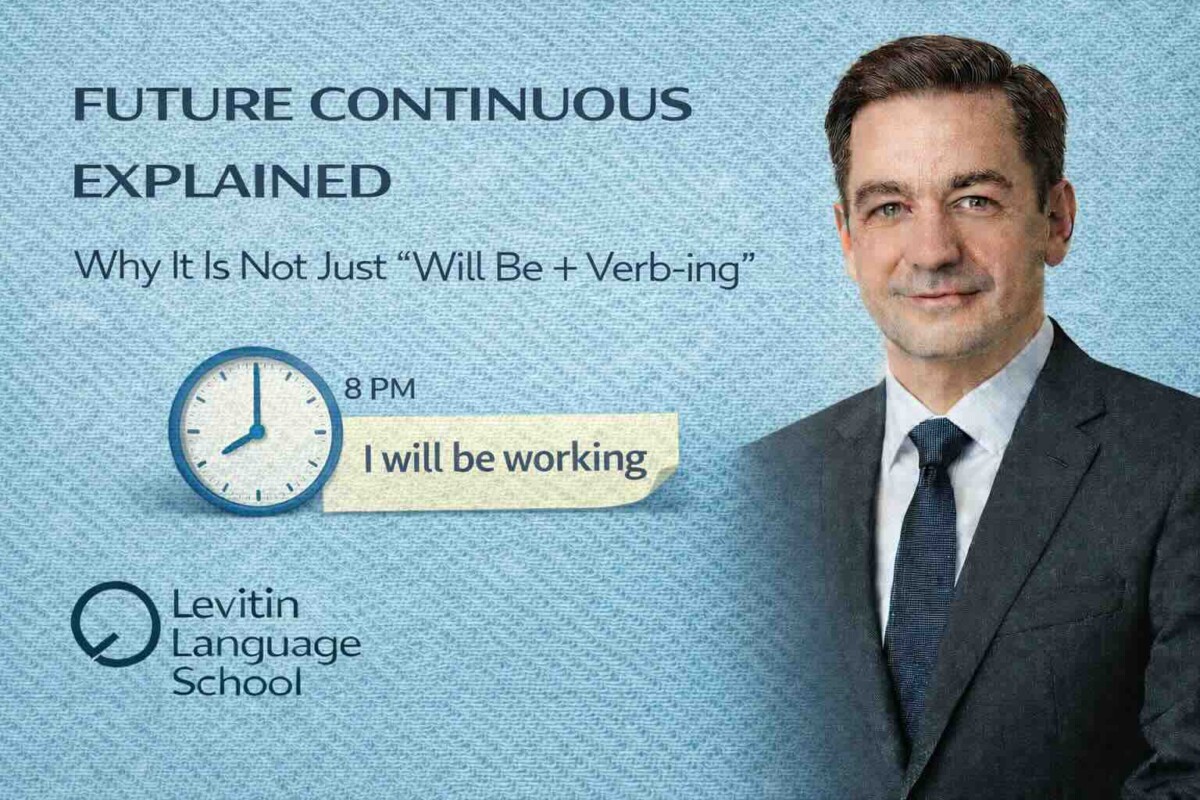
Future Continuous Explained — Why It Is Not Just “Will Be + Verb-ing” | LEVITIN SCHOOL
24.02.2026

Future Continuous Explained — Why It Is Not Just “Will Be + Verb-ing”

English

When students first see Future Continuous, they usually reduce it to a formula: will be + verb-ing Technically correct. Conceptually insufficient. Because Future Continuous is not about grammar mechanics. It is about viewing the future from inside a specific future moment. That perspective changes everything. The Core Idea: A Future Moment as a Frame Future […]

Tymur Levitin | LEVITIN SCHOOL Tymur Levitin
Read more