German

The Complete Guide to German Passive — Part 1 | LEVITIN SCHOOL
23.08.2025

The Complete Guide to German Passive — Part 1

German

The Myth of “Three Passive Forms” “Grammar is not a set of tricks; it’s the shape of meaning.”— (Author’s Column by Tymur Levitin) Choose your language Why this series Most textbooks stop at a tiny island: werden-Passive in Präsens/Präteritum and, at best, Perfekt. Sometimes you see Zustandspassiv (sein + Partizip II). Almost nobody shows what happens in all […]

Tymur Levitin | LEVITIN SCHOOL Tymur Levitin
Read more
Mal vs Mal — One Word, Two Worlds | LEVITIN SCHOOL
23.08.2025

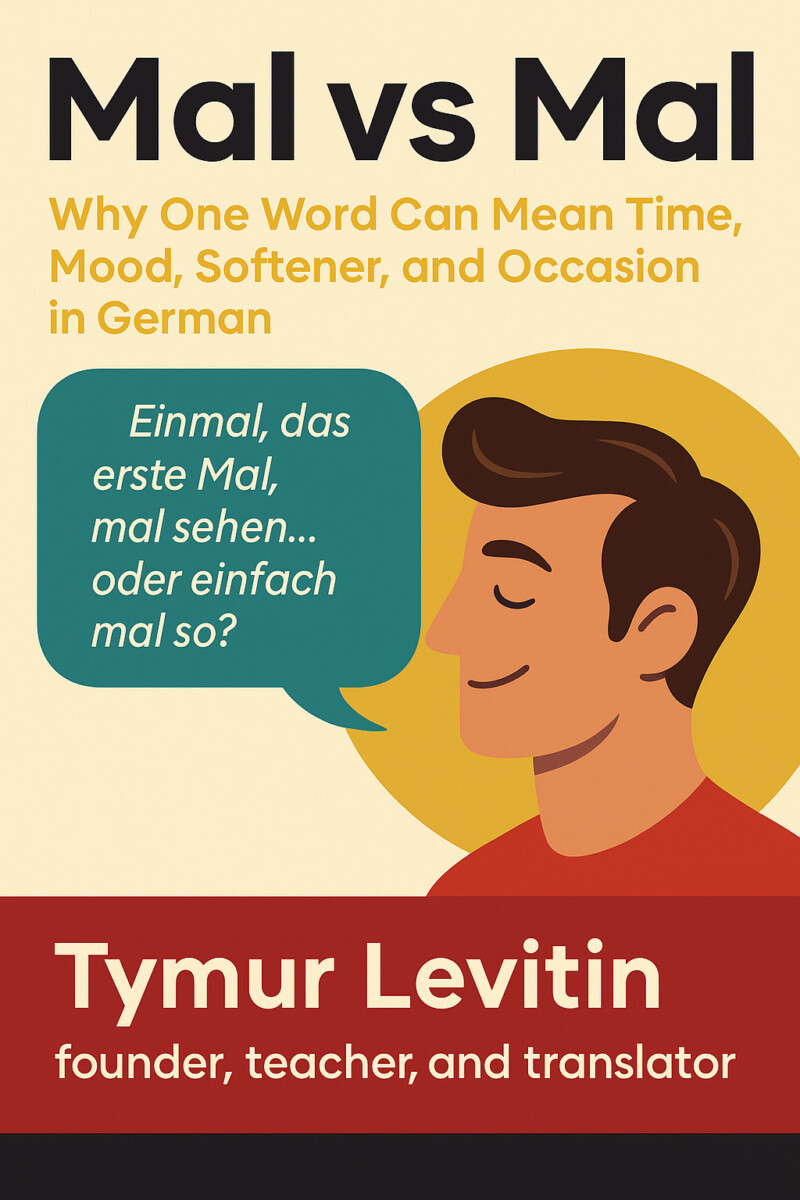
Mal vs Mal — One Word, Two Worlds

Author’s Column | Tymur Levitin on Language, Meaning and Respect

What One Letter Can Change in German — and Why It Matters So Much German Is Not About Letters. It’s About Meaning. A single capital letter can change the world.At least in German. You see mal and Mal — and think it’s the same.But in truth, these two words live in completely different dimensions. They sound the same.But they act like […]

Tymur Levitin | LEVITIN SCHOOL Tymur Levitin
Read more
Beyond Word Order: The Emotional Power of Emphasis in German | LEVITIN SCHOOL
21.08.2025

Beyond Word Order: The Emotional Power of Emphasis in German

Author’s Column | Tymur Levitin on Language, Meaning and Respect

When we talk about German grammar, most learners immediately think of rules: verb in the second position, subject–verb agreement, cases. But there’s something far more human, far more alive hidden in the structure of German: emphasis. And this is where grammar becomes psychology, and word order becomes emotion. Why Emphasis Is More Than Grammar German is […]

Tymur Levitin | LEVITIN SCHOOL Tymur Levitin
Read more
Top Strategies for Online Exam Preparation in English, German, and Spanish | LEVITIN SCHOOL
21.08.2025

Top Strategies for Online Exam Preparation in English, German, and Spanish

Author’s Column | Tymur Levitin on Language, Meaning and Respect

🌍 Choose your language Introduction Preparing for a language exam can be stressful — whether it’s TOEFL, IELTS, Goethe-Zertifikat, TestDaF, or DELE. Many students spend endless hours memorizing vocabulary lists and grammar rules but still struggle during the test. At Levitin Language School | Start Language School by Tymur Levitin, we know that effective exam preparation requires […]

Tymur Levitin | LEVITIN SCHOOL Tymur Levitin
Read more
Why Choose a Private Online Tutor for English, German, or Spanish? Benefits of Personalized ...
19.08.2025

Why Choose a Private Online Tutor for English, German, or Spanish? Benefits of Personalized Lessons

Author’s Column | Tymur Levitin on Language, Meaning and Respect

🌍 Choose your language Introduction Learning a foreign language has never been easier — or more complicated. With so many apps, group classes, and online resources available, students often ask: Why should I choose a private tutor instead? At Levitin Language School | Start Language School by Tymur Levitin, we believe that real progress comes from personalized lessons. Whether […]

Tymur Levitin | LEVITIN SCHOOL Tymur Levitin
Read more
Schon vs Bereits — Why One Word Feels Warmer (and the Other Colder) | LEVITIN SCHOOL
19.08.2025

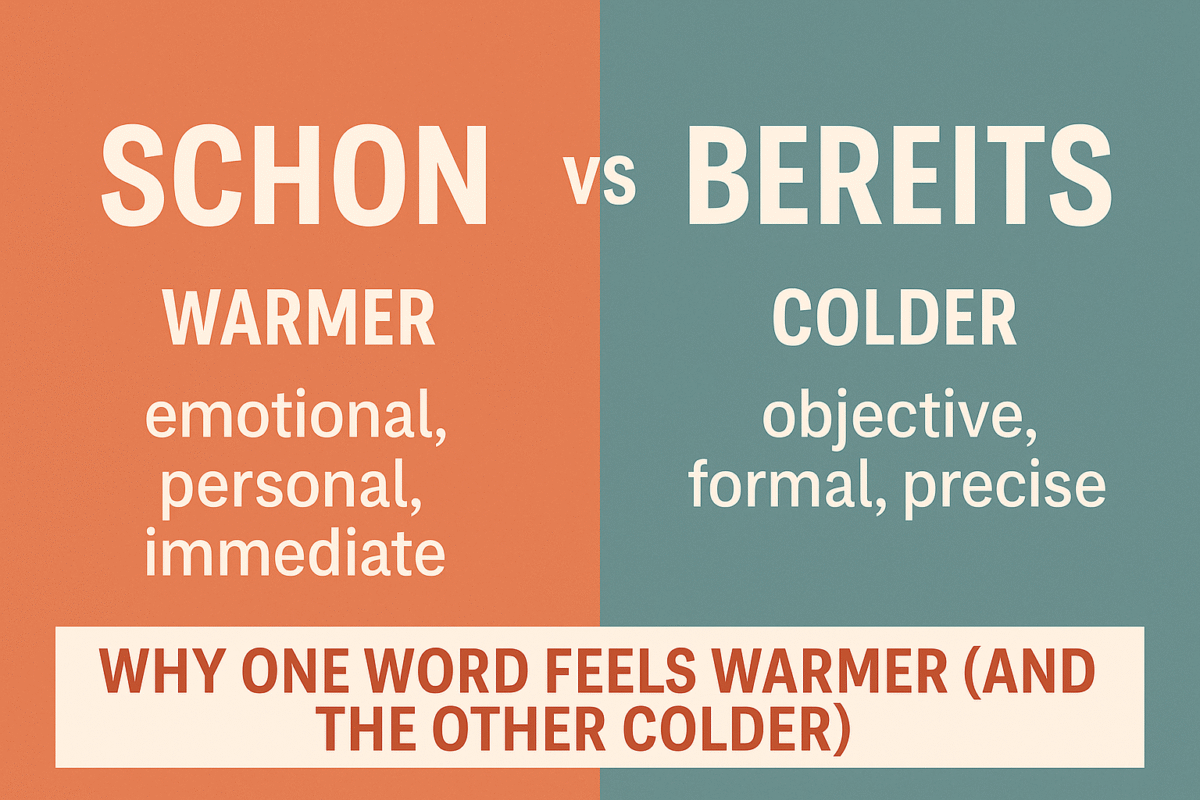
Schon vs Bereits — Why One Word Feels Warmer (and the Other Colder)

Author’s Column | Tymur Levitin on Language, Meaning and Respect

“Schon” ist, was du fühlst. “Bereits” ist, was du feststellst. 🌍 Choose your language / Обери мову / Вибери язык 🇬🇧 English — You are here 🇷🇺 Russian version 🇺🇦 Ukrainian version 🇩🇪 German version You’ve probably seen both words in German: They both seem to mean “already.” But native speakers will tell you: they’re not quite […]

Tymur Levitin | LEVITIN SCHOOL Tymur Levitin
Read more
“Doch” heißt mehr als “yes” — Why One Word Can Change the Whole Sentence in German
18.08.2025

“Doch” heißt mehr als “yes” — Why One Word Can Change the Whole Sentence in German

Author’s Column | Tymur Levitin on Language, Meaning and Respect

„Ein einziges Wort kann eine ganze Haltung verraten. ‘Doch’ ist kein Ja — es ist ein innerer Aufstand.“ — Tymur Levitin Choose your language: https://levitintymur.com/#languages Read this article in other languages: 🇷🇺 Русская версия:«Doch» значит больше, чем «да»: одно слово, которое может изменить всё предложение 🇺🇦 Українська версія:«Doch» означає більше, ніж «так»: одне слово, що може змінити […]

Tymur Levitin | LEVITIN SCHOOL Tymur Levitin
Read more
Contrastive Lexicology: Word Formation Across Languages | LEVITIN SCHOOL
18.08.2025

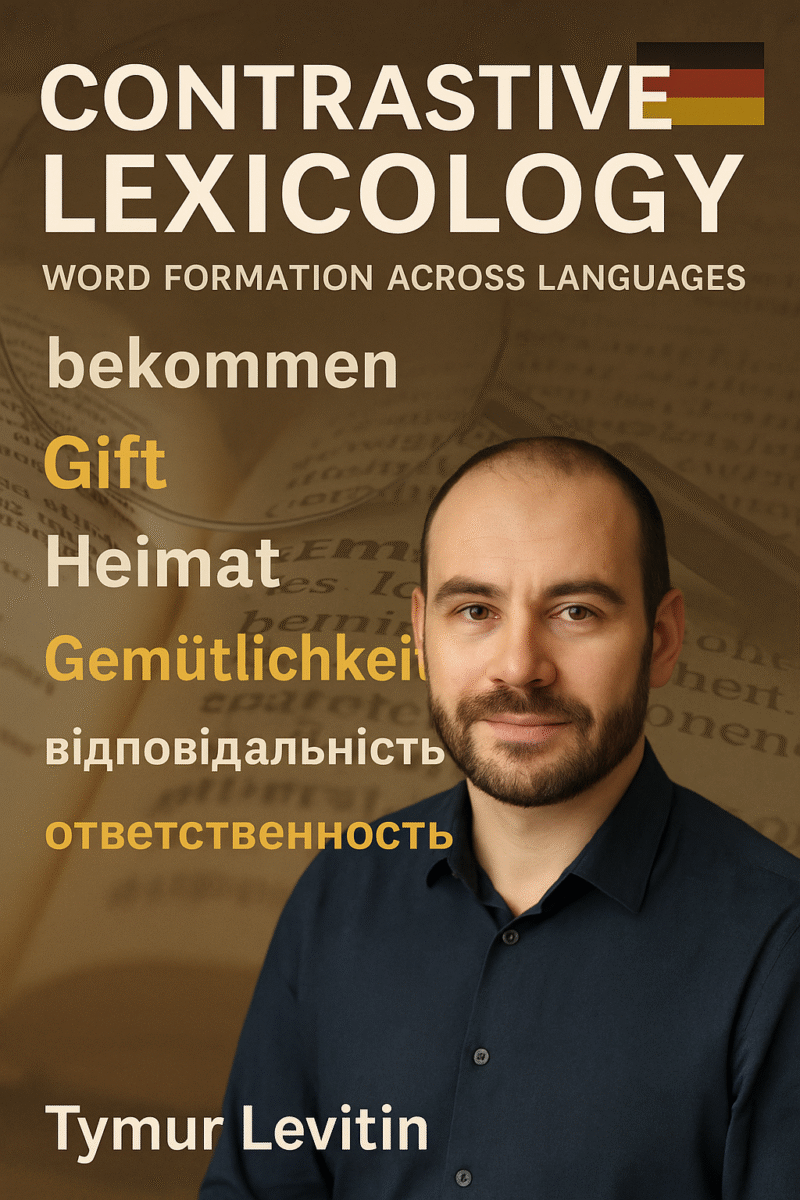
Contrastive Lexicology: Word Formation Across Languages

Author’s Column | Tymur Levitin on Language, Meaning and Respect

“To learn a language is to have one more window from which to look at the world.” — Chinese proverb Choose your language Lexicology is not only the study of words but also the study of how different languages create, combine, and transform them. Contrastive lexicology gives us a chance to see languages side by side […]

Tymur Levitin | LEVITIN SCHOOL Tymur Levitin
Read more
“Bitter Honey”: Language, Symbols, and the Dignity of a Man in Love | LEVITIN SCHOOL
17.08.2025

“Bitter Honey”: Language, Symbols, and the Dignity of a Man in Love

Arabic

🔗 Choose your language Sometimes a single song can tell us more about culture, language, and human nature than dozens of textbooks.The song by Belyy Oryol (White Eagle), “Bitter Honey”, is one such case. Behind its simple melody and concise lyrics lies a whole layer of cultural codes, linguistic nuances, and psychological meanings. This article opens a series […]

Tymur Levitin | LEVITIN SCHOOL Tymur Levitin
Read more
German Lexicology: Words, Context, and Identity | LEVITIN SCHOOL
17.08.2025

German Lexicology: Words, Context, and Identity

Author’s Column | Tymur Levitin on Language, Meaning and Respect

“Language is the archive of history.” — Ralph Waldo Emerson Choose your language Lexicology is the science of words, their meanings, and their functions within a language. When we look at German, we find a language that is both highly structured and deeply cultural. Each word carries not only a grammatical role but also an identity, […]

Tymur Levitin | LEVITIN SCHOOL Tymur Levitin
Read more