German

German Structured Communication — Why Germans Organize Ideas Before They Speak | LEVITIN SCHOOL
25.03.2026

German Structured Communication — Why Germans Organize Ideas Before They Speak

German

In many cultures, people begin speaking while they are still thinking. Ideas appear gradually during the conversation. In German communication, however, something different often happens. Many speakers organize their thoughts first — and only then start speaking. This is one of the reasons why German conversations often sound structured, precise, and logically ordered. Speaking After […]

Tymur Levitin | LEVITIN SCHOOL Tymur Levitin
Read more
German Definition Culture — Why Germans Often Stop the Conversation to Define a Word
21.03.2026

German Definition Culture — Why Germans Often Stop the Conversation to Define a Word

German

During a discussion in German something interesting can happen. The conversation suddenly pauses. Not because of disagreement. Not because someone is confused. But because someone asks a question like: Was genau meinst du mit „effizient“? For many learners this moment feels unexpected. Why stop the conversation just to define a word? But in German communication […]

Tymur Levitin | LEVITIN SCHOOL Tymur Levitin
Read more
German Fact Orientation — Why Germans Prefer Data Over Impressions in Discussion
18.03.2026

German Fact Orientation — Why Germans Prefer Data Over Impressions in Discussion

German

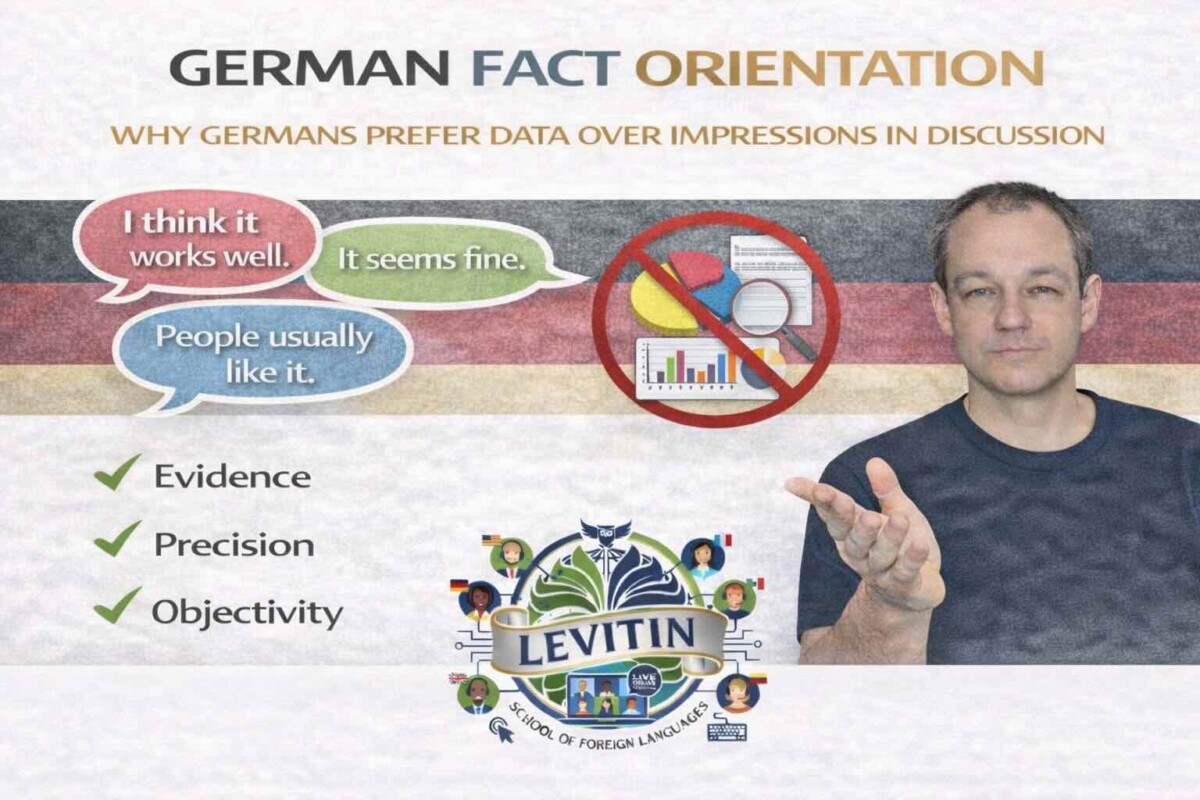
In many conversations people rely on impressions. They describe how something feels. They talk about general tendencies. They say things like: I think it works well.It seems fine.People usually like it. In German communication this approach often feels incomplete. Instead, speakers frequently look for something more concrete. Numbers. Examples. Evidence. This reflects an important feature […]

Tymur Levitin | LEVITIN SCHOOL Tymur Levitin
Read more
German Plurals Made Easy: How to Form Them Correctly | LEVITIN SCHOOL
17.03.2026

German Plurals Made Easy: How to Form Them Correctly

German

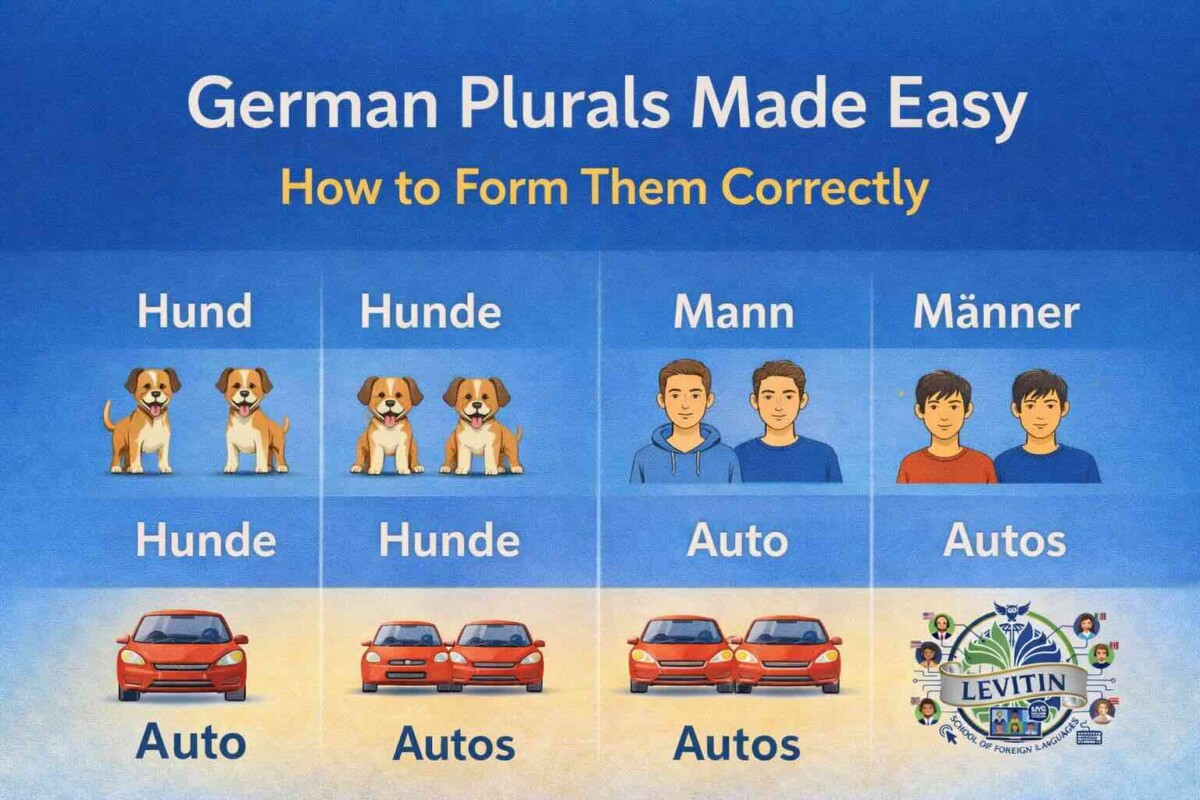
🔗 Choose your language: https://levitintymur.com/#languages German plural forms often confuse beginners because there is no single plural ending. Instead, German uses several common patterns. The good news: once you know these patterns, plural forms become predictable and much easier to learn. How Plurals Work in German In German, plural nouns: Example: The Most Common German […]

Tymur Levitin | LEVITIN SCHOOL Tymur Levitin
Read more
German Disagreement Culture — Why Germans Say “I Don’t Agree” More Directly Than You Expect
14.03.2026

German Disagreement Culture — Why Germans Say “I Don’t Agree” More Directly Than You Expect

German

In many conversations people try to avoid open disagreement. They soften their responses. They change the topic. They say things like: Maybe…I’m not sure…That’s interesting… In German communication, disagreement often appears more directly. Someone may simply say: Das sehe ich anders. For many language learners this moment can feel uncomfortable. But in German communication culture, […]

Tymur Levitin | LEVITIN SCHOOL Tymur Levitin
Read more
German Uncertainty Avoidance — Why Germans Prefer Clear Statements Instead of “Maybe”
10.03.2026

German Uncertainty Avoidance — Why Germans Prefer Clear Statements Instead of “Maybe”

German

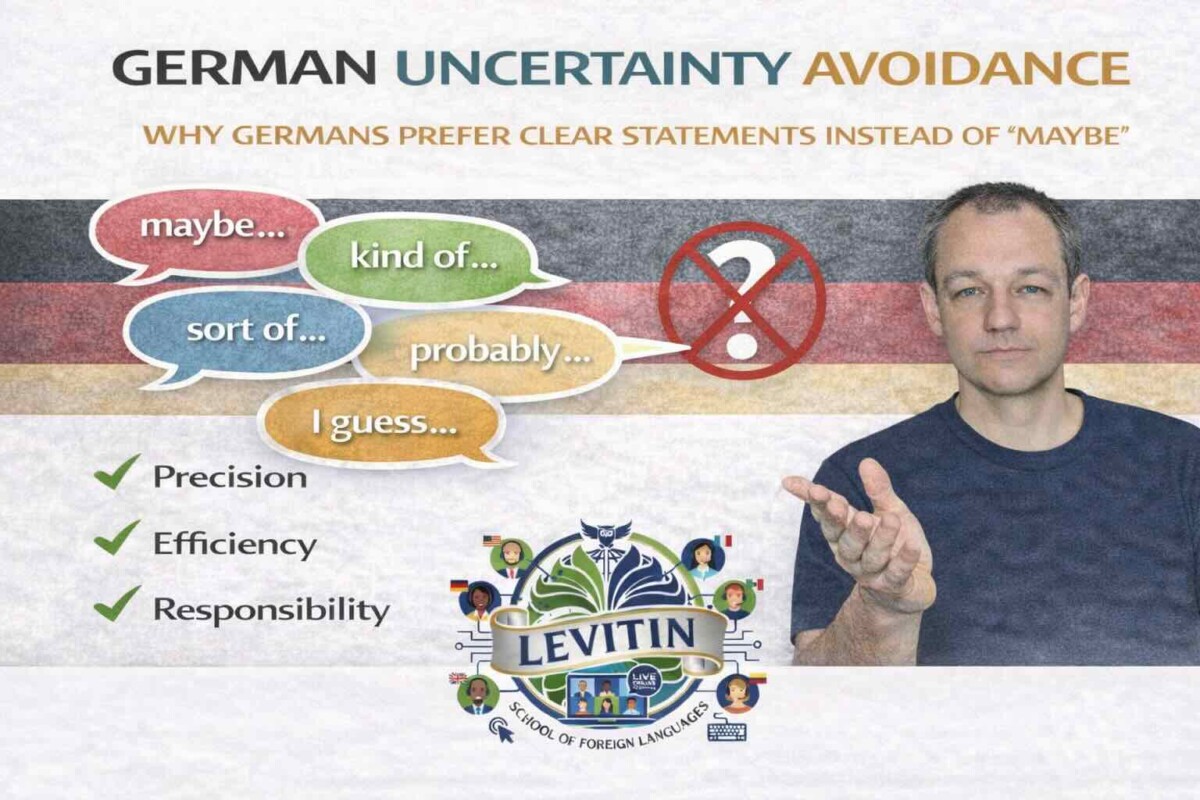
Many language learners notice something interesting when talking with German speakers. Conversations often sound more definite. Statements appear clear.Opinions sound structured.Answers feel precise. What is often missing are the soft expressions common in many languages: maybekind ofsort ofprobablyI guess In German communication, excessive uncertainty can sound confusing. This reflects an important cultural tendency: preference for […]

Tymur Levitin | LEVITIN SCHOOL Tymur Levitin
Read more
German Argument Structure — Why Germans Explain the Reason Before the Opinion | LEVITIN SCHOOL
10.03.2026

German Argument Structure — Why Germans Explain the Reason Before the Opinion

German

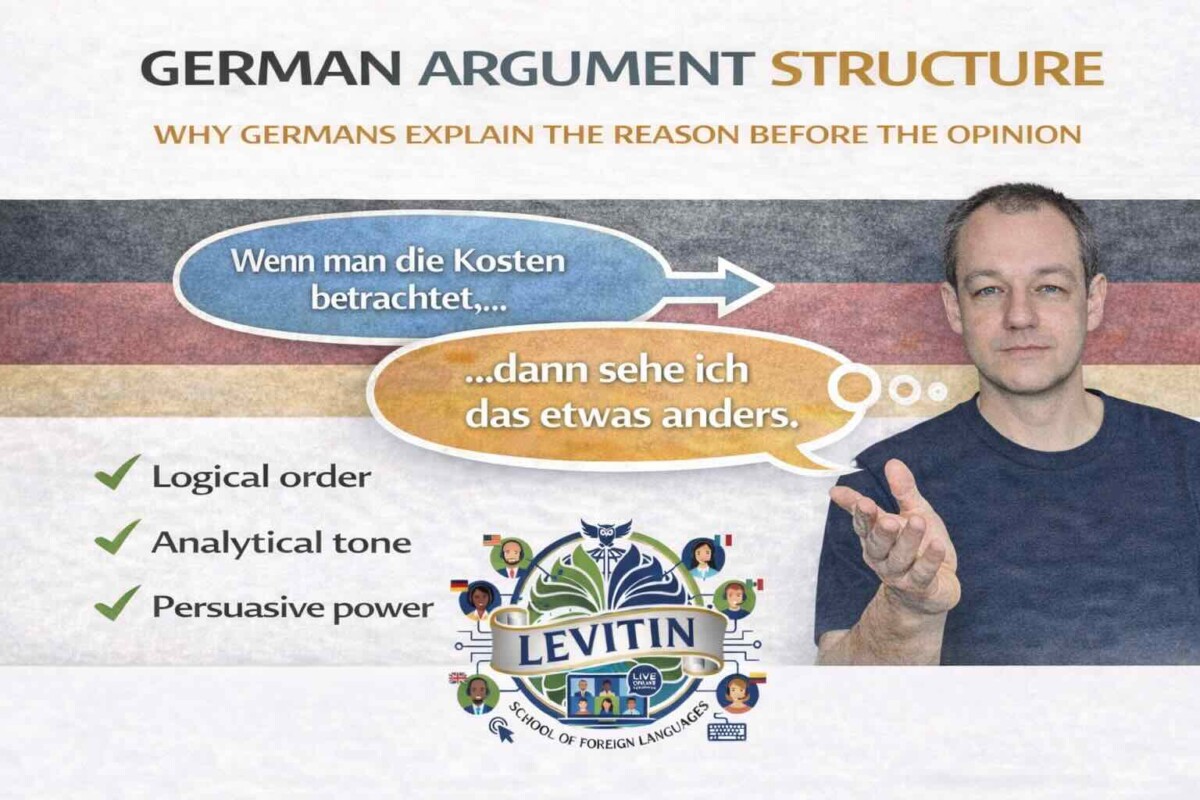
Many language learners notice something unusual in German conversations. When someone expresses an opinion, it rarely appears alone. Instead, the speaker often starts with the reasoning. Only after that comes the conclusion. For example, instead of saying: I disagree. A German speaker may say something closer to: Wenn man die Kosten betrachtet, dann sehe ich […]

Tymur Levitin | LEVITIN SCHOOL Tymur Levitin
Read more
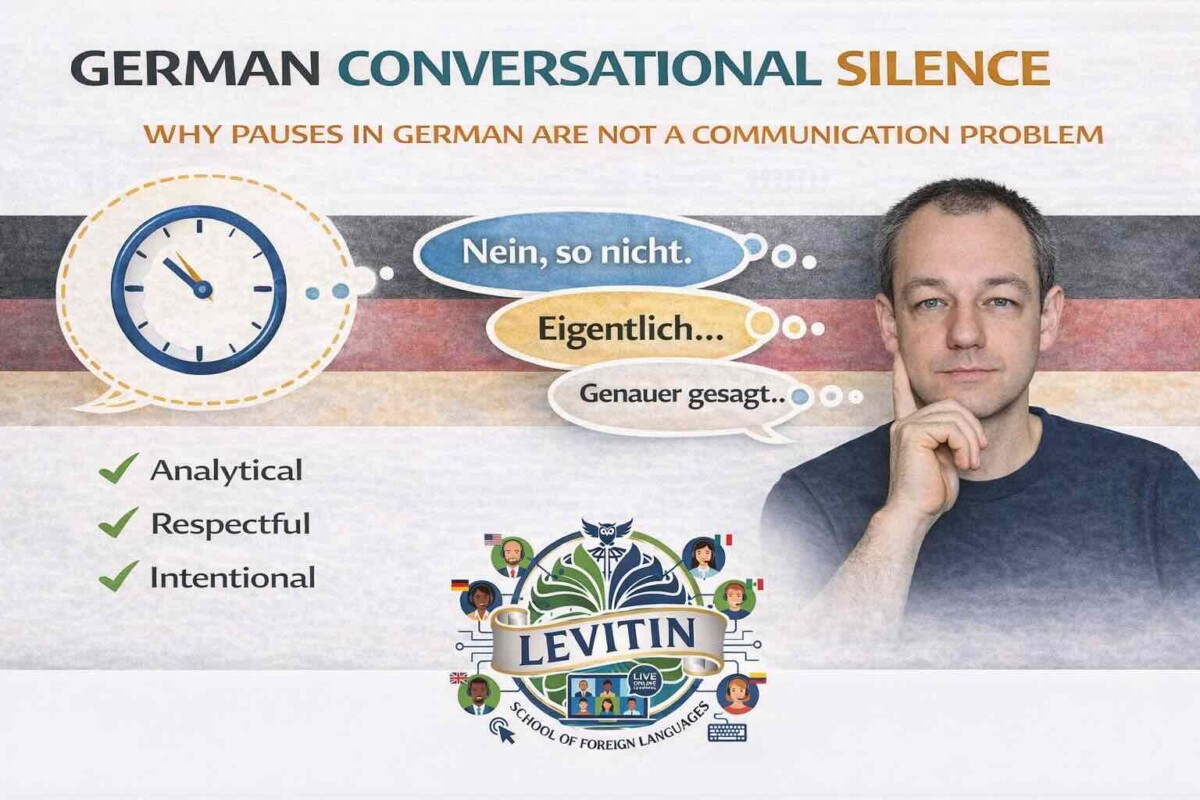
German Conversational Silence — Why Pauses in German Are Not a Communication Problem
10.03.2026

German Conversational Silence — Why Pauses in German Are Not a Communication Problem

German

In many conversations, silence is uncomfortable. People rush to fill it. They add words.They repeat themselves.They soften statements.They try to maintain the flow. But in German communication, silence often has a different function. A pause is not necessarily a problem. Sometimes, it is simply thinking. This article continues our German communication series and explores one […]

Tymur Levitin | LEVITIN SCHOOL Tymur Levitin
Read more
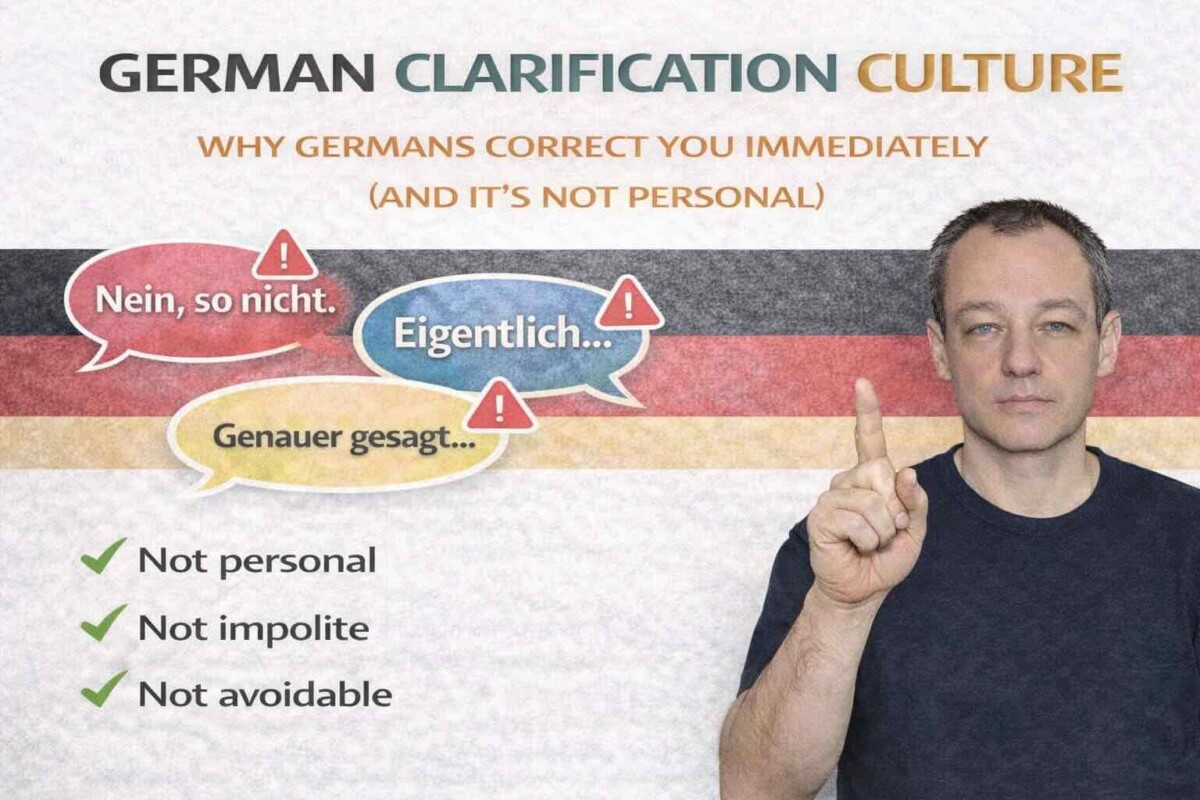
German Clarification Culture — Why Germans Correct You Immediately (And It’s Not Personal)
04.03.2026

German Clarification Culture — Why Germans Correct You Immediately (And It’s Not Personal)

German

You say something. A German responds: Nein, so nicht.Das stimmt nicht ganz.Eigentlich…Genauer gesagt… And suddenly, you feel corrected. Embarrassed. Interrupted. Challenged. But in many German interactions, correction is not confrontation.It is calibration. This article continues our German communication series and explores a phenomenon that many learners misunderstand: immediate clarification and correction culture. The Speed of […]

Tymur Levitin | LEVITIN SCHOOL Tymur Levitin
Read more